Reviews
Industrial heritage travel questions to ask before you book a 2027 trip
Industrial heritage questions to ask in 2027 help U.S. travelers distinguish historical context, public access, route limits, and credible visitor details.
What to take away
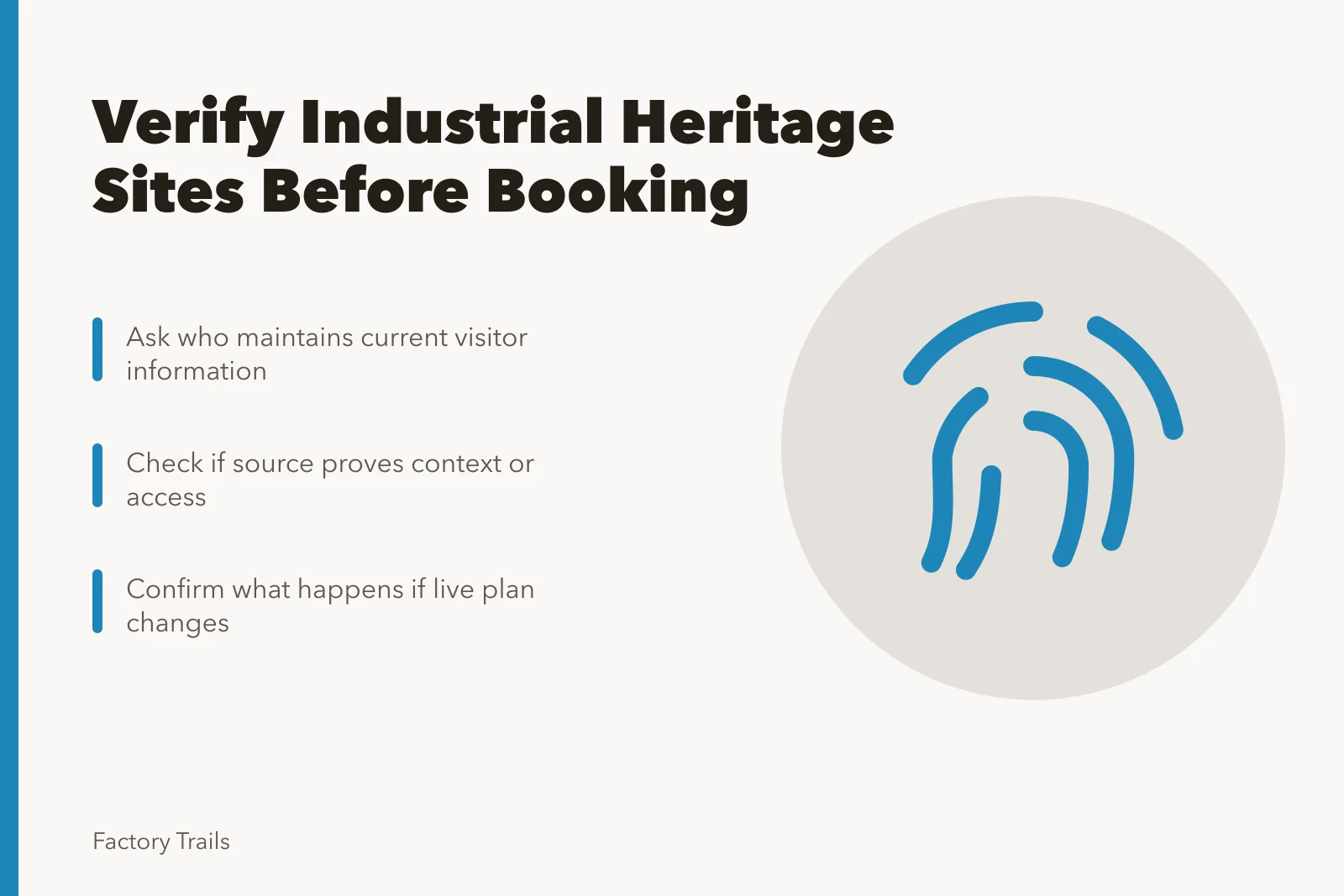
- Four questions decide whether a 2027 stop is worth bookingwho operates it now, what a visitor does there, how you book, and what happens if the plan changes.
- A dated page from the operator outranks a landmark listing, an old news story, or a photo set.
- Ask the same four questions of every candidate so a good photograph cannot carry a weak site.
- Write down the source URL, the date you checked it, a contact, and one fallback stop.
Four questions that decide a 2027 industrial stop
Start with the operator. Ask who runs the site today and which page carries current visitor terms. A register listing or a county history page explains why a place matters. Neither confirms that a gate opens on a Tuesday in April.
Then ask what a visitor does there. A preserved mill might offer a museum floor, a working loom line, a guided tunnel, or a viewpoint behind a fence. Each is a different product with its own hours and ticket.
Then ask how you book, and what changes the plan. Timed sessions online, group requests by email, and walk-in days all exist. A private event or a maintenance shutdown can close a working site with little notice.
Sort every answer into strong or weak before you compare two routes.
[figure 1]
Strong vs Weak Answers
Strong answer
- Open to visitors?
- Current source says how
- Use this route?
- Source identifies public route
- What stop adds?
- New process or scale
- What changes plan?
- Stated closure or rule
- Recommend it?
- Current terms support it
Weak answer
- Open to visitors?
- Old article says once
- Use this route?
- Map appears to show way
- What stop adds?
- Repeats first stop
- What changes plan?
- Guess on arrival
- Recommend it?
- Photo looks appealing
Our industrial heritage travel checklist covers the booking mistakes that start with an undated page.
The visitor center is not the factory
In Hershey, Pennsylvania, the attraction most travelers book is Hershey's Chocolate World, a visitor center with a ride and retail space. The working factory is not open for public tours.
That gap runs through industrial tourism. A site can be an active plant with strict visitor rules, a museum inside an old building, or grounds open to anyone who walks in.
Name which one you are booking before you pay. The label decides what you pack and when you arrive.
Example: four named sites and the questions that fit them
Here is how those four questions land on sites in the United States and Canada.
| Site | Operator | What a visitor does | Check before 2027 |
|---|---|---|---|
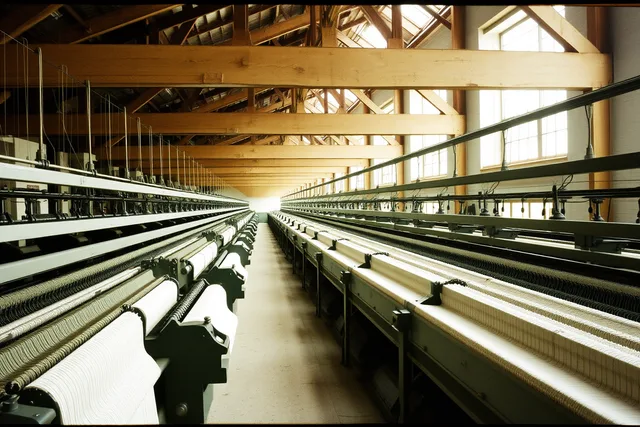
| Lowell National Historical Park, Massachusetts | National Park Service | Working textile machinery, canal and trolley tours | Seasonal tour dates and whether the mill floor runs |
| Sloss Furnaces, Birmingham, Alabama | City of Birmingham | Self-guided walk around a preserved blast furnace site, plus events | Whether a private event closes the grounds |
| Britannia Mine Museum, Britannia Beach, British Columbia | Non-profit museum | Guided underground mine train tour | Whether the underground route runs, and required footwear |
| Royal Canadian Mint, Winnipeg | Crown corporation | Guided tour of a working coin production floor | Which location sells tours and how sessions are booked |
Lowell works as the US baseline because the Park Service operates the site and publishes its own terms. The Lowell park page settles hours, tour times, and reservations for the current season.
The Mint splits its offer by city. The Royal Canadian Mint tour page compares the Winnipeg production tour with the Ottawa boutique, which is the difference between a working floor and a shop.
Britannia runs a timed underground route rather than a walk-up site. Our guide to booking a Britannia Mine Museum underground tour explains what to reserve and when.
Working factory tours and protective equipment
Some 2027 routes will include a live plant instead of a museum. Ask the host what the group must wear on the floor, and ask early, because the answer shapes what you pack.
US workplace rules cover protective equipment, eye and face protection, and foot protection in OSHA 1910.132, 1910.133 and 1910.136. Those standards bind employers rather than tourists. Plants often apply similar rules to visitors, so ask about safety glasses and closed-toe footwear.
Group size changes access too. Twelve people can enter spaces a coach group cannot.
Sloss Furnaces is Alabama's best known industrial landmark, and our guide to Alabama's industrial heritage sites covers the rest of the state.
Booking windows and seasonal closures for 2027
- Check the operator page for the 2027 calendar. Small sites often post next-season dates in late winter or early spring, so confirm rather than assume.
- Reserve timed tours four to eight weeks ahead for summer weekends. That is a typical range for small museums, and you should treat it as guidance, not a rule.
- Confirm seasonal windows. Canal boats and open-air furnace grounds in the northern US and Canada usually operate from late spring to early autumn.
- Hold one fallback stop within an hour of the main site, and check that it is open on the same day.
A pre-booking checklist for industrial heritage stops
- Operator name and the URL of its current visitor page
- Date you checked that page
- Public activity and its start point
- Booking method, session time, and cancellation rule
- Phone or email for the day of the visit
- Footwear and other gear rules
- Fallback stop and why it is on the route
Put those fields in one note before you travel. Our notes on visitor arrival notes for industrial sites show a format that guests follow on the day.
An answer you cannot date is not an answer. Write the URL and the check date beside every claim.