Guides
Part of Confirmed access, not a brochure, is what an industrial tour operator sells
Industrial tour operators earn their keep on one day: the one you cannot arrange alone
Two-day itinerary built around industrial tour operators: buy the operator for the day you cannot arrange yourself, and do the rest alone. Two days, one guided.
What to take away
- Buy one guided day for the access you cannot arrange alone, then walk the second day yourself.
- Give the guided day six to seven hours and put it first.
- Plan day two as three stops of about two hours each, with nothing booked.
- Book through whoever runs the sitethe Royal Canadian Mint, Britannia Mine Museum, or a park reservation service.
- Ask the guide for tomorrow's list before you leave the last stop.
Buy the access, not the itinerary
The fee buys entry, not comfort. Working plants, underground workings and active mills admit groups and refuse individuals. Pay for the day that puts you inside one of those.
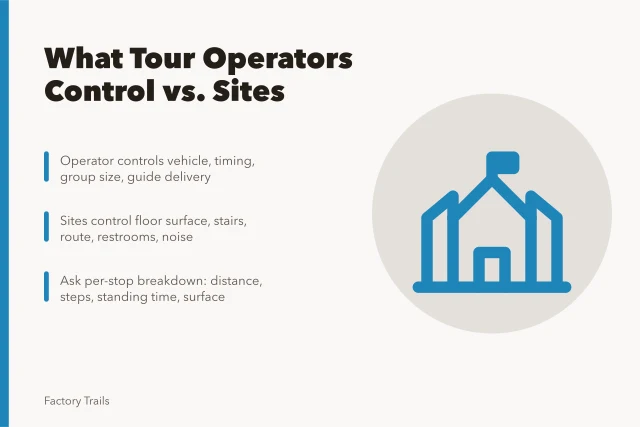
Judge an operator on three things: the named site, the time spent inside it, and whether the departure runs when only two people book. A full day that spends under two hours on a working floor is a bus ride with lunch.
Rates are quoted per person or per group, so compare structure before comparing totals. What a US factory tour costs separates free plant tours from paid museum days and the fees attached to each.
Example: one guided day at Britannia Mine
Picture one booked day that justifies the fee. Near Squamish, British Columbia, the Britannia Mine Museum sells a timed underground tour into a copper mine that worked until 1974. Visitors ride a mine train in, and the underground section runs about 90 minutes.
The whole visit, surface buildings included, fits into a morning. Book the earliest slot you can get. The tunnel stays cool, and queues build after lunch.
The mill building adds roughly 45 minutes and holds the crushing and flotation equipment. Britannia Mine Museum describes the underground route and how tours are booked.
Mine tours run in fixed slots, so a 10am booking leaves the rest of the day free for the surface site.
Day two here writes itself: Britannia Beach, the old concentrator, and Howe Sound. That is the mine and the tailings, close enough to cover on foot.
Guides at sites like these are often former workers or long-serving volunteers, which shapes what they point out. Where industrial tour guides come from explains why that background matters more than the script.
Building the independent day
Your region will not be Britannia. Pick a place where the industry and its consequences sit within a short drive, then give each one its own block of time.
Johnstown, Pennsylvania, is the strongest eastern pairing. The steel valley and the dam failure upstream that drowned it in 1889 are one story. The Park Service history of the flood covers the works, the disaster and the relief effort that followed.
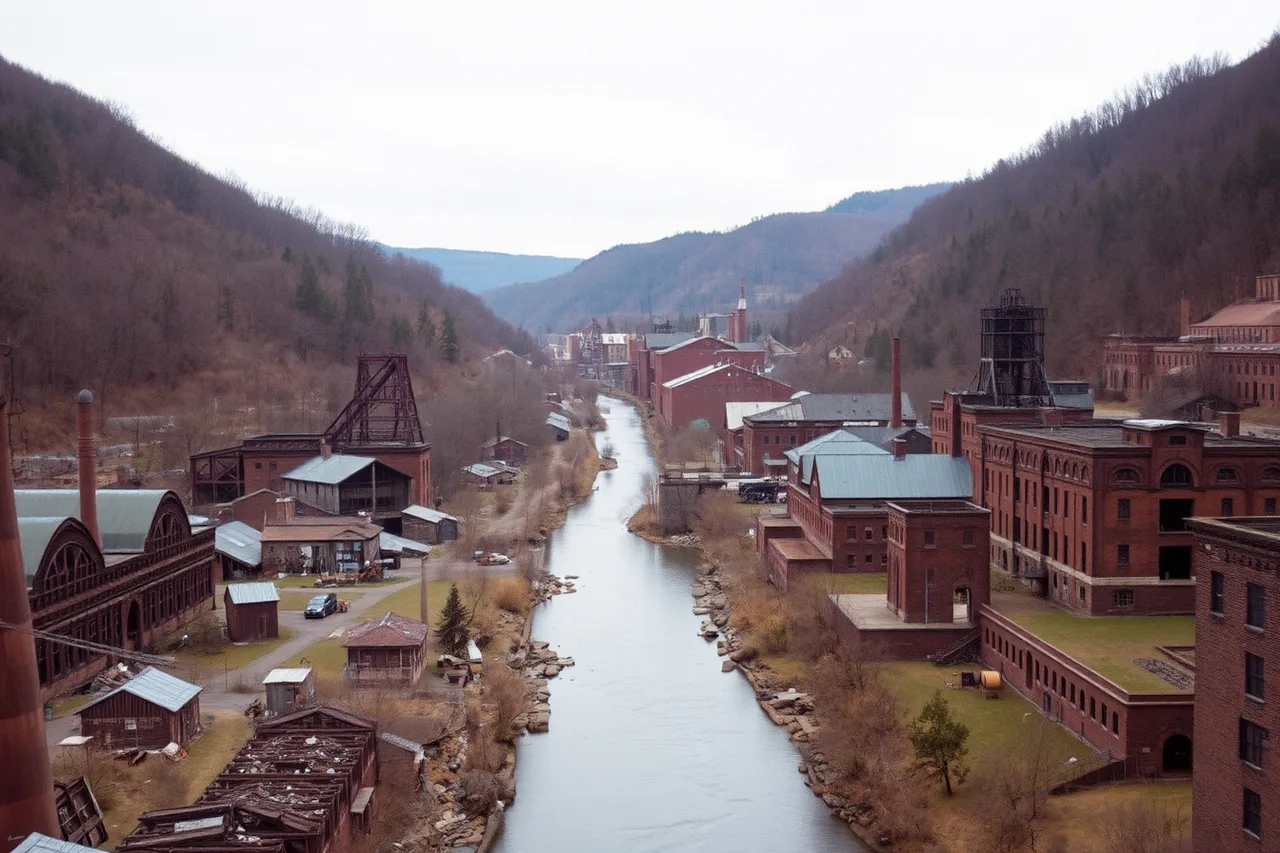
A guided steelmaking day followed by an independent day on the valley itself is a real education. The valley is compact enough to cover on foot in an afternoon, which keeps day two simple.
Vermont's Marsh-Billings-Rockefeller answers a slower question: what one property does to a forest across two centuries, cutting it and replanting it. Its history traces that cycle on a single estate.
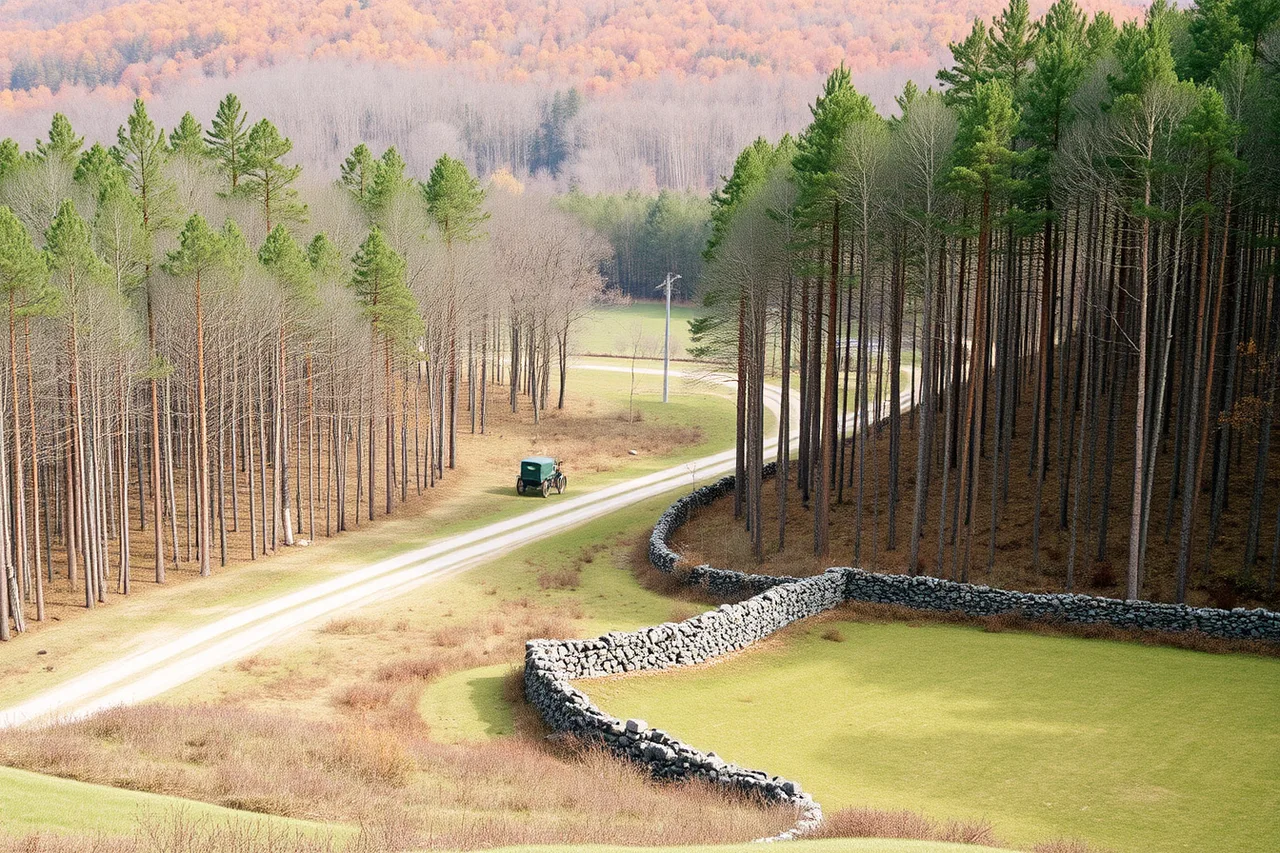
For mill country, Lowell, Massachusetts, puts the cotton mills and the Merrimack canals in one walkable district. If you are weighing steel cities instead, Pittsburgh and Birmingham steel heritage trails compared shows which one rewards a self-guided day better.
The two-day shape
Keep the proportions fixed even when the sites change.
| Block | Day one, guided | Day two, independent |
|---|---|---|
| Morning, 3 hours | One working site, inside | The site the guide named |
| Midday, 1 hour | Lunch with the group, ask questions | A local cafe, ask more |
| Afternoon, 3 hours | A second site or museum | River, town or tailings |
| Evening, 30 minutes | Ask the guide what to see tomorrow | Write up your notes |
What to book, and how far ahead
Reserve the guided day first, because it is the only part of the trip that can sell out.
- Pick the site that is otherwise closed to youa working production floor, an underground working, or a mill with live machinery.
- Book direct with whoever operates it. The Royal Canadian Mint sells Winnipeg production-facility tours and Ottawa boutique visits, and its visitor page explains which is which. Federal sites in the United States often take bookings through Recreation.gov or their own reservation page, and Canadian parks use the Parks Canada service. Skip resellers.
- Reserve four to eight weeks ahead for summer dates and holiday weekends. Off-season, two weeks is usually enough.
- Leave day two unbooked. If the guided day is cancelled, you still have a full trip.
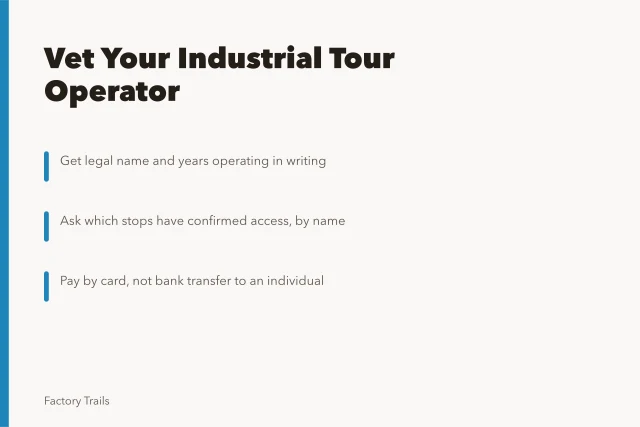
Two operators often sell the same day, so check confirmed access rather than the brochure. The operator watchlist explains why that distinction decides whether the fee is worth paying.