Guides
Part of Industrial heritage travel safety checklist: what to know before you go
Industrial heritage travel safety checklist: how to scope the plan before you go
A scoping checklist for industrial heritage visits that confirms the responsible authority, the public route, and the fallback before the day.
A working plant and its preserved twin do not share a rulebook. Scope the visit against the authority that actually runs the site, then write the plan down.
What to take away
- Identify the operating authority firsta National Park Service unit, a state or municipal preservation authority, a museum trust, or a company still producing on part of the property.
- The site's own published visitor rules and safety officer set the conditions. No third party, including this article, can substitute for them.
- Confirm opening hours, tour times, and any maintenance shutdown before you book transport.
- Photography permissions, tripod bans, and escort ratios are set per site and change without notice.
- Keep the plan short enough to read aloud at the meeting point.
Name the authority before anything else
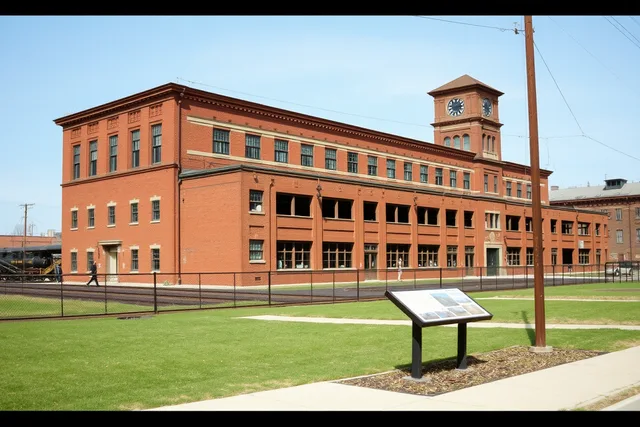
Sloss Furnaces in Birmingham is a city-owned preserved iron works. Pullman National Monument is a National Park Service unit on a former company town. Britannia Mine Museum in British Columbia runs a preserved concentrator and an underground train. The Big Three automakers still run plants that occasionally open limited public tours.
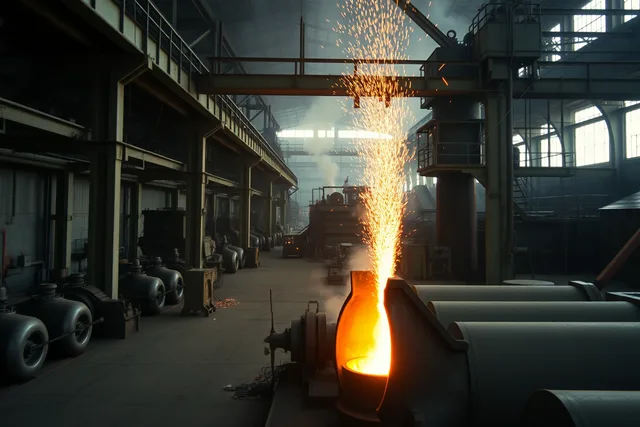
Those four formats produce four different answers to the same question: who decides where a visitor may stand? A preserved furnace site can route you through the casting shed. A live assembly plant routes you along a marked walkway behind a barrier. The rule comes from the operator, not from the category.
Start with the site's own visitor page, or its booking line if tours are ticketed. If the property is a National Park Service unit, the park safety page is the controlling document. Steamtown National Historic Site, for example, publishes site-specific safety direction covering designated pathways and track rules.
Confirm the day is actually open
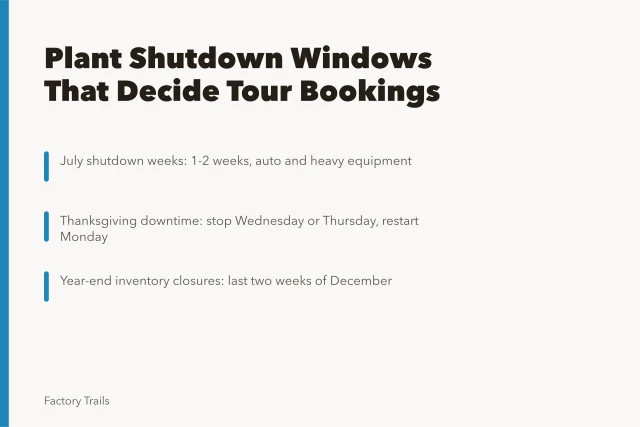
Industrial sites close for reasons a general travel calendar will not show. Annual maintenance, a furnace reline, a rail shutdown, or a film crew can take a route offline for a week.
Check the operator's own notices, then cross-check current visitor conditions for anything weather or access related. If the site runs a booking line, call it. A tour booked against a shutdown calendar is the most common failure in this sector.
Match the plan to the site's format
| Site format | What to confirm |
|---|---|
| Preserved plant, static | Public route, stair and lift access, photography rules |
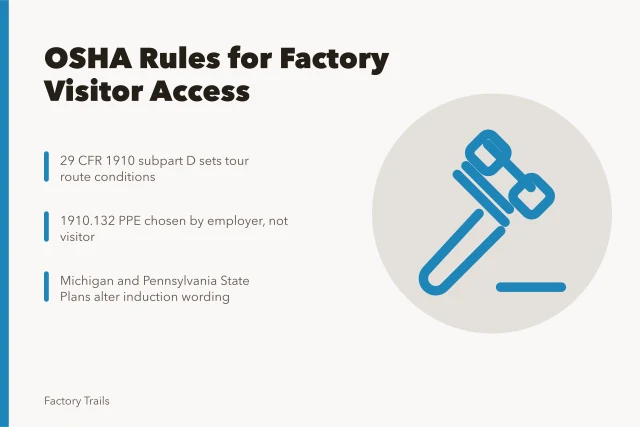
| Working plant, live production | Induction, PPE supplied on site, escort ratio, barrier lines |
| Museum with underground or rail element | Headroom, footwear, noise, tour departure times |
| Mixed site, part working | Which buildings are open and which are fenced |
Ask the site directly about noise, stairs, and route length. Accessibility statements and a medical professional answer mobility questions; a checklist cannot.
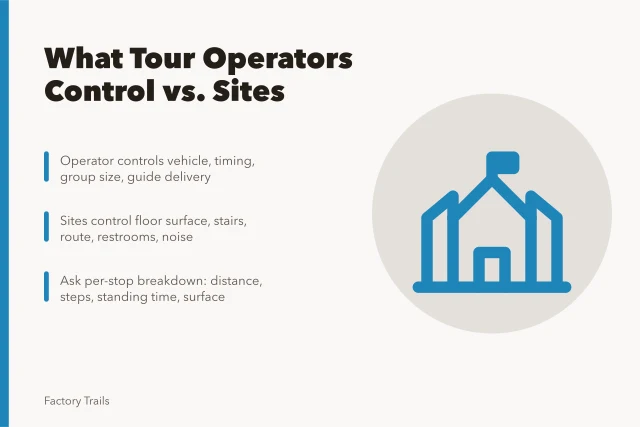
Group size and escort ratios are set by the operator. A typical range for guided industrial tours is one escort per 10 to 15 visitors. Live production areas sometimes require one escort per 5. Confirm the ratio and the group cap in writing before you book.
Cost lines: scope, do not guess
Guide fees, coach hire, and group insurance vary by operator, season, and group size. Write the arithmetic with your own figures: (guide day rate x days) + (coach rate x days) + insurance premium + contingency. Where a figure matters and you do not have it, ask the operator in writing and keep the reply.
Do not carry a price from a previous year into a new plan. Stale cost notes are the second most common failure.
Keep the visit plan current
A visit note earns its keep when it names the source, the date, and the claim on one page, then records any later correction. The National Archives records-management basics and the National Park Service Museum Handbook are the reference standards if you need them.
Keep archival and interpretive material separate from live access instructions. On the day, posted directions and staff instructions override the note.
One-page plan template
Copy this into your plan before you travel:
- Site:
- Authority:
- Date checked:
- Contact route:
- Fallback:
- Group size and escort ratio:
Filled example: Site: Sloss Furnaces, Birmingham. Authority: City of Birmingham. Date checked: 2026-06-02. Contact route: the contact form on the visitor page at slossfurnaces.com. Fallback: if the casting shed route closes, meet at the main entrance and call the number posted on the visitor page.
Final check before sharing
- The public entrance is named, not inferred from a nearby address.
- One person holds the current visitor information and the operator's contact number.
- Every group member knows the turn-around time and the public fallback.
- The plan does not require crossing tracks, fences, work areas, or private land.
- A changed condition has a written response, not an improvised workaround.
Save it where the group can read it without a signal. Review it at the meeting point, then follow the latest posted directions.
If the route changes during the day, record only what staff or a published notice confirms. A personal workaround is not a recommendation.
Common questions
Who sets the safety rules at an industrial heritage site?
The operating authority does: the park superintendent, the museum's safety officer, or the company that runs the plant. Their published visitor rules and on-site staff instructions are the controlling version. Confirm with them, not with a travel article.
Can an old map or a previous trip confirm the route?
No. Routes, closures, and photography permissions change with maintenance schedules and staffing. Use the operator's current directions and the safety questions worth asking before you book as your starting point.
What if the group arrives and the route is closed?
Use the fallback you agreed before departure and record what the notice said. Arrival logistics at these sites are covered in our visitor arrival notes.
Should I report a possible hazard?
If it is safe to do so, use the site's published contact process from a public location. Do not enter a restricted area to confirm a hazard yourself.