Guides
Part of Industrial heritage travel fundamentals: how to plan a visit that holds up
Before you go: a checklist for industrial heritage travel
Industrial heritage travel checklist for 2027 gives U.S. readers a clear pre-trip review for direct sources, visitor information, history, and access limits.
Industrial heritage travel checklist for 2027 helps readers prepare a thoughtful visit to a U.S. industrial history site, district, museum, trail, or archive. It is a research and access checklist, not a route plan or a promise that a historic property is open.
What to take away
- Start with the responsible site's current visitor information.
- Keep historical records separate from access and program details.
- Treat public visitor areas and private or active industrial property differently.
- Build a backup learning option for changed plans. For example, the Smithsonian's National Museum of American History, the Library of Congress's Historic American Engineering Record, or an NPS museum collection.
Pre-trip checklist
| Check | Details |
|---|---|
| Site name | Official name and published visitor source |
| Current details | Hours, tickets, tours, closures, notices; check on a direct page |
| Historical context | Museum, archive, heritage organization, or public record explains why the place matters |
| Access limits | Public visitor area, view, or record only; note which type |
| Backup | Smithsonian's National Museum of American History, Library of Congress's Historic American Engineering Record, or an NPS museum collection |
| Media credit | Direct catalog credit for any image used in a trip note |
| Source card | Research question; historic source; current source; date checked; limit; backup |
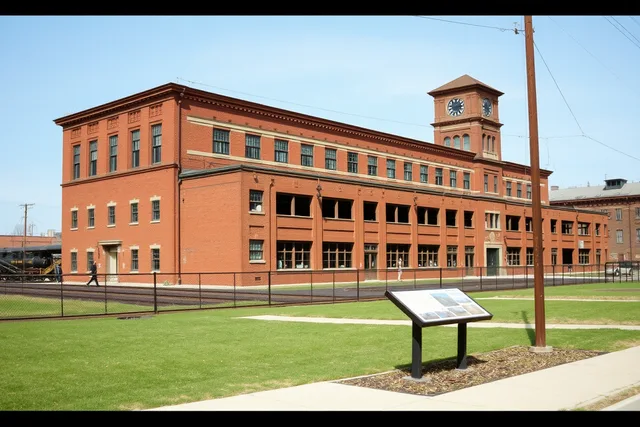
Steamtown National Historic Site's current visitor page distinguishes among open facilities, a closed theater, and seasonal ticketed train rides. Review Steamtown's current basic visitor information. The example shows why a guide should link to a specific, current visitor page rather than infer present access from historic interest or an old travel article.
Many industrial heritage sites release tour tickets on a rolling basis, often 30 to 90 days ahead. Seasonal train rides and factory tours may sell out weeks in advance. Check the site's ticketing page for release dates.
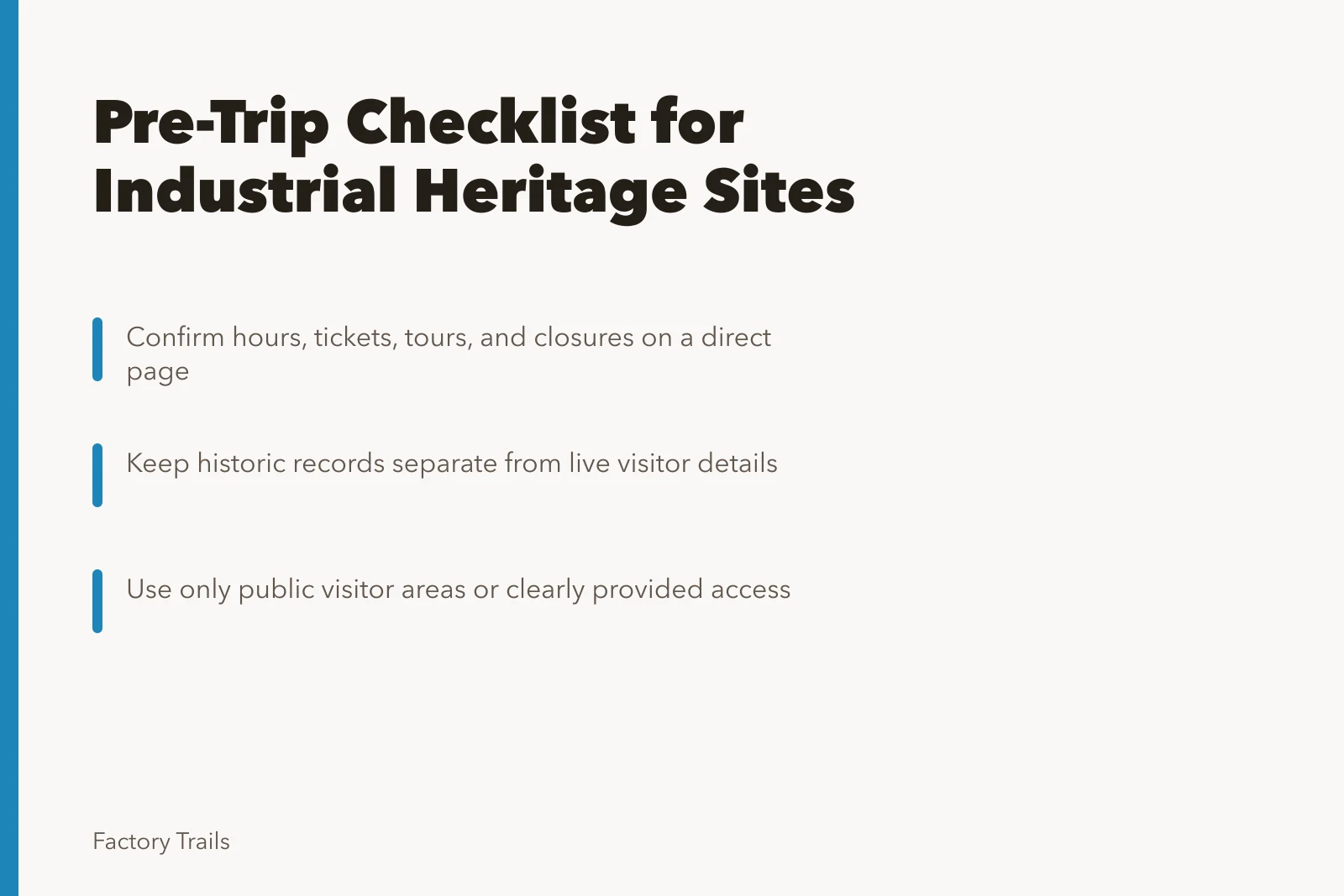
Pre-trip checklist
- Identify the place
- Confirm current details
- Read historical context
- Note access limits
- Set a backup
- Credit media
Make a basic source card
Give the primary stop one short record before you arrange travel. It keeps historical material and practical information from being confused later.
The fields to record appear in the printable checklist above.
The National Archives describes records-management fundamentals. A source card applies that principle in miniature: preserve enough information for a later reader to find the page and understand why it was used.
Keep plans respectful and flexible
An industrial setting can include active work, homes, private property, and sensitive cultural history. Use only public visitor areas or places where access is clearly provided. If a site is closed, private, or unclear, shift to its public record, a museum collection, or a designated nearby resource instead of assuming entry is appropriate.
Active industrial sites may have uneven floors, noise, heat, or restricted areas; check the site's accessibility page and safety rules before you go.
The National Park Service visitor-conditions guidance explains why a last current check is worthwhile. Conditions, repairs, and weather can change a visitor plan without changing the historical value of a place. If a condition changes, revise the active plan and retain the historical research as context.
When a guide lists a tour, restaurant, shop, or local service, verify the exact offering from a direct source and disclose paid material according to the site's policy. A listing is useful when it is factual. It should not claim a business is best, currently available, or endorsed without direct evidence.
Use images as evidence of the past
A historical image can help visitors notice a building, railroad alignment, or industrial setting. Record the catalog number, photographer, date, and collection. Compare the image with later maps or site plans to see what changed. The Library of Congress's Prints and Photographs Online Catalog and the National Park Service Museum Handbook explain how to read those records.
Before leaving, read the source card and checklist once in order. The review should answer four practical questions: where the group will start, what is confirmed, what needs a final check, and which legal public alternative preserves the research question.
If a point remains uncertain, label it plainly instead of treating it as a detail that will resolve itself on arrival.
Common questions
Does a historic factory photo prove a site is open?
No. Use a current responsible visitor source for access, hours, or program information.
What is a good backup for a closed heritage site?
The Smithsonian's National Museum of American History, the Library of Congress's Historic American Engineering Record, or an NPS museum collection can still support the trip's research question.
Can a local business appear in a travel checklist?
Yes, when the description is factual, source-backed, and clearly disclosed if it is paid content.