Reviews
Manufacturing museum safety questions to ask before you compare sites
Manufacturing museum safety questions for 2027 help U.S. sites compare public access, exhibit risks, program boundaries, staff roles, and current notices.
Ask five questions before you compare manufacturing museum sites: what the public can do on your visit date, whether machinery runs, where the public route ends, what protective equipment the site issues, and what the operator confirms in writing. The manufacturing museum fundamentals checklist covers the booking basics that sit under those questions.
What to take away
- The visit date decides the answer. One site can be fully open, partly open or closed inside a single season.
- Name the program, not the town. A visitor center is not a factory floor.
- Settle minimum age, footwear and accessibility before you compare prices.
- Treat any 2027 calendar as unconfirmed until the operator posts it.
Five questions to ask in this order
- What can the public do on the intended date? Ask for the exact activity: self-guided gallery, guided walk, working demonstration, or nothing at all.
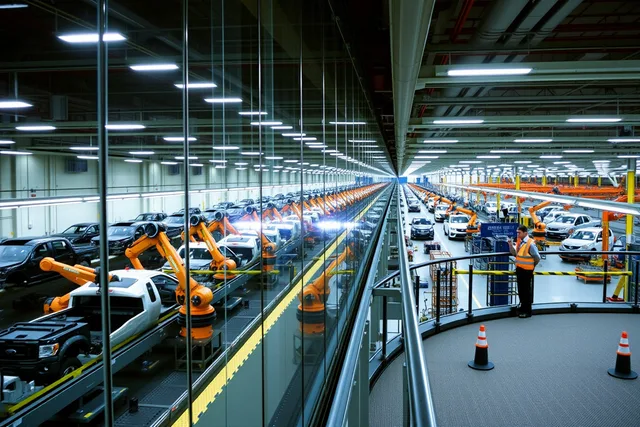
- Does the machinery run? A preserved machine and an operating machine carry different distance and noise rules.
- Where does the public route stop? Ask which rooms, catwalks and mezzanines the group enters, and which stay behind glass.
- What does the site issue? Closed-toe shoes, safety glasses, hearing protection, hard hats, high-visibility vests, or none.
- What confirms this in writing? Ask for the current visit page, a dated confirmation email, or a same-week notice.
Public Experience Safety Questions
- What can a visitor do today?
- Is machinery static or programmed?
- Which path or room is bounded?
- Who approves public message changes?
- What source confirms current condition?
Four sources make the same point: the Smithsonian PEAS pages, the NPS visitor conditions page, the National Archives records-management basics and the NPS Museum Handbook. Record what you checked and the date. History does not prove current access.
Safety criteria to compare on paper
Group caps, staff ratios and per-person costs belong on one sheet, and the factory tour budget checklist shows how to lay it out.
- Occupancy capmaximum visitors per guide and per room, not per day.
- Barriers and markingsrailings, machine guards, painted floor lines, distance from moving parts.
- Staff ratiohow many staff per group, and whether they are trained interpreters or plant operators.
- Minimum agethe floor age, not the recommended age, plus rules for carriers and strollers.
- Accessibilitystep-free routes, seating, hearing loops, and whether the accessible path skips the working floor.
- Protective equipmentOSHA 1910.132, 1910.133 and 1910.136 cover general gear, eye and face protection, and foot protection. Ask who supplies it.
Ask for the answers in writing, with a date.
Named sites and what each one sells
| Site | What the public gets | Check before booking |
|---|---|---|
| Hershey's Chocolate World, Hershey, PA | Visitor center attractions and a simulated factory ride | Which attraction and time slot |
| Sloss Furnaces, Birmingham, AL | Preserved blast furnace grounds, self-guided routes and scheduled programs | Which buildings are open that week |
| Lowell National Historical Park, Lowell, MA | Working textile machinery, ranger tours and seasonal boat tours | Tour times and mill building hours |
| Royal Canadian Mint, Winnipeg, MB | Overhead tour of a working production floor | Booking, security rules and minimum age |
| Royal Canadian Mint, Ottawa, ON | Boutique mint and coin exhibits, no production floor | Which of the two mints you booked |
Chocolate World is a visitor center, and the Hershey plant is not open for public tours, as the Hershey's Chocolate World entry explains. Ask about the attraction you booked, not the factory you pictured.
Sloss Furnaces keeps its blast furnace grounds open for self-guided routes and scheduled programs, and the Alabama industrial heritage guide maps nearby sites worth a second day. Check the furnace's own program calendar before a long drive.
Lowell National Historical Park runs working mill machinery inside its buildings, and the park's official visitor page lists tour times and building hours. Its boat tours are seasonal, so a summer weekend needs an early plan.
The Royal Canadian Mint keeps its two buildings separate, and the visit-the-mint page shows why. Winnipeg tours look down onto a production floor. Ottawa is a boutique with exhibits and no factory view.
Booking windows and the 2027 calendar
Most operators post next-year dates in the first quarter, so a 2026 schedule is not a 2027 confirmation. Federal park sites and private attractions rarely publish on the same timetable. Check both in the same week.
Two booking windows are worth knowing in advance. Lowell boat tours generally run from late spring through early autumn, so a summer visit needs a reservation two to four weeks ahead. Winnipeg summer slots often fill four to eight weeks ahead.
Britannia Mine Museum in British Columbia sells its underground tour by timed slot, and the underground tour booking guide explains what to reserve. Canada is the second market here, with different rules from U.S. park sites.