Guides
Factory tour planning workflow: how to pick a site, confirm access and prepare your group
Planning a factory tour in the United States in 2027: a practical workflow for choosing a site, confirming access, preparing a group, and checking facts.
What to take away
- Work in order. Pick the format, confirm live access, plan the route and buffer, then prepare the group.
- For 2027 group requests, ask two to four months ahead at working plants and check next-year calendars each December and January.
- Confirm access with the operator before you pay for travel.
- Allow 30 to 60 minutes around the advertised start for parking, check-in and briefing.
- Keep a one-page planning cardofficial page, contact, price, tour length, group limit, last check date.
The workflow in five steps
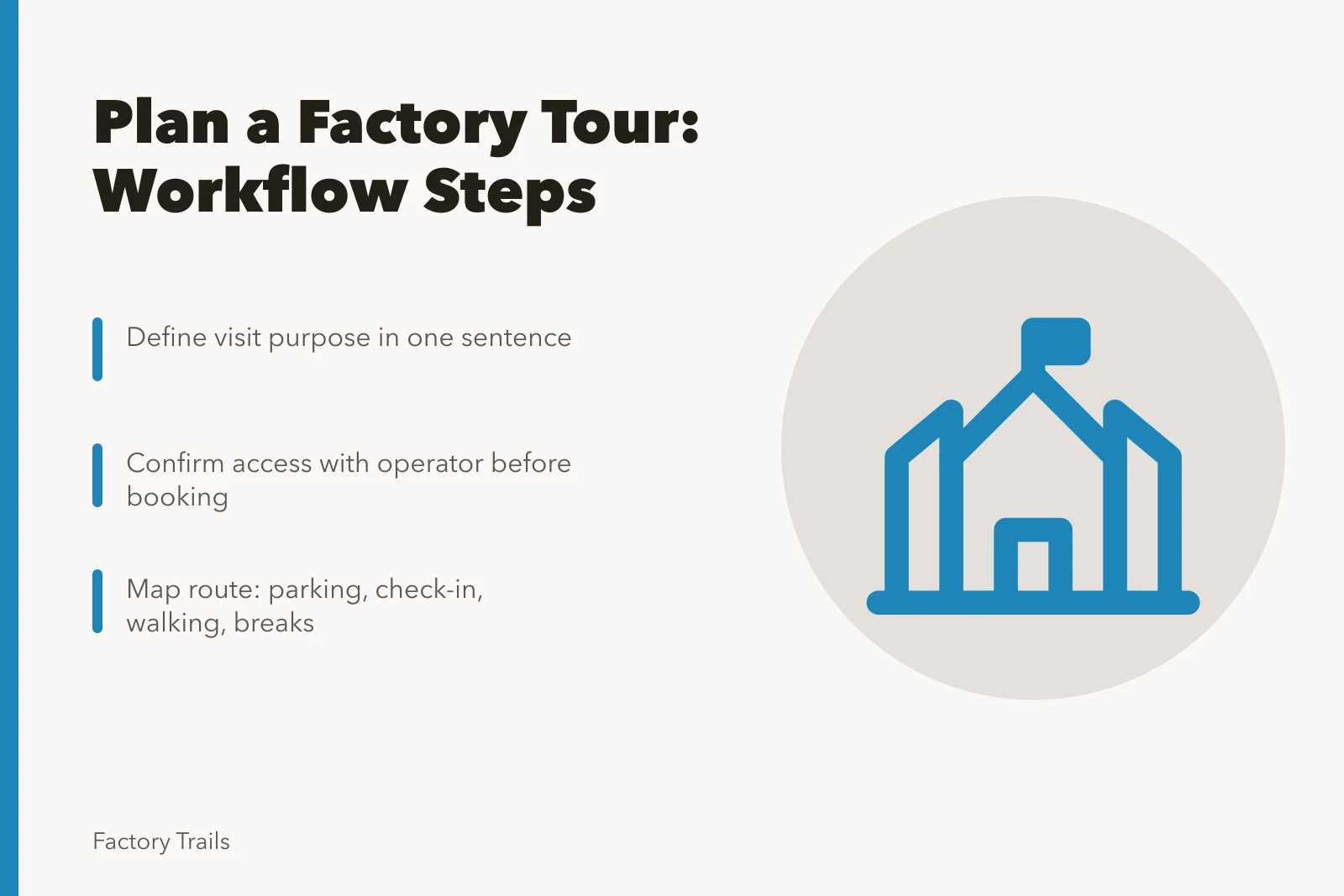
- State the purpose in one sentence. Naming the process you want to see rules out an unrelated site immediately.
- Choose the format. A working plant, a preserved mill, a mine and a heritage district each set different rules.
- Confirm live details with the operatordates, ticket path, group limit and any closure.
- Plan the route, the day's timing and a buffer around the visit.
- Prepare the group with one decision sheet holding the meeting point, a contact number and a backup plan.
Match the tour format to the group
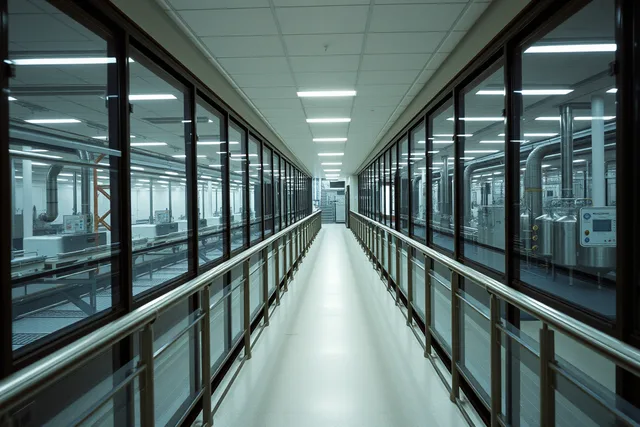
A working factory normally shows a viewing corridor or a limited production area. Confidentiality rules can bar photography and questions about specific processes.
A historic mill or industrial museum leans on preserved equipment and staff interpretation. The industrial site interpretation checklist covers what to review before committing a group's day to that kind of site.
| Format | What the group usually gets | Booking path |
|---|---|---|
| Active factory | Viewing corridor or limited production area, with confidentiality rules | Public affairs or community relations contact |
| Historic mill or museum | Preserved machinery, exhibits, staff-led tours | Site ticket page or front desk |
| Mine or heavy site | Guided route, sometimes underground, gear often required | Timed tickets, seasonal calendar |
| Heritage district | Self-guided streets, markers, occasional interiors | Streets need no booking, interiors often do |
Confirm access and 2027 booking windows
Reservation practice splits by format. Working plants usually take group requests through a public affairs contact, and two to four months of lead time is a sensible target. Museums and parks sell timed tickets online, sometimes only weeks before the date. Those are typical ranges, so the operator's page decides.
Many sites post next-year dates in late fall or early winter. A spring 2027 request sent in February can sit behind school-season blocks. Check the calendar in December and January, then book the travel.
Build a planning card with the official page, contact method, tour length, reservation requirement, price and last check date. Public tours at US plants and heritage sites typically run free to about $30 per person. Custom plant access is a separate purchase, and the factory tour budget checklist covers how to scope those costs.
Planning card fields
- Official visit page
- Location
- Contact method
- Tour length
- Reservation requirement
- Price
- Last check date
Example: Hershey's Chocolate World and Lowell
Hershey's Chocolate World in Pennsylvania draws visitors who expect to watch chocolate being made. The site is a visitor center attraction, and the Wikipedia entry on Chocolate World records that the working Hershey plant is not open for public tours. Groups that want production lines should plan a different stop.
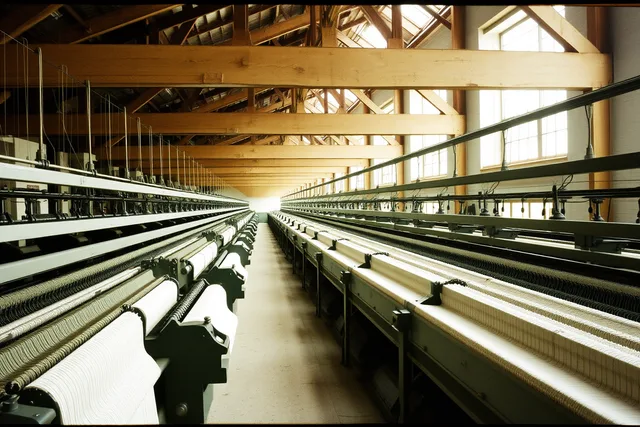
Lowell National Historical Park in Massachusetts runs the other way. It interprets working textile machinery and ranger-led mill tours, and it manages its own dates and capacity. Check the park's history and culture page for what currently operates.
Prepare the group, the route and the gear
Advertised tours at active plants typically run 45 to 90 minutes. The visit is longer. Add 30 to 60 minutes around the start for parking, restrooms, a safety briefing and check-in. Machinery stoppages push tours late, so leave the next hour open.
Time around a 45-minute tour
- BeforeArrival, parking, restrooms
- BeforeSafety briefing and check-in
- TourAdvertised 45-minute tour
- AfterBuffer for traffic or overrun
- Send one decision sheetdate, contact, meeting point, transport, backup plan.
- Name one person to check the operator's notices on the morning of the visit.
- Ask where the group parks, checks in, walks and exits, and whether stairs or uneven surfaces appear.
- Match shoes and bags to the site's rules before the group leaves.
Route questions that go unanswered tend to reappear as problems on the day. The common factory visit mistakes to avoid list covers most of them.
US booking norms: phone, email and ticket platforms
Most US plant tours take an email or phone request rather than online checkout. A short email naming group size, preferred dates and purpose beats a phone message, because public affairs teams answer in writing. Some plants use Eventbrite or a corporate events page for open houses.
Caps are common. Plant tours often hold 10 to 25 people and split larger parties into consecutive slots. Small groups sometimes skip the queue by joining a scheduled open day instead. Government-run sites, including the United States Mint, have changed public tour availability in recent years, so confirm before booking flights.
Canadian groups follow the same sequence with different operators. The Royal Canadian Mint runs production tours in Winnipeg and a smaller boutique visit in Ottawa, both booked through its visit the mint pages. In British Columbia, timed underground tours at Britannia Mine Museum fill early in summer, and the Britannia Mine underground tour guide sets out the booking steps.
Review your plan before you travel
Read your notes the day before departure. Check the ticket confirmation, the meeting point and any notice posted since you booked, then send the group one line with the final details.
If you later write about the visit, separate what you observed from what a guide said and what an official source confirms. Attribute interpretation to the site, and attach a source link to each factual claim you keep.