Guides
Part of Working factory visits compared mainly on whether a company trains its own staff
Working factory visits compared: plants at opposite ends of the energy scale
Two working factory visits, one at a steel mill and one at a small truck assembly plant, show how heat and production sequence shape the tour.
What to take away
- Pair a melting plant with an assembly plant. Heat and sequence are different worlds, and each explains the other.
- Put the hot plant first. Everything after it reads as calm and legible.
- At Ford's Rouge tour in Dearborn, the observation deck over the F-150 line is the whole visit, so book the slot that matches a running shift.
- At Cleveland-Cliffs' Cleveland Works, the scheduled tour follows the melt shop and the caster, not the whole mill.
- Confirm the week of travel whether the line is running. A tour booked against a maintenance shutdown shows you an empty floor.
The strongest two days of plant visiting are not two plants of the same kind. They are the two ends of manufacturing: where energy transforms material, and where parts become a product.
Day one: the melting plant
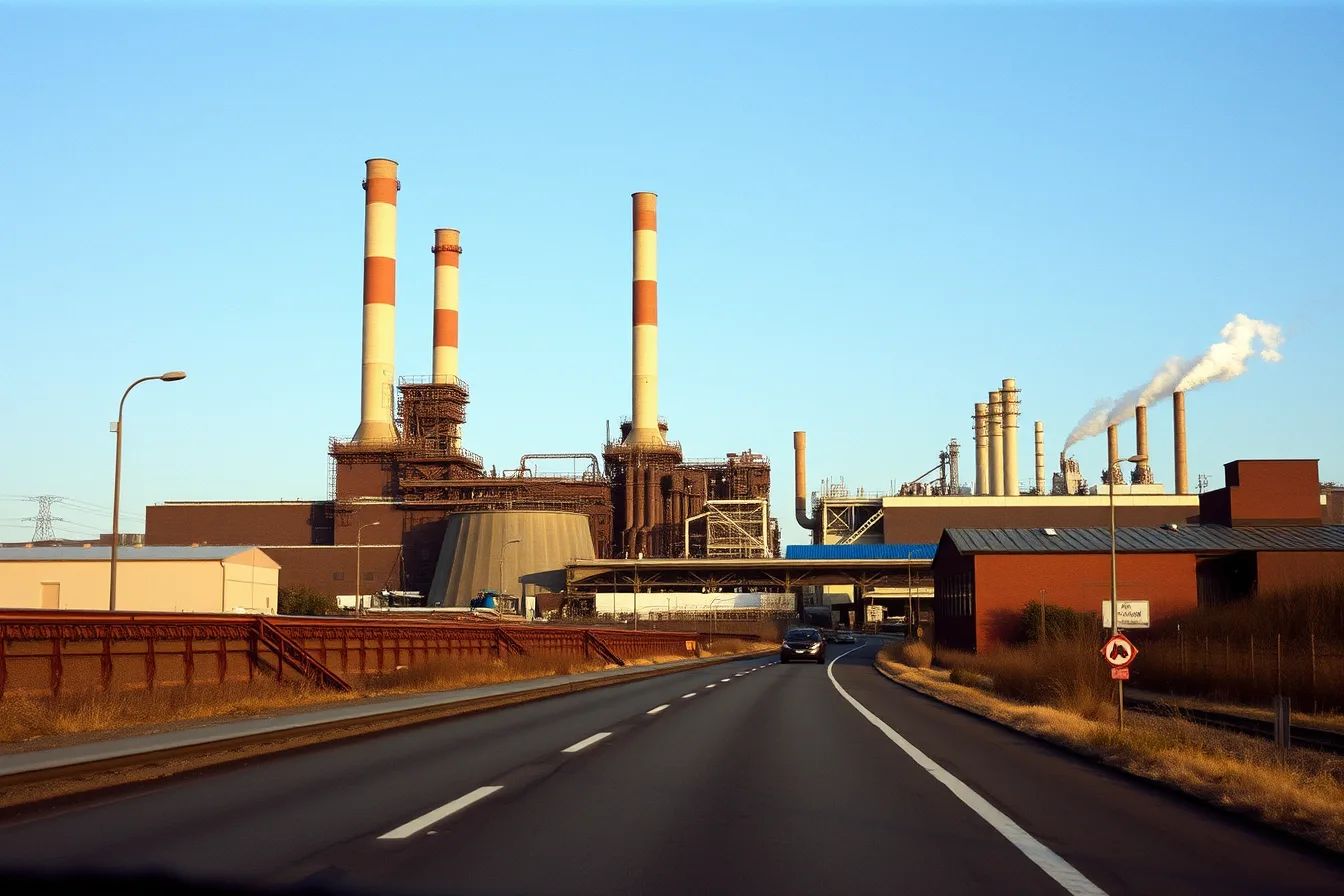
Start with Cleveland-Cliffs' Cleveland Works in Ohio, a working integrated steel mill on the Cuyahoga River. It melts iron and scrap, casts slabs, and rolls them, and the tour covers the melt shop and the caster rather than the whole site.
A blast furnace runs for years between relines. Stopping and restarting costs more than keeping it hot, which explains the shift patterns, the maintenance calendar and the economics in one fact.
The Department of Energy's industrial efficiency work covers the processes behind the most energy-intensive parts of manufacturing. Read it before you stand next to one.
Ask the guide when the furnace last cooled, what a restart costs, and where the waste heat goes. Then rest. A morning in a hot plant is genuinely tiring.
Between the two: read the siting
Spend part of the first afternoon on where the plant sits. Heavy industry locates where water, rail and permits are, and all three are visible from the road.
Drive the district around the Cleveland Works. Look at the stacks, the rail spurs, the water intake, and where housing starts. That half hour explains more about the plant than the visitor center does.
Day two: the assembly plant
Ford's Rouge Complex in Dearborn, Michigan is the counterpart: the same company's F-150 assembly line, viewed from an observation deck above the floor. It is quieter, cooler, and organized around flow rather than heat.
Watch the line balance, the buffers between stations, and how many people do what. Ask what sets the line speed, what the most common stoppage is, and how long a changeover takes.
Ask which standards the truck must meet. The overview of how standards work in the United States describes the voluntary consensus system behind most of them, and on an assembly floor those documents are why half the inspection equipment exists.
Leave the second afternoon open. If the visit goes well you will be offered something extra, and that is the part people remember.
Why the pairing works
Melting plant
- Constraint
- Heat and continuity
- Runs
- Continuously
- Feels
- Loud, hot, elemental
- Key question
- What does a restart cost?
- Named example
- Cleveland-Cliffs Cleveland Works
Assembly plant
- Constraint
- Sequence and balance
- Runs
- In shifts
- Feels
- Quiet, precise, relentless
- Key question
- What sets the line speed?
- Named example
- Ford Rouge Complex, Dearborn
Two days across both teaches more than four plants of one kind, because each explains what the other is not.
Practical notes
Book both weeks ahead and confirm the week of travel. Keep a preserved site in reserve near each: Sloss Furnaces in Birmingham for the melting end, the Ford Piquette Avenue Plant in Detroit for the assembly end.
One plant per day, always. The reasoning is in planning without rushing, and what to look for on the floor is worth reading the night before each visit.
Common questions
What if I can only get one visit?
Take the melting plant. It is the more memorable of the two by a distance, and the one whose process is hardest to picture from photographs.
Is this suitable for children?
The assembly observation deck frequently is. Melting plants usually set a firm minimum age, and the site's own visitor rules are the authority on it.
Can the two days be a week apart?
Yes, and the contrast is sharper when they are close together. A week apart lets the first visit fade before the second.
What if both plants are the same type?
Ask each about the other end of its own supply chain. It partly recovers the contrast, though not the heat.