Reviews
Manufacturing museums options comparison: how to choose the right one
Compare named U.S. manufacturing museums and mill sites for 2027 by what each actually shows, who it suits, and how to check current visitor terms.
What to take away
- No site here is ranked best. Your question picks the winnerscale, labor history, a process explained in sequence, underground work, or a live assembly line.
- Entry is free at the National Park Service units below and at the Sloss Furnaces grounds. Paid sites typically cost about USD 15 to 35 per adult.
- Allow 90 minutes to four hours per site. One anchor plus one complementary stop fills a day.
- A preserved mill and a working plant are different visits. The stronger trips include both.
- Book the working plant first. Its calendar follows production, not tourism.
Six U.S. sites carry most of the manufacturing tourism traffic, and one Canadian site suits trips that cross the border. The public meets this history in five formats: museum collection, preserved mill or factory, guided industrial tour, live demonstration, and public industrial route.
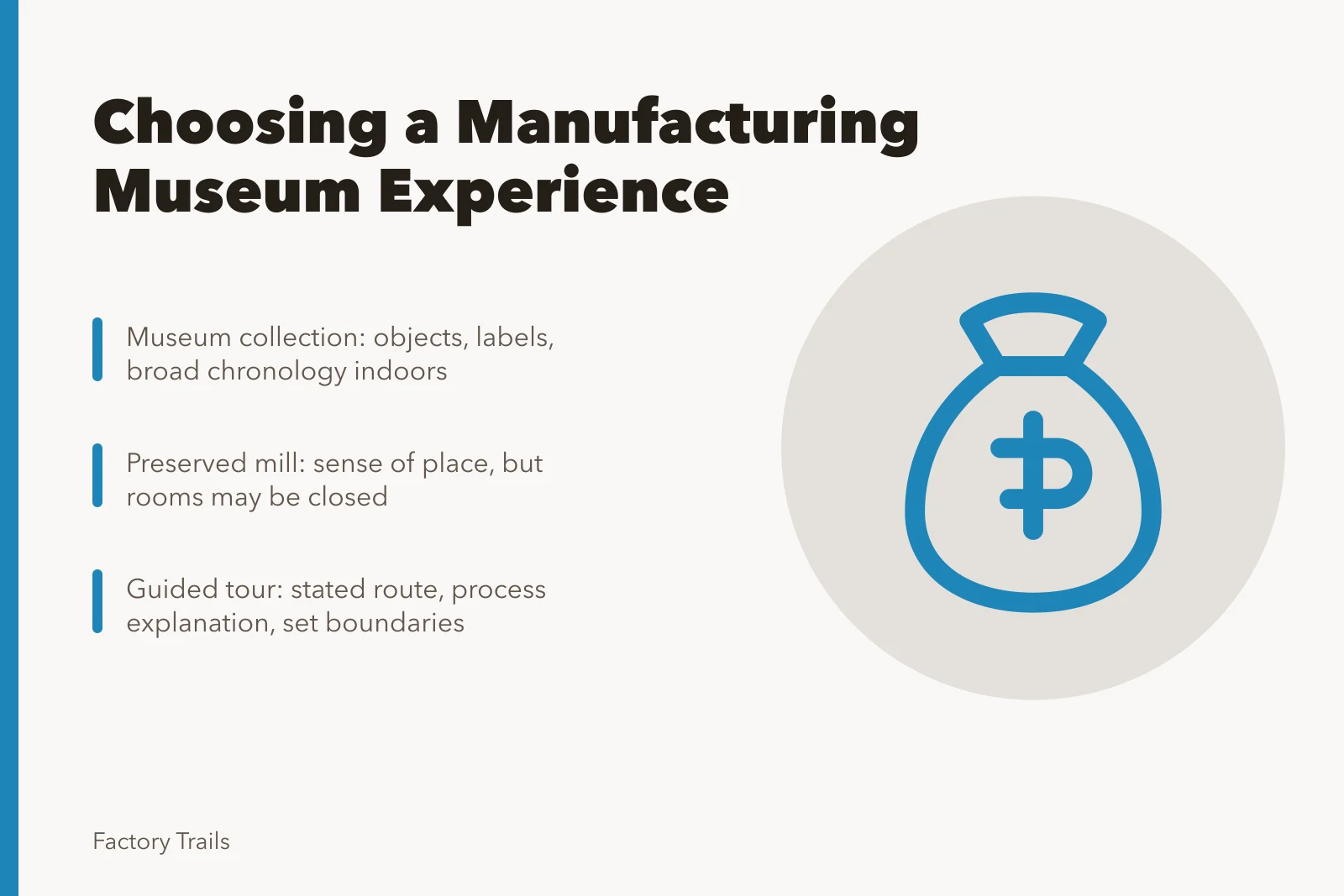
Five formats and their limits
Format
- Museum collection
- Objects, labels, worker stories
- Preserved mill or factory
- Scale, power systems, place
- Guided industrial tour
- Defined route, process explanation
- Live demonstration
- Watching a specific process
- Public industrial route
- Water, rail, housing, town
Best for
- Museum collection
- Machinery runs, all on display
- Preserved mill or factory
- All rooms open, working plant
- Guided industrial tour
- Daily tours, every area entered
- Live demonstration
- Included with admission, year-round
- Public industrial route
- Every building open to public
Do not assume
- Museum collection
- Preserved mill or factory
- Guided industrial tour
- Live demonstration
- Public industrial route
Booking one format while expecting another is the most common planning error.
Six sites, side by side
| Site | Format | Typical visit | Entry | Choose it if |
|---|---|---|---|---|
| Sloss Furnaces, Birmingham, AL | Preserved blast furnace site | 90 minutes to 2 hours | Free grounds | You want scale and pig iron |
| Pullman National Historical Park, Chicago, IL | Company town and factory grounds | 2 to 3 hours | Free | You want labor history |
| Lowell National Historical Park, MA | Textile mill complex with a working weave room | 3 to 4 hours | Free, some programs need booking | You want a process explained in sequence |
| Saugus Iron Works National Historic Site, MA | Reconstruction of an early integrated ironworks | About 90 minutes | Free | You want the earliest American ironmaking |
| Britannia Mine Museum, Britannia Beach, BC | Former copper mine with an underground tunnel tour | About 2 hours | Paid, tunnel tour often separate | You want underground work and ore processing |
| Ford Rouge Factory Tour, Dearborn, MI | Working assembly plant seen from a walkway | About 2 hours | Paid | You want to watch a live line |
Durations are planning estimates for a normal visit, not operator figures. Entry figures are typical adult ranges. The operator's own page holds the price you will pay.
Sloss Furnaces is the scale pick. The furnaces and casting sheds are the exhibit, and the site interprets pig iron and the workers who ran it. Grounds access is free, and guided tours and event access vary. The guide to Alabama's industrial heritage sites covers what else deserves a day in Birmingham.
Pullman covers the company town, the factory grounds and the 1894 strike. Lowell runs a preserved textile mill complex with a working weave room and ranger-led tours. Both are free to enter and both reward half a day.
The Lowell hours page shows how a careful site publishes separate times for a mill museum, a weave-room demonstration, a turbine exhibit and scheduled tours. Pullman publishes its own equivalent.
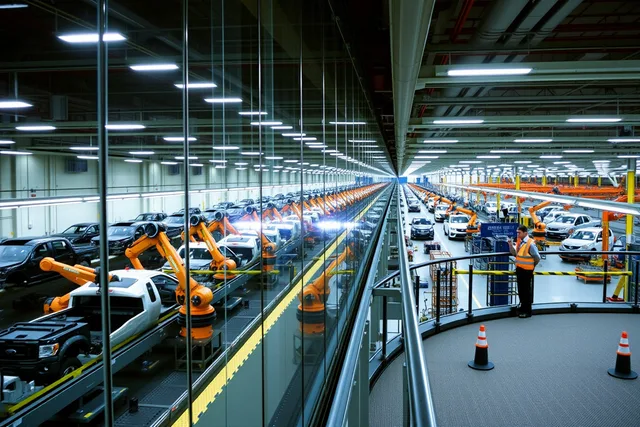
Saugus Iron Works reconstructs the first integrated ironworks in North America, with a blast furnace, forge and rolling mill. Britannia Mine Museum adds an underground tunnel tour and a mill building. Ford's Rouge tour is the working-plant end of the list: a live assembly line seen from an elevated walkway.
Working plant or preserved twin
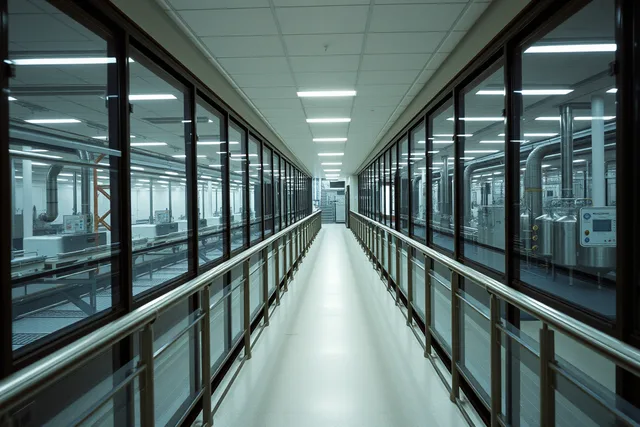
A preserved site shows you what the work was. A working plant shows you what the work is, from behind glass or a walkway, with no floor access.
The two are not interchangeable, and a strong itinerary uses both. Pair a preserved furnace with a working plant and you get the historical arc plus the current process.
Book the working plant first, because its calendar moves with production. The working factory visits guide explains how to plan around a live line and what a shutdown window does to a booking.
How to choose in three steps
- Name your question before you name a site. A visitor asking how cloth was made lands at Lowell. One asking what a blast furnace felt like lands at Sloss.
- Confirm the format and the calendar. Decide whether you are booking a preserved building or a working plant, and whether the tour enters the floor.
- Give one anchor your full time. Add a second stop only when it answers a different question.
If two candidates do the same job, drop one. A striking exterior with no public interior is a photo stop, not an anchor.
Example: a Detroit day built around one question
Example: the question is how a vehicle gets assembled. The Rouge tour becomes the anchor and gets booked first, with its visitor center filling the second hour. A preserved auto heritage site in the region becomes the complement, because it answers the history question a live line cannot.
Costs, booking and 2027 dates
Free entry covers Sloss, Pullman, Lowell and Saugus. Paid sites cluster in a typical USD 15 to 35 adult band, and Canadian sites price in CAD.
The Britannia Mine Museum underground tour booking guide explains how the tunnel tour is sold separately from surface admission, which is normal for underground and live-line products.
For Canada, the Royal Canadian Mint tours page separates the Winnipeg production facility tour from the Ottawa boutique. That is the working-plant versus display-site choice in miniature.
One common confusion: Hershey's Chocolate World is a visitor center, not a working factory, and the plant is not open for public tours. Read the wording before you assume a ticket enters production space.
For 2027, treat every published calendar as a draft. A plant can move from daily to weekly tours, and a restoration closure can swallow a season. Re-check when you book and again the week before travel.