Guides
How to plan industrial heritage travel before you book anything
Industrial heritage travel planning for 2027 gives U.S. visitors a practical method for choosing sites, checking access, building context, and keeping plans current.
What to take away
- Name the site first and check what it actually offers. A famous brand does not mean an open plant.
- Keep historic records and live visitor pages in separate notes.
- Book timed mill, mine and factory-floor tours weeks ahead, and treat walk-in sites as schedule risks.
- Give each day a primary stop and a public fallback that needs no reservation.
- Log the page title, URL and date checked for every practical claim.
Name the sites before you open a booking page
A trip starts with places, not with a booking page. Pick two or three sites that share a theme, then read each site's own visitor page.
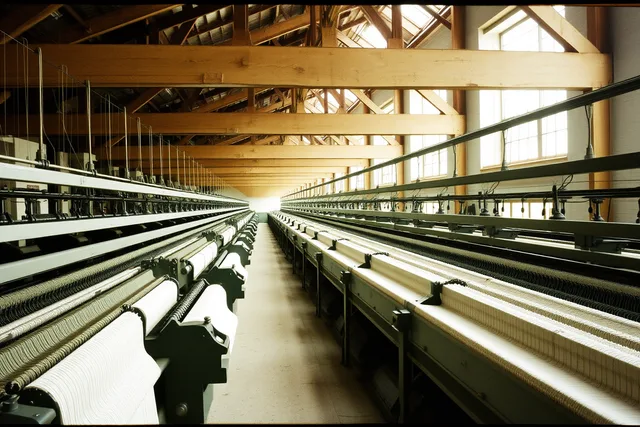
Lowell National Historical Park in Massachusetts runs tours through working textile mill buildings and canal gates. Sloss Furnaces in Birmingham, Alabama keeps a twentieth-century iron blast furnace standing as a National Historic Landmark.
Brand names mislead. Hershey's Chocolate World sits beside the factory in Hershey, Pennsylvania, and it is a visitor center with a ride and shops. The Chocolate World visitor center entry confirms that the working plant runs no public tours.
Canada repeats the pattern. The Royal Canadian Mint runs production tours in Winnipeg and keeps a smaller boutique mint in Ottawa. The Britannia Mine Museum in British Columbia sells an underground train tour that fills early in summer.
If your shortlist keeps growing, this guide to picking an industrial heritage travel provider helps you cut it on tour quality rather than distance.
Three kinds of notes, kept apart
Historic context, live visitor facts and logistics answer different questions. One page for all three invites bad assumptions.
| Note type | What it answers | What it cannot prove |
|---|---|---|
| Historic record | Age, purpose, workforce, technology, change over time | Current hours or access |
| Current visitor page | Hours, tickets, directions, accessibility, closures | Full historical interpretation |
| Local orientation | Food, transit, lodging, public amenities | Permission to cross private land |
Three Kinds of Information
Historic record
- Useful for
- Age, purpose, people, technology
- Not proof of
- Current access or hours
Current visitor page
- Useful for
- Hours, directions, reservations
- Not proof of
- Complete historical interpretation
Local orientation
- Useful for
- Food, transit, lodging
- Not proof of
- Permission to cross private land
The National Park Service heritage documentation guidelines and the NPS Museum Handbook both treat a record as evidence with limits. Copy that habit at trip scale. A measured drawing explains a building's form and says nothing about Saturday opening hours.
Booking lead times and reservation windows
Capacity drives these bookings, not price. Guides are staff and production floors keep their own schedules.
| Stop type | Typical booking window | What to watch |
|---|---|---|
| Timed mill or museum tour | 1 to 3 weeks ahead | Weekdays often keep same-day tickets |
| Underground or factory-floor tour | 3 to 8 weeks ahead | Summer weekends go first |
| Group of 10 people or more | 4 to 10 weeks ahead | Age, footwear and bag rules |
| Federal facility, such as a United States Mint tour | Set release dates, often weeks ahead | Photo ID, screening, no large bags |
| Free site with walk-in entry | No booking | Holiday closures and event days |
Every figure is a typical range, not a quoted policy. Adult admission at industrial museums commonly falls between about $10 and $30, and some landmarks keep grounds free while charging for guided programs.
Watch the calendar rather than the fee. Mint tours in Philadelphia and Denver are free, ticketed and claimed early. Some plants lend safety glasses and closed-toe shoes; OSHA standard 1910.132 covers when employers must provide protective equipment.
For a booking example with the same pattern, read how to book a Britannia Mine Museum underground tour, where season and group size set the release.
Build the plan in three passes
- Story passread enough to name the industry, the period and the local link. Label every note historical.
- Confirmation passopen the current page run by the park, museum or operator. Copy the address, hours, ticket terms, accessibility notes and advisories with the date checked.
- Fallback passchoose a second stop of a different type that needs no reservation and no timed entry.
Three-Pass Trip Planning
- Pass oneestablish the story
- Pass twoconfirm the visit
- Pass threecreate a fallback
Example: two days around a furnace town
Birmingham, Alabama shows the method at work. Sloss Furnaces gives the anchor: public grounds, a preserved blast furnace and guided tours on set days.
Day one stays at Sloss so the timed tour is not rushed. Day two adds a site with a different role and keeps an open slot for a library or archive. One base also cuts driving, which matters when a tour starts at 9 a.m.
The guide to Alabama's industrial heritage sites lists what else in the region earns half a day, so the second morning is not guesswork.
Live access checks and a recheckable record
A historic source can stay accurate while a gate closes. The National Park Service visitor conditions guidance is written for that gap.
Follow an order: current site instructions first, then a public trail, museum, tour or street. Then a research-only alternative. Never cross a fence because an old photograph shows it open.
For each practical claim, log the page title, the URL, the date checked and the claim itself. The National Archives records management basics page explains why a record needs its own context to stay useful. That habit lets you keep the history and refresh only the live details.
Recheck hours, closures and reservations the day before you travel. Save the pages offline. If a stop falls through, keep the question and swap the site. Groups heading onto a working floor should read these mistake prevention fixes for working factory visits first.