Guides
Manufacturing museums safety checklist: what to review before your next season
Manufacturing museum safety checklist for 2027 helps U.S. sites align visitor access, collection protection, risk records, emergency readiness, and updates.
What to take away
- Run a full safety review four to six weeks before opening day, then repeat it after any change to a barrier, route or program.
- Anchor each check in a named frameworkOSHA 1910.132, 1910.133 and 1910.136 for protective equipment, ADA for routes, NFPA 101 for exits.
- Collections and historic fabric sit under American Alliance of Museums ethics guidance and your state historic preservation office.
- Keep one record per checkdate, location, observing role, approved fix, and the public wording.
- Publish no access, demonstration or hands-on claim that a current site source has not confirmed.
Which U.S. framework governs each check
A season review is four overlapping duties, not one inspection. Each duty has a named anchor you can cite in your own records.
| Duty | Named anchor | What gets reviewed |
|---|---|---|
| Staff and demonstration PPE | OSHA 1910.132, 1910.133, 1910.136 | Who supplies eye, face and foot protection, and when it is worn |
| Public route and access | ADA Standards for Accessible Design | Clear width, ramps, signs, and the alternative route |
| Egress and visitor load | NFPA 101 Life Safety Code | Exit paths, barrier placement, and capacity per program |
| Collections and historic fabric | AAM ethics guidance, state historic preservation office | Case protection, handling rules, approval for physical change |
The OSHA general PPE standard sets out when an employer must supply protective equipment. That duty covers interpreters who run live demonstrations, not only maintenance crews.
Most manufacturing museums inherit a building, not a purpose-built gallery. Route width and exit paths are often fixed by the original structure, which is why the review starts there.
Build the pre-season review in five steps
- Set the date. Four to six weeks before opening day works, while staff rosters and group bookings are still open.
- Walk the public route end to end with the facilities log in hand, from the ticket desk to the last barrier.
- Compare the floor against every public descriptionwebsite, printed map, on-site sign, and staff briefing.
- Log each finding with its date, location, observing role, and the approved fix.
- Take a sign-off from the role that owns the fix, then set the next review date.
Risk Response Path
- Observe risk: loose railing, water, blocked exit, damaged barrier, hazard
- Record resource, location, observation, possible public effect, receiver
- Assess before diagnosing: do not guess cause
- Prioritize people: close unsafe area if needed
- Follow approved procedure and communicate confirmed boundary
- Avoid reopening claims until responsible authority confirms
Re-run the sequence after any barrier, route or program change, after an incident or near miss, and at least once a year. A maintenance plan for U.S. factory tour sites can carry those findings into scheduled work instead of leaving them in a notebook.
Sample review record for one public area
One record per area is enough if it holds eight fields. Keep job titles, not personal names.
Field / What goes in it
- Area
- Public area name and the route segment it sits on
- Date checked
- Day, month and year, plus who walked it
- Observing role
- Job title of the person who found it
- Observation
- What was seen, where, and under what conditions
- Public effect
- What a visitor would notice or need to know
- Approved wording
- The exact sentence cleared for the website and signs
- Fix owner
- The role that owns the correction
- Next review
- Date or trigger that brings the area back
Public Area Safety Checklist
- Public boundaryentry points, approved routes, barriers, restricted areas
- Visitor conditionscurrent hours, program terms, weather or capacity limits
- Physical conditionslip, trip, water, lighting, structural concerns via reporting path
- Collection protectioncases, labels, handling rules, visitor separation current
- Machinery statusstatic, demonstrated under approved conditions, or unavailable
- Communicationsignage, website notice, staff briefing, review date
- Escalationrole or authority receiving a safety concern
Example: a barrier change at the loom exhibit
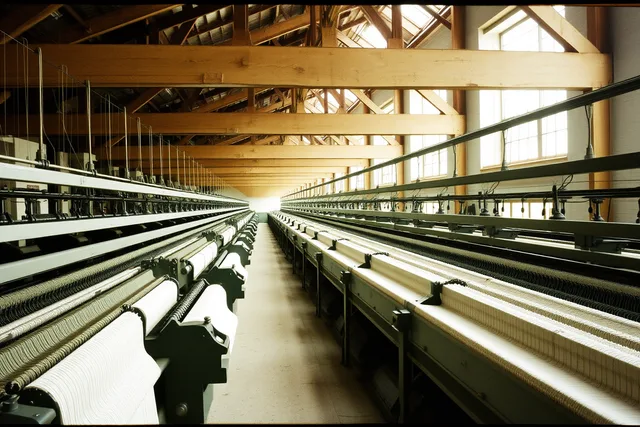
An interpreter reports that visitors' bags brush the frame of a working loom during demonstrations. Write the record before anything moves.
- Recordarea, date, observer role, and the observation as seen.
- Fixthe rope line moves back along the aisle, and facilities signs off on the new position.
- Public wording"Loom demonstrations run at 11 a.m. and 2 p.m. The rope line marks the viewing distance."
- Accessibilitythe new line narrows the aisle below the 36-inch minimum clear width in the ADA Standards, so the accessible route shifts to the parallel corridor and the map is redrawn.
Where a change also alters interpretation, choosing an industrial site interpretation provider covers how to brief whoever rewrites the label and the map.
Write the visitor notice before the change goes live
A public notice needs four things: what is open, what changed, where to get current information, and when the notice will be reviewed. Keep internal security and emergency response detail out.
The National Archives records-management basics explain why decisions are stored with their context. File the approved wording with the date and the source behind it.
The NPS Museum Handbook keeps collection history and current visitor conditions in separate records. Follow that split, so a 1912 loom's history never doubles as a claim about today's access.
A temporary closure that stays on the website after reopening is a credibility problem as well as a visitor-service failure. Set the review date when you publish.
Travelers plan around the same boundary. The factory tour safety checklist for U.S. visitors shows what a visitor can reasonably confirm before booking a trip.