Guides
Industrial tour booking mistakes and the question that prevents each
Five common booking mistakes with industrial tours, the question that prevents each, and a first-visit routine built on public safety records and the operator's own pages.
What to take away
- Do not pay a deposit until the host has told you the route, the stops and the space type in writing.
- Pay by credit card where you can. The Federal Trade Commission describes a billing dispute process for charges for items not delivered as agreed.
- Capacity is set per date and per group. A reply that fitted ten people does not cover thirty.
- Access starts at the car park, not at the factory door. Ask about the whole path.
- A restriction is information, not a failure. Lowell runs a weave room where not every loom is working, and the Royal Canadian Mint says live coin production is not guaranteed on a tour.
- Read the public record before you gothe operator's own pages and, for a working plant, OSHA's inspection data.
Mistake 1: Paying before the visit has a shape
The costly error is paying before anyone has said what the group will see. A deposit buys a place in a process, not a defined experience.
The question that prevents it: "Which stops are on the route, in what order, and in what kind of space: working production, demonstration, or visitor center?"
Look for stop names, minutes and a space type. A line such as "a full behind-the-scenes experience" is a sales phrase, not a route. The working factory visit questions give the full ten-question set to send with the booking request.
On payment, the Federal Trade Commission's guide to using credit cards and disputing charges lists charges for items "not delivered as agreed" among billing errors. It says the issuer must receive your written notice within 60 days after the first bill with the error was sent. Quality disputes have extra conditions, including that you tried to settle with the seller first. Keep the confirmation email, because it is your evidence of what was agreed. Ask your card issuer how its own rules apply to a tour deposit.
Mistake 2: Treating capacity as permanent
Group size, dates and equipment change, and so does what a host can handle. A plan confirmed for ten people on one date says nothing about thirty on another.
The question that prevents it: "Is this route confirmed for our headcount and our date, and what changes if the number goes up?"
Published terms show how much sites differ:
- Hershey's Chocolate World asks for group requests three weeks ahead, sets a 20-person threshold for group bundles, and says the request form does not confirm a reservation.
- The Britannia Mine Museum in British Columbia applies group pricing from ten people and asks for reservations at least 24 hours ahead.
- The Royal Canadian Mint's guided tours page says extra time is available for larger groups.
Three sites, three different rules. None publishes a universal standard, so ask each one. If your group changes, send the new number in writing and wait for a written reply. Check the calendar too: plant shutdown weeks can remove a whole route, as explained in the guide to U.S. plant shutdowns.
For outdoor or underground routes, add: "What happens in bad weather, and who decides?"
Mistake 3: Stopping the access check at the factory door
A step-free route inside the building does not prove the visit works for every guest. The journey from arrival to the first stop matters as well.
The question that prevents it: "Describe the path from the drop-off point to the first stop, including steps, doors, ramps and any lift."
The U.S. Access Board explains that an accessible route is built from walking surfaces, doorways, ramps, curb ramps and elevators, and that it must connect site arrival points to each accessible entrance. That gives you the vocabulary to ask precisely.
Real sites show why you ask. Hershey's Chocolate World FAQ says boarding the Chocolate Tour ride means crossing a moving turntable, and guests in motorized wheelchairs or specialized strollers must transfer to a manual wheelchair for the ride. The Britannia Mine Museum's visit FAQ says it takes 48 steps up to where the train departs. Neither is a flaw to hide. Both are facts a group needs before arrival. For a wider treatment, see the accessible options guide.
Mistake 4: Booking a famous name without checking the format
A recognised brand does not tell you whether visitors enter a working plant, a demonstration space or an attraction.
The question that prevents it: "Is this a working production area, a demonstration, or a visitor center, and what will be running on our date?"
Three examples from the operators' own pages:
| Site | What the operator says | What it means for booking |
|---|---|---|
| Hershey's Chocolate World | The Chocolate World FAQ describes a free ride, and says nothing about a walk-through of the working plant. | The name does not mean a factory floor visit. |
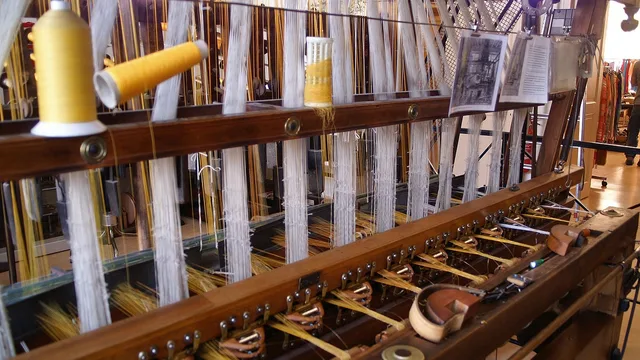
| Lowell National Historical Park | The weave room FAQ says the room is a museum exhibit, not a production mill. | You see historic working looms, not commercial production. |
| Royal Canadian Mint | Ottawa and Winnipeg both run 45-minute guided tours that include a look at the production floor. | Same format at both sites, with live production not guaranteed. |
Match the format to your purpose. If the group wants to see production, a heritage demonstration will disappoint. If the group wants history, a plant tour may offer less. The Hershey comparison and the Royal Canadian Mint guide go deeper on each.
Mistake 5: Calling a restriction a failure
A closed area does not make a visit worthless. Walking away at the first restriction can discard a good tour. Missing the restriction until you arrive is worse.
The question that prevents it: "Which area could be unavailable, why, and what is the approved alternative for our slot?"
The Mint states that, because production schedules fluctuate, not every tour is guaranteed to see live coin production. Lowell's FAQ says some looms in the weave room are not running. These are honest statements. A site that publishes them is easier to plan around than one that promises everything.
Get the answer in the form of a name, a role and a time:
- Which stop is at risk, and what usually causes it (production, maintenance, weather)?
- Who approves the substitute?
- How will guests be told, by whom, and by when?
- Is the substitute available on the same day and for the same headcount?
If the alternative is a talk in a room in place of a floor visit, decide in advance whether the group accepts it. The host should also tell you what safety rules apply, which the safety questions guide covers in order.
First-visit habits that cost nothing
Three habits turn a first visit into a better one.
Read the public record. OSHA publishes inspection and citation data, including a searchable Establishment Search. A working plant's history is public. Treat it as context, not a verdict. An old finding says little about today, and it is not something to raise with a guide as an accusation. It simply produces better questions: what has changed, and what are you proud of now. Some states run their own approved safety programs, which OSHA says must be at least as effective as its own, so a state agency may hold records too.
Understand the shift pattern. Whether a line is running depends on which shift is working. Ask the host: "Which shifts run during our slot, and are the lines you will show us running then?" Plants differ, and no single public schedule applies to all of them. Editorial suggestion: choose a slot when the host confirms the line is running, and ask for it in the same email as the route.
Record what you learned. Editorial suggestion: notes on process, surprises and open questions are often more useful than photographs, and some hosts limit photography, so ask before the visit. Write the notes between stops, not in the evening. Afterward, send the operator a short note on what worked. If something was wrong, raise it with the host in writing first.
For a standing list of operators and red flags, see the 2027 operator watchlist. For the rules that decide who gets in, see OSHA rules for visitor access on working floors.
Sources
- Visit FAQs, Britannia Mine Museum