Guides
Industrial heritage travel: regional adaptation guide for 2027
Industrial heritage regional guide for 2027 helps U.S. visitors connect industry, communities, and transport without confusing historical context with access.
Plan a 2027 industrial heritage trip in three layers: one region, one orientation stop that explains the system, and one companion stop that adds different evidence. Lowell, Massachusetts shows the pattern. The national park visitor center explains the water-powered mill system; a mill exhibit adds the working detail. Confirm every visit against the operator's current page.
What to take away
- Pick a region by the system it explains, such as water, rail, coal or ore, rather than by one famous building.
- Use a heritage area plan or a museum for context, and the operator's current page for hours, tours and access. A designation does not mean a site is open.
- One orientation stop plus one companion stop fills a day in most regions.
- Re-check schedules 2 to 4 weeks out, then again 24 to 48 hours before travel.
Pick a region, then an anchor stop
Regions are defined by a system: a river valley, a canal corridor, a coalfield or an ore range. The system tells you which stops belong together. Choose the anchor stop first, because it sets the map for everything else.
| Region | Anchor stop | What it explains | Typical travel |
|---|---|---|---|
| Merrimack Valley, Massachusetts | Lowell National Historical Park visitor center, canal boat, trolley | Water-powered cotton mills and mill housing | Stops 10 to 15 minutes apart on foot |
| Blackstone Valley, Rhode Island and Massachusetts | Slater Mill and the river corridor | The first U.S. cotton mill and its canal | 20 to 40 minutes by car between villages |
| Birmingham, Alabama | Sloss Furnaces National Historic Landmark | Iron and steel production, company labor | 5 to 10 minutes by car from downtown |
| Pittsburgh, Pennsylvania | Rivers of Steel sites, including Carrie Blast Furnaces | Steel, rivers, immigrant neighborhoods | Seasonal guided tours, 20 to 30 minutes between sites |
Travel times above are planning ranges, not posted schedules. Mill towns are usually walkable; steel and mining sites are drive-to. The regional factory tour plan guide shows how to compare regional plans before you commit to one.
Match the question to the source
Context and current access come from different documents. A heritage area management plan sets out long-range goals and interpretation, as the National Park Service heritage area management plans page explains. It will not tell you whether a gate opens on a Tuesday in October.
Question / Source that answers it
- How does the region frame its story?
- The heritage area management plan
- Is this site open today?
- The site's own current visitor page
- What does a building or tool record show?
- Archives and museum collection records
- Who runs a program right now?
- The local organization's current page
Keep one line per claim: source, date checked, and what it supports. The regional industrial interpretation checklist turns that habit into a form you can reuse each season.
Match source type to use
Source type
- Heritage-area plan
- Themes, partners, interpretation
- Historic record
- Earlier industry and change
- Current visitor page
- Hours, rules, parking
- Local organization page
- Community context, programs
Regional use
- Heritage-area plan
- Current entry or route
- Historic record
- Present ownership or condition
- Current visitor page
- Complete regional history
- Local organization page
- Permission beyond stated offer
Do not use it for
- Heritage-area plan
- Historic record
- Current visitor page
- Local organization page
Example: one anchor plus one companion
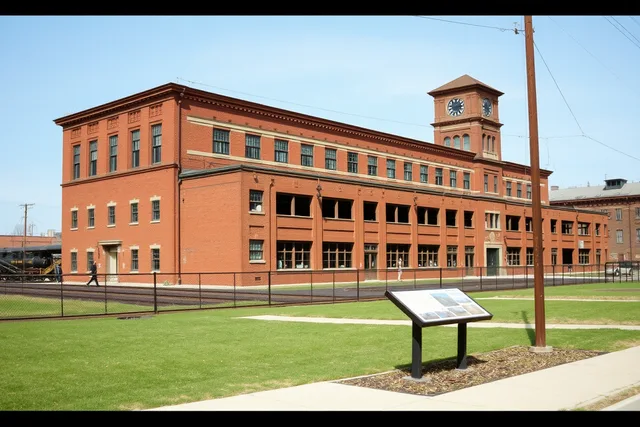
Lowell, Massachusetts works as a worked example of the layered day.
- Confirm the visitor center's current hours and any ticketed boat or trolley times.
- Visit the orientation stop first for the map of the mill system.
- Add one companion experience that answers a different question, such as worker housing or canal engineering.
- Check travel time between actual public entrances, not map centers.
- Hold a fallback in the same story, such as a library collection or a designated trail.
The sequence survives closures. If the companion stop shuts, the fallback keeps the question alive. For a region with more sites than a day can hold, the Alabama industrial heritage sites guide compares Sloss Furnaces with nearby stops.
Layer a regional itinerary
- Choose one orientation point first
- Add one companion experience
- Change the scale of the story
- Skip every county and remnant
- Keep stops few and selected
Format follows current local information
The right format depends on what is open now. A canal corridor suits a designated path; a mill town suits a museum. A working plant suits an authorized tour, if one exists at all.
Hershey's Chocolate World is a visitor center rather than a factory floor, as the Wikipedia entry on the attraction records. Book the format the operator currently offers, not the one the history implies. Plants that admit visitors often require closed shoes and safety glasses.
Booking calendar and what to re-check
Few 2027 schedules exist a year out. Treat any 2027 date you find now as provisional unless the operator posts it. Seasonal sites often publish next-season hours in late winter or early spring, and guided industrial tours usually release dates a few months ahead.
Costs vary by format. Public parks and self-guided walking routes are often free. Guided canal, underground and production-floor tours typically run about 20 to 45 US dollars per adult when a fee applies. The factory tour budget checklist covers the line items people forget, including parking and per-person fees.
Re-check twice: 2 to 4 weeks before you book travel, and 24 to 48 hours before arrival. The National Park Service current conditions guidance explains why closures, construction and seasonal operations need a fresh look.