Guides
Factory tour budgeting fundamentals: what to put in your 2027 scope checklist
Factory tour budget checklist for 2027 helps U.S. operators define routes, staff time, safety, access, equipment, visitor communications, and a pilot review.
Use this checklist before approving a factory-tour budget. It turns a broad idea into a defined visitor operation, so the estimate covers the work that actually makes a tour possible.
What to take away
- Define the permitted route before requesting prices.
- Separate one-time setup from work repeated for every tour.
- Leave room for a pilot and post-pilot corrections.
2027 scope checklist: what to record before pricing
| Check | Record before budgeting |
|---|---|
| Audience | Public, school, trade, employee family, or invited group |
| Capacity | Maximum group size and the number of groups each day |
| Route | Start, stops, stairs, crossings, exits, excluded areas, and backup route |
| Purpose | Education, community access, recruitment, sales, preservation, or another stated goal |
| Operating calendar | Regular season, blackout dates, weather limits, and production conflicts |
| Ownership | Named leads for operations, safety, security, guiding, booking, and public updates |
Do not use a generic "tour expenses" line. List the work by owner: route planning, safety review, signs or barriers, guest communication, guide training, reservation tools, accessibility review, cleaning, reset, and follow-up. If an existing employee will take on the work, record the hours and what they will no longer be doing during a tour.
Tour Scope Checklist
- Audiencepublic, school, trade, family
- Capacitymax group size, groups per day
- Routestart, stops, stairs, exits, backup
- Purposeeducation, community, recruitment, sales
- Operating calendarseason, blackouts, weather
- Ownershipnamed leads for each function
Setup versus per-tour planning ranges
| Cost item | Setup (one-time) | Per tour |
|---|---|---|
| Route planning and safety review | 20 to 60 staff hours, typical | 1 to 3 staff hours for checks and changes |
| Signs, barriers, and printed materials | $500 to $3,000, typical, quoted by vendor | $0 to $50 for replacement or reset, typical |
| Guide training | 8 to 24 staff hours, typical | 2 to 6 staff hours for briefing and guiding |
| Reservation tools and public information | 4 to 16 staff hours, typical | 1 to 2 staff hours for updates and messages |
| Accessibility review and adjustments | 4 to 20 staff hours, typical | 0 to 2 staff hours per tour for setup |
| Cleaning and reset | 2 to 8 staff hours, typical | 1 to 4 staff hours per tour |
Planning ranges only. Replace with local quotes and loaded hourly rates.
Worked example with placeholder rates. Setup: 100 staff hours plus $1,200 in signs. At a loaded rate of $20 per hour, setup is $2,000 plus $1,200, or $3,200. Spread over 20 tours, setup is $160 per tour.
Per tour: 6 guide hours at $20 is $120, plus $10 for materials. That gives a planning figure of $290 per tour. Do not treat this figure as a quote.
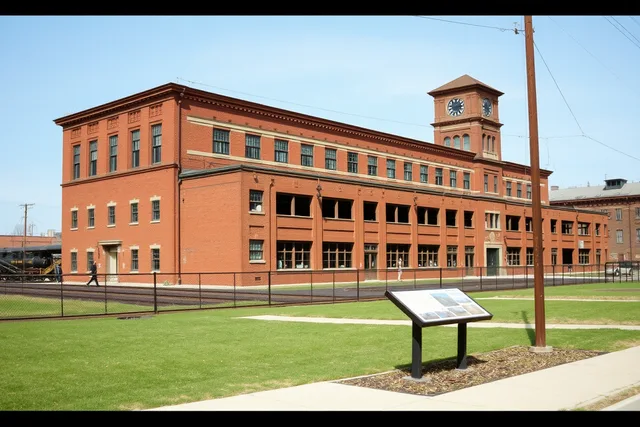
The National Park Service's Slater Mill guided-tour page explains that tours can be modified or canceled under a heat-index threshold. The lesson is practical: budget for the decision and communication process, not just the ideal tour day.
Use this short operating test:
- Can a host greet every group without delaying essential work?
- Can the route be adjusted safely when a stop is unavailable?
- Do visitors know what clothing, footwear, age rules, arrival time, and restrictions apply?
- Is there a clear response if the scheduled experience must change or end early?
- Can staff reset the route and document incidents before the next group arrives?
Separate confirmed costs from pending questions. A confirmed cost has a quote, record, measured time, or other identified basis. A pending item names the missing decision and owner. Do not hide pending work inside a general contingency line.
After the pilot, record actual group size, staff time, route version, questions, and changes before copying the result into a larger budget.
For 2027, the method does not change. The entries must be dated for the 2027 season. Check local heat rules, insurance certificate dates, and posted group-size caps for 2027. Those are set locally and can change annually.
Conditions that change the cost
The Government Accountability Office's cost-estimating guide emphasizes a documented basis, assumptions, and updates.
The National Archives explains records-management fundamentals for information that documents work.
The Department of Justice describes effective communication as dependent on the information's context and complexity.
At the review meeting, rank the decisions that could change the visitor promise or the operating schedule. Resolve that item before smaller refinements. The checklist is meant to sequence decisions, not simply collect them. Date the completed version and store it with the route and public information reviewed that day.
List the next review date in the summary.
Confirm that date with the responsible program owner before publishing any visitor information based on the checklist.
Common questions
Who should own the budget checklist?
One program lead should maintain it, with input from operations, safety, visitor services, and the people responsible for public information.
Is a pilot tour part of the budget?
Yes. It is the best chance to learn real timing, staffing needs, access issues, and reset work before launch.
What should a cancellation message include?
State what changed, the available alternative, any refund or rebooking process, and how visitors can confirm the next scheduled option.
Include the contact channel and the date the message was updated.