Reviews
Part of How to compare industrial heritage travel options before you book
How to compare industrial heritage travel options: questions for 2027
Comparing industrial heritage travel options for 2027 starts with one question about what this trip must answer and which factory stop answers it.
What to take away
- Write the purpose of the trip as one sentence, then cut stops that do not answer it.
- Match the format to the questiona working plant shows process, a preserved site shows the building.
- Keep records and live visitor information as separate sources with separate jobs.
- Set the booking window by format, with working plants needing the longest lead time.
- Price three line items per dayguide fees, coach time and insurance.
The one-sentence purpose test
Purpose first, shortlist second. The comparison rests on one line.
"This trip answers how iron moved from ore to rail."
Test each candidate against it, then sort stops into answers, partly answers, or does not answer.
- Write the purpose sentence.
- List every candidate stop.
- Sort each stop into those three groups.
- Cut the last group and keep the sort.
The factory tour planning workflow runs the same sequence from purpose to confirmed access, which makes it the quickest route from this sort to a booked itinerary.
Match the format to your question
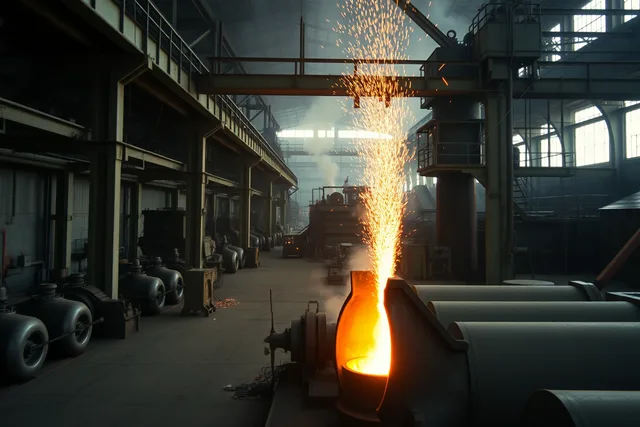
A working plant and its preserved twin answer different questions. A live line shows process, noise and scale in motion.
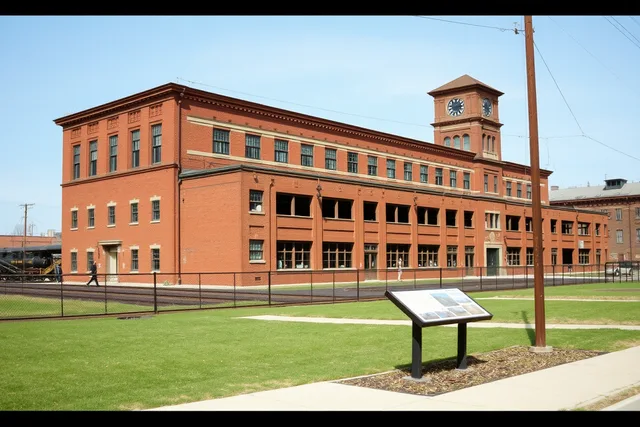
A preserved site shows the same building with the production gone. It is often the only way to stand beside the machinery.
[figure 1]
| If the question is about | The format that answers it | What it cannot do |
|---|---|---|
| How a process worked | A working plant on a running day | Show the building empty of equipment |
| What the building looked like | A preserved site or exterior route | Confirm current opening hours |
| Who worked there and when | A museum, archive or labor collection | Give you the physical scale |
| What the site looks like now | A current page from the managing body | Explain the process |
Read the right-hand column first. Better photographs do not fix a format that cannot answer your question.
Compare the answer, not the attraction
Two stops can look equally good and answer different things. Ask five questions of each candidate.
[figure 2]
| Question | A useful answer | A warning sign |
|---|---|---|
| What does it add? | "It explains the furnace the first stop shows only from outside." | "It is another place with similar views." |
| What is open now? | "The managing body publishes current hours and closures." | "A 2014 blog post says you could walk in." |
| What backs the story? | "The collection record names the subject and the date." | "The caption has no source." |
| What if it closes? | "This public alternative answers the same question." | "We will work it out when we get there." |
| Who confirms access? | "The site office, in writing, dated this month." | "A booking page nobody has updated." |
The National Park Service's visitor conditions guidance covers the second row. A closure changes the order of your day, not the history.
Records prove the past, not the present. The Library of Congress record for the Birmingham Industrial District documents how that district was surveyed, not whether anything there opens today.
The industrial site interpretation checklist covers the third row, because it sets out what a panel or guided talk must contain before you treat it as evidence.
Example: two brands, two different answers
Hershey, Pennsylvania, is the first test. Hershey's Chocolate World is a visitor center with a ride and a retail hall. The working factory is not open for public tours.
Decision rule: a brand name is not a format, so ask what the operator actually runs.
The Royal Canadian Mint splits the same way inside one organization. Winnipeg runs tours of a production mint. Ottawa is a boutique with a smaller visitor offer.
Decision rule: choose the city and the format together, then confirm on the Royal Canadian Mint tours page which of the two you are booking.
Booking windows for 2027
Set the lead time by format, then count backward from your travel date.
| Format | Request by | Why |
|---|---|---|
| Working plant tour | January or February for a spring or summer visit | Security screening and escort ratios take weeks |
| Underground or specialty museum tour | March for a July date | Small group caps fill in peak season |
| National park ranger program | April for summer | Seasonal programs post in spring |
| Group coach day | February for peak summer | Vehicle and driver supply is tightest in July and August |
Treat these as planning leads rather than published deadlines, and have every confirmation in hand one month before travel, so a cancellation leaves time to switch.
Price three line items per day
Quote guides, coach time and insurance per operator and per group, and write the date on each figure. The factory tour budget options comparison shows how the five common formats differ in cost structure, which helps you judge whether one quote is high.
Worked example: one coach day and three guided stops, group of 45.
| Line item | Typical range | Basis |
|---|---|---|
| Coach, 10 hours with driver | USD 1,400 to 2,200 | Per vehicle, per day |
| Guided program, 90 minutes | USD 150 to 400 per stop | Per group, three stops |
| Trip liability insurance | USD 300 to 700 | Per day, per group |
Typical day total: about USD 2,150 to 4,100, or roughly USD 48 to 91 per person at 45 seats. Use these ranges to compare quotes, not as published prices.
Build the exit before the companion stop
Add a second stop only after the first is confirmed. A good companion changes the evidence you collect.
One example: a document collection after a factory museum, or an indoor program after an outdoor route when weather is the risk.
Then name the exit in writing. If the companion closes, does the group stay longer at the main stop, move to the records, or switch to a public alternative?
An option with no confirmed use is a gap, not a fallback. The visitor arrival notes guide shows how to write those instructions so a group follows them on the day.