Guides
Part of How to compare industrial heritage travel options before you book
How to build an industrial heritage travel options checklist before you book
A source-card checklist for industrial heritage trips, so every stop answers one question and every access claim is checked against a live source.
Use this checklist before you book a primary industrial-history stop. It turns a pile of promising names into a route where every stop has a job.
What to take away
- Write the trip question in one sentence, then pick the single stop that answers it.
- Fill a source card for each candidatequestion, source role, date checked, limitation, decision.
- Confirm present-day access from the responsible organization, never from an old photograph or catalog record.
- Screen every candidate against five testsrelevance, access, difference, timing, source scope.
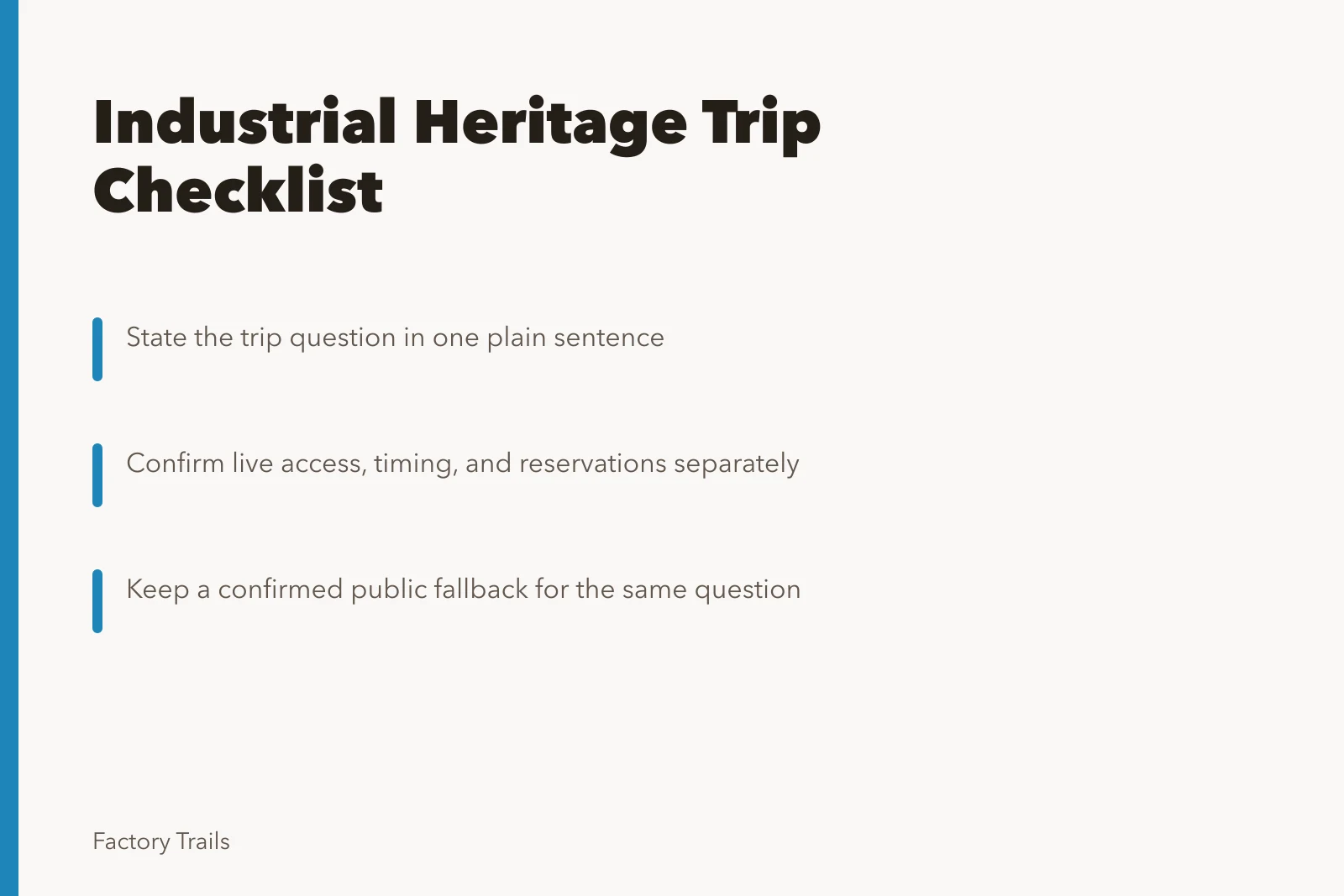
- Keep one confirmed public fallback that answers the same question.
Write the trip question first
Put the question in one sentence. It might be how a furnace charged its burden, how company housing shaped a town, or how a rail spur reached a mill. Then name the evidence that would answer it.
Trip question and evidence
- Trip question written in one sentence
- Evidence type named
- One primary option chosen
- Companion added only if different evidence
A museum collection, a guided walk, an exterior route, and an archival record give different evidence. Pick one as primary. Add a companion only when it supplies evidence of a different kind.
- Trip question written in one sentence.
- Evidence type named.
- One primary option chosenmuseum, tour, public route, or research collection.
- Companion added only if it brings different evidence.
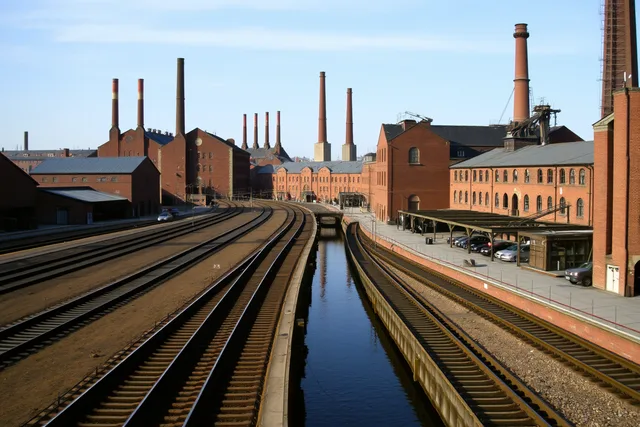
The Birmingham Industrial District record documents a district historically. It says nothing about whether you may walk in today.
Confirm access from a live source
Historical truth and current access are separate checks. A catalog record can stay accurate for a century while a gate closes for the season.
Confirm access from live source
- Find responsible organization's current page
- Confirm access, timing, reservations, local rules
- Never infer permission from old image
- Name a confirmed public fallback
- Find the responsible organization's current page for the stop.
- Confirm access, timing, reservations, and local rules.
- Never infer permission from an old image, map, or catalog entry.
- Name a confirmed public fallback that answers the same question.
The National Park Service publishes current conditions guidance for its sites. The same discipline applies to a decommissioned plant run by a preservation trust or a private owner.
Build a source card for every candidate
A card beats a folder of links. It records what a source can prove and what it cannot.
Source card fields
Field
- Trip question
- Exact question this stop must answer
- Source role
- Historical record, catalog, or live page
- Date checked
- Day you read the live source
- Limitation
- What the source does not establish
- Decision
- Primary, companion, fallback, or research only
What to record
- Trip question
- Keeps route tied to one purpose
- Source role
- Stops source being asked too much
- Date checked
- Flags details that need rechecking
- Limitation
- No current access details is a real answer
- Decision
- Holds route to one primary stop
Why it matters
- Trip question
- Source role
- Date checked
- Limitation
- Decision
Build a source card
| Field | What to record | Why it matters |
|---|---|---|
| Trip question | The exact question this stop must answer | Keeps the route tied to one purpose |
| Source role | Historical record, collection catalog, or live visitor page | Stops a source being asked to prove too much |
| Date checked | The day you read the live source | Flags details that need rechecking |
| Limitation | What the source does not establish | "No current access details" is a real answer |
| Decision | Primary, companion, fallback, or research only | Holds the route to one primary stop |
The National Archives explains records-management fundamentals. For a trip file the lesson is simple: keep the source, and write down why it belongs.
Screen each option against five tests
Keep it when
- Relevance
- It answers the trip question
- Access
- A current source confirms a public visit
- Difference
- It adds a new kind of evidence
- Timing
- It fits without endangering the anchor activity
- Source scope
- Its limits are written down
Remove it when
- Relevance
- It is only a photo stop
- Access
- Access is unstated or restricted
- Difference
- It repeats the primary stop
- Timing
- It forces a rushed day
- Source scope
- The plan leans on inference
Run the tests in order and stop at the first failure. A stop that fails relevance will not be rescued by good access.
Worked example: a preserved plant and its working twin
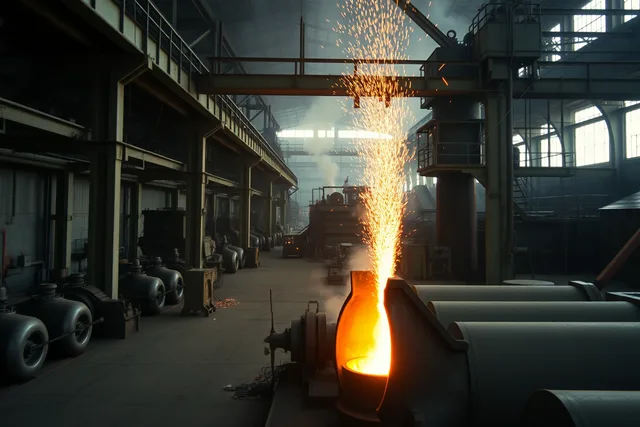
Say the question is how molten iron moved from furnace to casting floor. A preserved site such as Sloss Furnaces in Birmingham shows the stoves, the cast house, and the ladle route at walking pace.
A working plant shows the same flow under production, but visits depend on the operator's own rules, escort ratios, and whether the line is running or down for maintenance.
Those two stops are not interchangeable, and they are not duplicates. The preserved site gives interpretation and photographs. The working plant gives process, noise, and scale. If the working plant cancels, the preserved site still answers the question, which is what makes it the primary.
Check the companion stop
A companion should not be a smaller copy of the main stop. A museum and an archive pair well: one interprets, the other holds original material. An exterior route and an indoor exhibit pair for the same reason, one reads the site, the other covers a wet afternoon.
Ask one closing question: if the companion vanishes, does the day still answer the main question? If not, it was never a companion. It was an unverified dependency, and it moves into the primary slot only once its practical terms are confirmed.
Record the decision
Review the cards top to bottom and circle the one option that is both relevant and confirmed. If nothing earns a circle, research further instead of adding another uncertain stop.
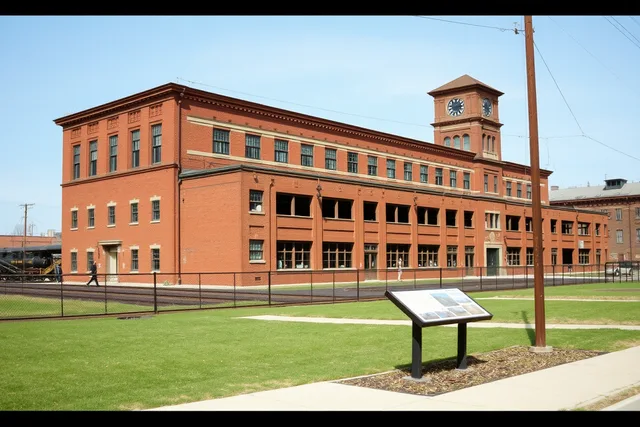
Keep the date checked beside the decision. The National Park Service Museum Handbook sets out careful documentation for collections. Apply the same habit to any historical image in your file: identify it accurately, and never read current access into it.
Common questions
Can a digital collection be my primary option?
Yes. It suits a trip where you need to understand a place before choosing an in-person visit. Give it the primary slot and let the physical stop become the companion.
What makes a good fallback?
A confirmed public museum, library collection, trail, or district that still answers the trip question. It must be open on your date, not merely likely to be.
Should I list private sites as optional?
No. Keep them in research notes until the owner or operator publishes explicit public access terms. A private site with no published terms is not an option, it is a hope.
How often should I recheck a source card?
Recheck any card whose date checked is older than the operator's own booking window. Access rules, maintenance shutdowns, and escort requirements change with the season.