Guides
Part of How to compare industrial heritage travel options before you book
How to keep industrial heritage travel records for 2027
Industrial heritage options records for 2027 help U.S. visitors document why a chosen museum, tour, public route, or research source belongs in a trip plan.
A selection record explains why an industrial-history option belongs on a trip and what evidence supports it.
What to take away
- Record the job each option performs in the trip.
- Keep historical evidence apart from current visitor information.
- State each source's limit in one short line.
- Update the record when a responsible organization changes access details.
The selection record
| Field | What to write |
|---|---|
| Option | Museum, tour, route, or research collection |
| Trip question | The one question it helps answer |
| Evidence type | Historical context or current visitor information |
| Current source | Responsible page and date checked |
| Added value | What it contributes beyond the primary stop |
| Fallback | Confirmed public replacement that answers the same question |
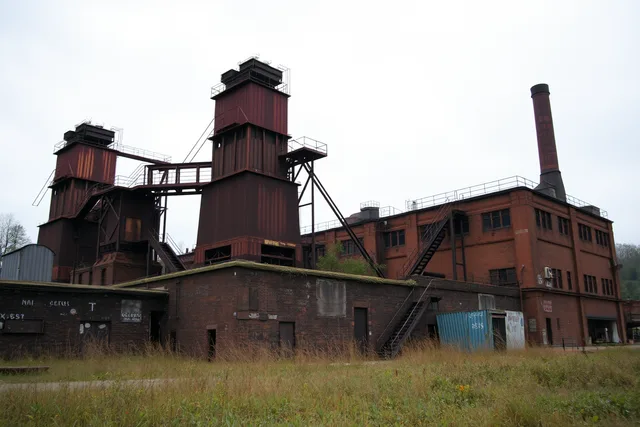
The Druid Mill record identifies a historic textile-mill record in the Library of Congress collection. It can support a statement about a documented mill, its period, or the collection record itself. It cannot establish whether the property now accepts visitors, has parking, or is open on a particular day.
Selection record fields
- Optionmuseum, tour, route, or research collection
- Trip questionthe one question it answers
- Evidence typehistorical context or current visitor info
- Current sourceresponsible page and date checked
- Added valuewhat it contributes beyond the primary stop
- Fallbackconfirmed public replacement answering the same question
Here is the same six fields filled in for one real stop. Copy the table, keep the field names, and replace the entries.
| Field | Entry |
|---|---|
| Option | Lowell National Historical Park, Massachusetts |
| Trip question | How did a textile city use water power, mills, and worker housing? |
| Evidence type | Historical context plus current visitor information |
| Current source | National Park Service page for the park, checked 3 March 2027 |
| Added value | Working canal and mill buildings beyond the primary museum stop |
| Fallback | Visitor center exhibits that answer the same question indoors |
- Source limitthe catalog record documents the mill buildings. It does not list 2027 hours, tour times, or parking.
- Access noteLowell National Historical Park, managed by the National Park Service. Claim to confirm: visitor center hours and mill exhibit times. Checked 3 March 2027.
Build a record that another person can use
A useful note is short enough to read at the side of the road and complete enough for an editor to revisit months later. Start with the decision, not a pile of bookmarks. Write the destination's name, the main question it answers, and the one fact that earns it a place on the itinerary.
Then label every source by function.
For example, an archival catalog may support a sentence about former manufacturing. An official visitor page may support current hours. A museum collection page may support the identification of an object. These are separate claims. When a source is placed in the right field, the record discourages later overstatement.
The National Archives describes basic records-management concepts, including the value of organizing records so they can be found and used later. One action from it: give every source line the complete URL and the date you checked it. A vague label such as "good research" is not enough.
Keep the record in one place. A notes app is enough for a single stop. A spreadsheet suits a multi-stop trip, with one row per source. A shared doc works when two people plan together.
Give your co-traveler edit access and send the link before departure, not on the morning of the drive. If they will be offline, export a copy to the same folder.
Make the source limit explicit
Add a short line such as: "Historical record only, not current access." This stops a later writer or traveler from turning a catalog record into an itinerary promise. Use the same discipline for image records and old maps.
The Library of Congress's Historic American Buildings Survey collection provides catalog records that can support a caption, date, or subject. A catalog entry should not be treated as a business directory, a reservation system, or an instruction to enter a property. This simple boundary improves both research and reader trust.
Keep the access note current for 2027
Create a second note for any part of the trip that requires an in-person visit. The note should name the organization that controls the location or program, the practical claim you need, and the date it was checked. If a source only says that a place exists, it is not enough for arrival instructions.
The National Park Service publishes visitor-conditions guidance that shows why live travel details should be checked near departure. Conditions and closures can change even when the historical account does not. For a 2027 trip, re-check every live detail 14 days before departure and again 48 hours before.
Review the record before sharing it
Read each line as if another traveler must act on it. Does the record name a current responsible source for practical details? Does it state why the option matters? Does the fallback answer the same question? If not, revise the note before turning it into a recommendation or route.
A short, well-labeled record is easier to update than a long list of unsupported ideas.
Add a new note when a later responsible source changes your original understanding. Preserve the earlier entry only when it is useful to explain the decision. Do not leave an old access statement in place without a clear date.
For collection material, follow the stated terms and retain the identification information. The National Park Service Museum Handbook describes documentation practices for museum collections. One action from it: put the object or image identification number on the same row as the claim it supports.
Common questions
Why record the added value?
It shows whether the option deserves time in a finite itinerary or merely repeats another stop.
What is a source-limit note?
It states what a source can establish and what it cannot.
Can I use the same record next year?
Historical context may remain useful, but renew all live visitor details before using the plan again.