Guides
Factory tour fundamentals: what U.S. visitors should confirm before they go
Factory tour fundamentals for U.S. visitors in 2027 cover planning, access, safety, questions, historic context, and the details to confirm before going.
A factory tour can mean several different things. It may be a live production visit, a guided walk through a historic mill, a behind-the-scenes museum program, or a self-guided route through an industrial district. The best preparation starts by identifying which experience you are actually booking. That answer affects timing, footwear, photography rules, accessibility, and the questions worth asking.
What to take away
- Confirm whether the site is active, historic, guided, or self-guided.
- Check the current operator's page shortly before you travel.
- Treat safety instructions and restricted areas as part of the experience, not optional fine print.
- Ask questions that help you understand a process without interrupting or endangering the work.
- Separate historical interpretation from current travel information.
Start with the kind of tour
The word "factory" creates expectations that a site may not meet. Some operating facilities welcome visitors to a viewing area but do not allow them onto a production floor. Some historic sites demonstrate reconstructed machinery rather than running commercial equipment. Other places use the word tour for an outdoor route connecting buildings that can only be viewed from outside.
Read the visit description closely. Look for the tour length, required reservation, age limits, walking conditions, sensory considerations, and whether the experience runs seasonally. If the description does not answer a practical question, contact the operator before you make a trip around it. Do not assume last year's schedule is still correct.
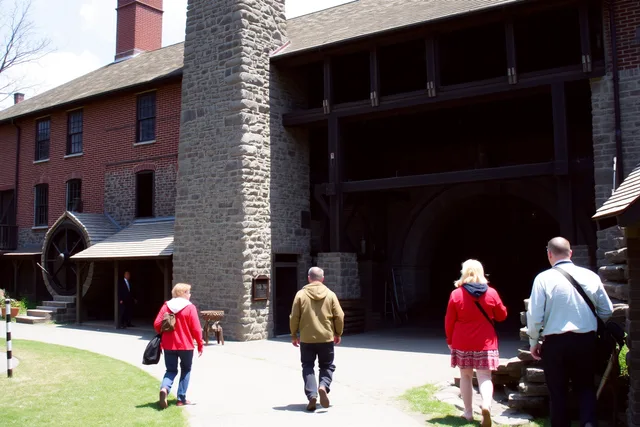
At Painesdale Mine and Shaft in Michigan, the National Park Service describes guided tours of the Champion No. 4 shaft-rockhouse, along with its historic hoist house and captain's office exhibits. That is a good illustration of why a tour name alone does not tell a visitor enough. Read the National Park Service Painesdale tour overview for the specific example.
Plan the visit in the right order
Do the time-sensitive checks first. Confirm the date, start time, reservation rules, entry point, and cancellation policy. Then check the walking demands, restrooms, weather exposure, accessibility information, and any bag or camera limitations. If the site has both a visitor center and a tour starting point, verify which address belongs to which.
What to confirm before travel
Check
- Entry
- Exact meeting point and start time
- Booking
- Ticket, waiver, age, or ID rule
- Route
- Stairs, surface, distance, and seating
- Conditions
- Weather, heat, noise, and protective gear
Confirm before travel
- Entry
- Visitor centers and tour starts may differ
- Booking
- Some tours cannot add walk-ins
- Route
- Historic structures can have real physical limits
- Conditions
- The experience may change with operations
Why it matters
- Entry
- Booking
- Route
- Conditions
Use this short planning sequence:
- Find the operator's current tour page, not an old roundup or map listing.
- Confirm whether tickets, timed entry, or a minimum age apply.
- Read the access and safety information from start to finish.
- Decide whether your group needs a mobility, sensory, language, or seating accommodation.
- Save the operator's contact details in case weather or operations change.
This order is useful because it prevents a familiar mistake: researching history for an hour before discovering that a reservation window closed or the route is not suitable for the group.
| Check | Confirm before travel | Why it matters |
|---|---|---|
| Entry | Exact meeting point and start time | Visitor centers and tour starts may differ |
| Booking | Ticket, waiver, age, or ID rule | Some tours cannot add walk-ins |
| Route | Stairs, surface, distance, and seating | Historic structures can have real physical limits |
| Conditions | Weather, heat, noise, and protective gear | The experience may change with operations |
| Updates | Official page and a current contact | Third-party listings can be outdated |
Give the final check to the current operator's information. A well-researched historical article can explain why a site matters, but only the operator can confirm whether a particular route, program, or accommodation is available on the day you visit.
Expect a working environment or a historic structure
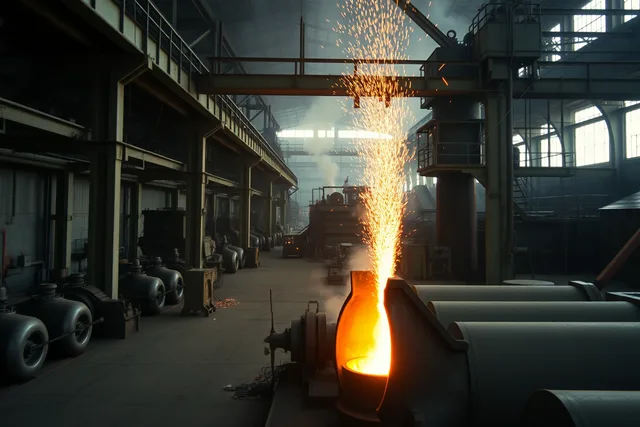
Factory tours are not interchangeable with ordinary museum visits. An active setting may involve protective equipment, a safety briefing, noise limits, secure areas, production schedules, and a strict rule against touching anything. A historic setting may have uneven floors, narrow stairs, low light, water features, old machinery, or protective barriers around fragile objects.
Dress for the conditions stated by the operator, not for a photo. Closed-toe shoes, secure clothing, and a light layer are reasonable defaults when a site expects walking, but they do not replace site-specific instructions. Avoid bringing large bags unless the operator says they are permitted. Keep your attention on the guide, your footing, and the boundary markers around equipment.
Children can enjoy industrial history, but the adult accompanying them needs to know the conditions in advance. A tour may move through a loud room, include a long standing period, or pass equipment that cannot be touched. Explain the basic expectations before the tour starts, especially staying with the group and following the marked route.
Learn the story without forcing it
The most satisfying tours connect what visitors see to a clear process: what went into a system, what work happened there, what came out, and how the place affected nearby people and land. A guide may explain the machinery, but you can listen for the wider frame as well. Who performed the work? Where did materials come from? How did a product move to market? What changed when the site closed, moved, or adopted new technology?
Historic industrial sites often contain more than a single business story. They can hold evidence of skilled trades, immigrant communities, local housing, transportation, labor organizing, environmental change, and changing uses of the property. Let the specific records and the guide's interpretation lead the conversation. Do not assume that a preserved building represents every worker's experience or every period of the site's operation.
If you are visiting an operating factory, the story may be more limited by confidentiality. That is normal. A good tour can still explain a process, a safety principle, a quality check, a workforce skill, or a supply-chain decision without disclosing proprietary information.
Ask considerate questions
Prepare two or three questions, then let the guide control the timing. Questions that begin with "how," "what changed," or "what should visitors notice" often lead to richer answers than a question that asks for a number or a secret process detail.
Useful questions include:
- What part of the process should a first-time visitor watch most closely?
- What has changed in this operation or building over time?
- Which artifact, machine, or record gives the clearest picture of the work?
- What safety or preservation rule do visitors often misunderstand?
- What is one part of the site's story that does not fit a common assumption?
Avoid asking people to identify individual employees, reveal confidential production information, or pause a safety briefing. At a historic site, distinguish between a documented fact and a plausible interpretation. If a guide says that evidence is incomplete, treat that as useful information rather than a flaw in the tour.
Handle photos, notes, and phones with care
Photography rules can differ from one room to another. A site may allow exterior photos but prohibit them near equipment, collections, security points, or employees. Ask before recording video or using a tripod. Never step behind a barrier or into a marked work area for a better angle.
Notes are often more useful than a rapid stream of photos. Record the name of a machine, the period of operation, the source of a quotation, or a question you want to check later. If you publish a post about the visit, label personal impressions as impressions and link to the operator's current information for logistics. Do not turn a guide's offhand explanation into an absolute historical claim without checking its source.
Make access part of the plan
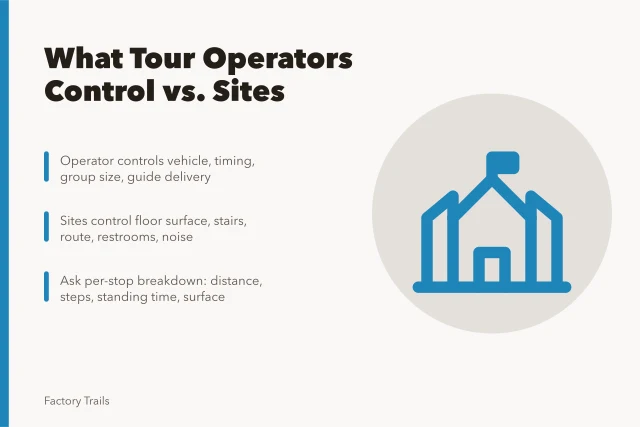
Access is more than a parking symbol. It can include route surfaces, slopes, elevators, seating, captions, sound levels, restrooms, service-animal policies, and the ability to leave a tour early. Historic buildings can be especially variable because their original design may limit movement even where an operator has added accommodations.
Ask a specific question. Instead of asking whether a place is "accessible," ask whether the full tour avoids stairs, whether a mobility device can use the route, whether there is a quieter option, and where a group can pause. The operator is the reliable source for the current answer.
The U.S. Access Board's accessible-route guide names common route components, including walking surfaces, doors, ramps, curb ramps, elevators, and permitted lifts. It gives visitors useful terms for asking about a particular route. It does not decide the access status of every feature at a historic property.
After the tour, verify what you share
Before repeating a fact online, compare your notes with a named collection, a museum label, or the site's current official material. This matters most for dates, claims about firsts, ownership, and statements about workers or communities. If the evidence is uncertain, write that honestly or leave the detail out.
A responsible visit can lead to a better article, school project, or family conversation because it preserves the difference between what you saw, what the guide explained, and what the historical record can prove. That distinction keeps industrial heritage interesting without flattening it into a slogan.
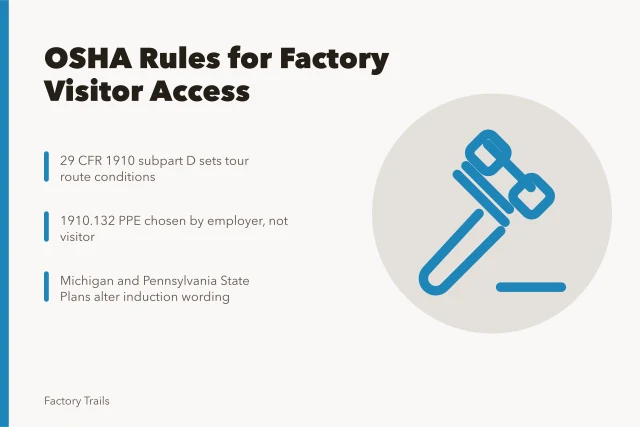
When a staff member changes the public route or asks a group to leave an area, follow the instruction. OSHA's emergency action plan guidance explains that employee emergency plans address reporting, evacuation procedures, and assigned duties. It does not set a tour itinerary, but it shows why a host site's safety response takes precedence over a visitor's plan.
Keep a check date beside any current hours, ticket, route, or program claim that you share after a visit. The National Archives research-room guidance advises visitors to confirm local procedures, hours, and availability with the relevant facility. This same discipline prevents an accurate memory of a past trip from being presented as a current access promise.
Common questions
Do factory tours always require reservations?
No. Requirements vary by operator, season, group size, and security conditions. Check the current official tour page before traveling.
What should I wear on a factory tour?
Follow the site's instructions. Closed-toe shoes and secure clothing are common practical choices, but the operator's safety rules control.
Can I bring children on an industrial tour?
Often yes, but confirm age rules, route length, noise, supervision expectations, and any areas that are off limits to children.
Are historic mill tours the same as active factory tours?
No. Historic tours often focus on interpretation and preservation, while active facilities may have operational, safety, or confidentiality limits.
In this guide
- Factory tour checklist for U.S. visitors: what to know before you bookFactory tour checklist for U.S. visitors in 2027 covers booking, route conditions, safety rules, access needs, equipment, and a final day-of visit check.
- Factory tour questions to ask before you book a visitFactory tour questions for U.S. visitors in 2027 help you compare active and historic sites, confirm access, and ask guides useful, respectful questions.
- Factory tour records: what owners and visitors should save in 2027Factory tour records guide for U.S. visitors in 2027 explains what to save from a visit, how to separate observations from facts, and how to cite a site responsibly.