Guides
How to budget an industrial tour route before you set a single price
Industrial tour regional budget notes for 2027 help U.S. operators plan local transport, weather, staffing, route changes, capacity, and community costs.
What to take away
- Calculate a cost per sold seat before you name a ticket price. Divide fixed route costs plus per guest costs plus a reserve by the seats you can realistically fill.
- Indicative 2027 planning ranges per departurerural mine route $1,150 to $2,400, urban mill walk $320 to $700, waterfront route with shuttle $900 to $1,900. Replace each with a local quote.
- Your price floor is cost per sold seat plus the contribution margin you need, never the route cost divided by the vehicle's maximum seats.
- Re-quote fuel, driver hours and host pay each season, and rebuild the sheet when the same variance appears twice.
- Keep the supplier quote, the route note and the variance note together.
Build the cost per departure first
A route budget needs one unit of measurement: the departure. Put the route, season, vehicle, group size and alternate plan at the top of the sheet.
- Fixed route costsvehicle hire or mileage, driver hours, parking, permits, site fee.
- Per guest costsadmission, protective equipment, insurance per head, materials.
- Disruption reservethe cost of the alternate plan times the share of departures likely to need it.
- Divide by realistic seats sold, not the seats bolted into the vehicle.
Cost per sold seat = (fixed route costs + per guest cost x guests + reserve) / realistic seats sold
Five areas need a number: transport, staffing, weather response, capacity and communication. Capacity means the smallest platform, room or viewpoint, not the coach.
[figure 1]
Route Budget Scope Checklist
- Name the route and season
- Set group size and vehicle
- Count staff and local hosts
- Define alternate weather condition
- Record cost owner per line
The SBA cost planning guidance applies the same logic to a new venture: name a cost before it surprises you. It will not price a tour route, so local conditions still belong in the lines.
Supplier quotes carry the arithmetic. Get a written coach or minibus quote, the site's tour fee and the host's hourly rate. Our 2027 scope checklist lists the lines regional sites leave out most often.
Example: three industrial routes and what they cost
The figures are indicative planning ranges for one departure, not published rates.
| Cost line | Rural mine route, 24 guests | Urban mill walk, 18 guests | Waterfront site with shuttle, 30 guests |
|---|---|---|---|
| Transport | $550 to $1,100 coach | $120 to $260 curbside drop-off | $600 to $1,200 shuttle and driver |
| Site fee and host | $300 to $600 | $150 to $350 for two hosts | $250 to $500 dock or site fee |
| Safety equipment | $60 to $140 | $30 to $80 | $50 to $120 |
| Disruption reserve | $120 to $300 | $40 to $120 | $100 to $250 |
| Total per departure | $1,150 to $2,400 | $320 to $700 | $900 to $1,900 |
| Cost per sold seat when full | $48 to $100 | $18 to $39 | $30 to $63 |
A rural mine route and a downtown walk share almost no cost drivers, so build separate sheets. Waterfront routes that depend on a seasonal ferry carry the heaviest reserve.
An underground mine tour adds a timed entry slot and a guide ratio that caps the group. Booking rules at a working site change the fixed cost before you sell a seat, so our note on underground tour booking at Britannia Mine covers the timing question.
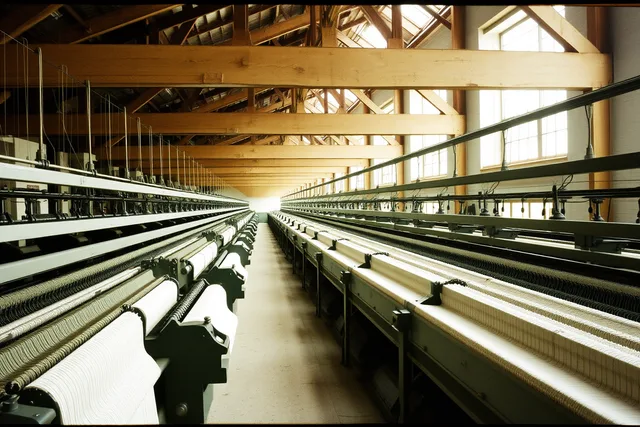
Urban mill walks are limited by stair width and floor space. Lowell National Historical Park runs visitors past working textile machinery, and its mill floor and canal layout shows how a fixed building shape sets a capacity ceiling.
The 2027 inputs that move the total
- Fuel and mileage. Re-quote the coach line each season. A 12 percent fuel move adds roughly $70 to a $550 transport line.
- Driver and shuttle hours. Waiting time and overtime are billable on most regional contracts.
- Host pay. A museum or heritage society host often charges a two to three hour minimum, so a short stop can cost as much as a long one.
- Safety equipment. Eye, foot and hearing protection for guests adds a per head cost, and OSHA's general PPE rule explains when an employer must supply it.
- Insurance and road permits. Annual premiums land hardest on a short season.
Some of these lines sit with a supplier rather than with you. Our note on factory tour budgeting and provider selection for 2027 covers how to split them.
From route cost to a price you can publish
Divide total route cost by the seats you expect to sell, not the seats you could sell. A 30 seat coach that fills to 22 still carries the cost of 30 seats.
Add your contribution margin. If the urban mill walk costs $22 per sold seat at realistic fill and you need a 30 percent margin, the floor is about $31 a ticket. Card and booking fees sit on top.
Set a deposit and cancellation term that covers fixed route costs. A late cancellation still pays for the coach.
Change table and the records to keep
Four triggers move a route budget, and each carries a cost, not just a response.
| Trigger | Cost impact | Budget record |
|---|---|---|
| Fuel rises 12 percent | Coach line up roughly $70 per departure | Revised transport estimate |
| Site raises the host rate | Fixed route cost up about $60 | New cost per sold seat |
| Dock or entrance closed | One extra host hour and a longer transfer | Revised staffing line |
| Group over capacity | A second guide or a second departure | New departure cost |
When the same variance appears twice, it becomes a planning input. Our cost map and capacity notes show how to fold it back into the fixed lines before the next season.
Keep the supplier quote, the route note and a one page variance note together, so an accountant or a partner can follow the logic without asking.