Guides
Factory tour budgeting and provider selection: how U.S. operators should choose help for 2027
Factory tour budgets and provider choices for 2027 come down to a written scope, matched specialist skills, and a change record you keep in one file.
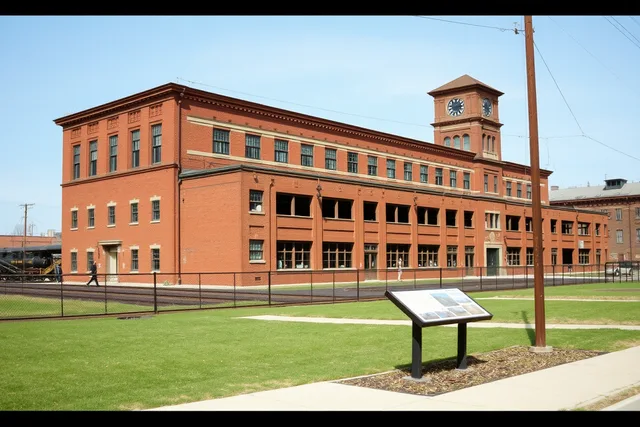
A preserved furnace and a working foundry ask different things of a contractor. At Sloss Furnaces the route is fixed and the interpretation is the product. At a plant that still runs, a single unescorted visitor on the floor stops production. Write down which one you are before you ask for a fee.
What to take away
- Write the visitor problem in one sentence before you request any proposal.
- Match the provider type to the taskexperience planner, content designer, or accessibility specialist.
- Budget the client-side lines, not just the fee. Escorts, staff review time and printing often exceed it.
- A low bid usually means narrower scope. Compare proposals against one written acceptance test.
- Keep a change record. It is the only defense against work built on an old brief.
Start with the problem, not the provider
One sentence. "Coach groups cannot find the approved entrance from the booking message." "The casting-floor stop runs long for a 45-minute visit." "We need a December indoor alternative that keeps the tour's purpose."
Each of those tells a provider what to fix. "Make the tour better" does not. It invites a rebrand, a booking platform and a script, when the real gap is a map and a check-in sign.
Match the provider type to the work
Visitor-experience planners shape route and interpretive strategy. Content designers fix booking flows, wayfinding copy and orientation scripts. Accessibility specialists audit routes, sightlines and written materials against the site's own accessibility statement. Graphic designers produce approved public materials. None of them should be asked to sign off on engineering, structural or machinery questions.
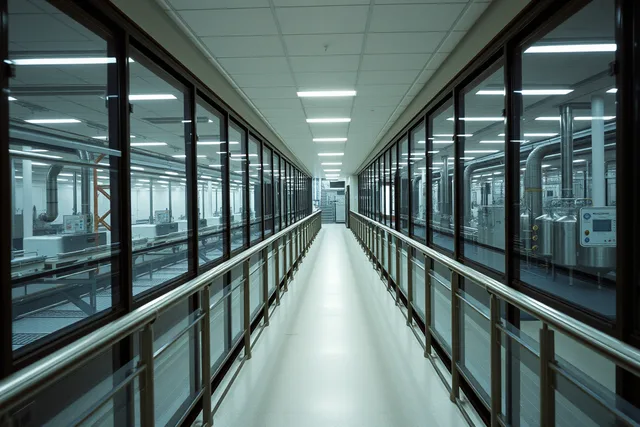
Off-site writing needs a schedule and a review path. On-site work at an active plant needs a facility escort, an orientation slot and a named site contact before anyone arrives.
OSHA's communication and coordination guidance covers how host employers and contractors exchange information on conditions, hazards and emergencies. Use it to confirm the facility's own process is running, not to write your own safety plan.
Build one brief every provider answers
Send the same document to every candidate. Same problem statement, same deliverables, same acceptance test. Ask each to return their understanding of the problem and their approach. Ask what they need from you and samples of comparable work. Ask for a timeline with review points. Ask for a fee structure with assumptions and exclusions listed.
The GAO cost-estimating guide treats purpose, scope, assumptions and updates as the parts of a credible estimate. Apply that to the brief. When two bids differ by half, the difference is usually scope, not efficiency.
Budget the lines the fee does not cover
The provider fee is one row. The rest is yours.
Budget lines beyond the fee
- Provider feefixed, hourly, staged, or capped
- Client staff timewho attends, who approves
- Site accessescort hours, orientation slots
- Productionphotography, translation, printing, software
- Change controlrate and approval path
- Contingencystated percentage for late client input
Budget line / What to pin down before you sign
- Provider fee
- Fixed, hourly, staged, or capped against the written scope?
- Client staff time
- Who attends reviews, who approves, how many hours each
- Site access
- Escort hours, orientation slots, any out-of-hours scheduling
- Production
- Photography, translation, printing, software fees, in or out
- Change control
- Rate and approval path when the route or deliverable shifts
- Contingency
- A stated percentage for revisions caused by late client input
A guide who must be pulled off the floor to escort a photographer costs the same whether the invoice shows it or not. Put it in the table.
Interview for changed access and conflicting feedback
Portfolio polish proves taste, not site discipline. Ask what they did the last time a plant moved a shutdown date mid-project. Ask how they handled two department heads giving opposite notes on the same script. Ask who physically attends the site and who can approve a decision that day.
Listen for a process. A provider who says they would escalate to the named program owner is answering the question. A provider who says they would "find a way to make everyone happy" is not. Ask how they separate a confirmed fact from an assumption when writing about a process they cannot observe.
Assign decision rights before work starts
Name three roles: the program owner who owns the engagement, the facility contact who controls site access, and the approver for anything the public sees. One person can hold all three. What matters is that the provider knows which name goes with which decision.
Change record entry
- Write the request when route, audience or deadline moves
- Write the reason for the change
- Write the cost or schedule effect
- Write the decision and the approver
- Keep a signed line, not a conversation
Then keep a change record. When the route, the audience or the deadline moves, write the request. Also write the reason, the cost or schedule effect, the decision and the approver. The GSA guidance on managing project costs describes documenting cost information and updating estimates as conditions change. A conversation is not a change. A signed line is.
Pilot on a real group
Run the new route or briefing with a small group on a normal operating day. Watch the arrival, not the script. A pilot catches the sign that is invisible from the coach drop-off and the stop that runs long beside a running line.
Sorting pilot feedback
Is the feedback a confirmed problem?
fix inside the change process
is it personal preference?
Sort the feedback into three piles: confirmed problem, personal preference, out of scope. Fix the first pile inside the change process. Decide the second on its own merits. Decline the third in writing.
Close out and keep the record
Collect final files in editable formats. Note any licence or usage term attached to photography or typefaces. Record what was left unresolved. The National Archives records-management fundamentals describe records as evidence that supports accountability, which is what the approved brief, the selection note and the change log become.
Keep those four documents together. The next program owner inherits the reasoning, not just the files.
Common questions
Should a factory tour hire one general consultant?
Only when the scope is genuinely broad and someone can manage the boundaries. A narrow problem is usually cheaper and faster with a focused specialist.
Who approves a provider's on-site work?
The program owner runs the engagement. The facility contact controls access. Technical and safety decisions stay with the site's own roles, never the provider.
How do you compare two very different proposals?
Against one written outcome, one deliverable list, one timeline and one acceptance test. Price alone tells you nothing until the scope matches.
What if a bid comes in far below the others?
Assume narrower scope until the provider shows otherwise. Ask which deliverables and which client inputs their number excludes.