Guides
Industrial tour planning checklist: what to confirm before you launch
Industrial tour planning checklist for 2027 helps U.S. operators confirm purpose, permission, route, capacity, access, guide readiness, and reviews.
What to take away
- Confirm authority, route, capacity and safety rules in writing before you advertise a date.
- Verify three U.S. obligationsclear exit routes, host-required protective equipment, and an accessible visitor path.
- Set group size from the tightest point on the route, not the average width.
- Carry liability cover and a signed visitor waiver before the pilot run.
- Sign off once with a date and route version, then recheck at the start of each season.
Core planning record
One table carries the launch file. Every row needs dated evidence, because a verbal yes from a site contact is not confirmation. The factory tour planning checklist covers the budget side of the same file.
| Area | Confirm this | Evidence to save |
|---|---|---|
| Purpose | Visitor, learning goal, duration and intended decision | Product statement |
| Authority | Approved dates, spaces, capacity and restrictions | Current written agreement |
| Route | Arrival, stops, exits, restrooms and alternate | Tested map and notes |
| Guide | Training, facts, contacts and escalation role | Guide packet |
| Safety | Exit routes, PPE requirements and host rules | Host safety brief and PPE list |
| Public copy | Access, meeting point, rules and possible changes | Published booking text |
Print it and keep one signed copy per launch.
Core Planning Record
- Purposevisitor, goal, duration, decision
- Authoritydates, spaces, capacity, restrictions
- Routearrival, stops, exits, restrooms, alternate
- Guidetraining, facts, contacts, escalation role
- Public copyaccess, meeting point, rules, changes
Print the same rows as a one-page tick list and carry it on the route walk:
- Current written agreement with the site, dated
- Route walked at the visitor time of day, tightest point measured
- Group size and pod split agreed with the host
- PPE list issued, sizes available on site
- Accessible path checked from arrival to exit
- Booking text matching the tested route
- Insurance certificate and waiver form ready
- Sign-off name, date and route version recorded
What U.S. safety and accessibility rules require
A tour runs inside someone else's workplace, so the host safety plan governs movement. Confirm three items in writing before the pilot: how the group leaves each stop, what protective equipment visitors must wear, and whether the whole path works for a wheelchair user.
OSHA requires exit routes in covered workplaces to stay unobstructed, marked and unlocked. Walk the nearest exit from every stop and record the distance and door type. The exit route rules state the standard your host must already meet.
Where the host requires protective footwear or eye protection, the employer supplies it at no cost to workers. Ask what visitors must wear, who provides it, and which sizes stay on site. See OSHA 1910.132 on general PPE for the split between host and visitor.
The U.S. Access Board guide to accessible routes explains how a route connects spaces through a building. Use it to test the meeting point, restrooms and narrowest doorway as one continuous path.
Whether the ADA covers a working plant depends on how the site is used. Put that question to the host and your own adviser, then write the answer into the file.
Repeating a route fault in a second season is the most common launch failure. Our list of common factory visit mistakes ranks the ones worth fixing before a pilot.
Set capacity from the tightest point
Walk the path at the time of day visitors will use it. Note noise, waiting points, truck movement, stairs, weather exposure and temporary blockages. Capacity comes from the single worst point, not the average. Our capacity and cost notes show how that number feeds the ticket price.
Example: sizing a group at a 36-inch passage
Suppose a loop is 8 feet wide for most of its length but narrows to 36 inches past a palletizer. Two typical adults walking abreast need roughly 18 to 20 inches of shoulder width each, so that point passes one person at a time. Allow about 15 seconds per person to clear.
Twelve visitors in one block would queue there for around 3 minutes. Two pods of six, spaced 3 minutes apart, keep the queue inside the safe waiting area. Set the published maximum from the pinch point, then count the guide separately.
Permission models differ by site
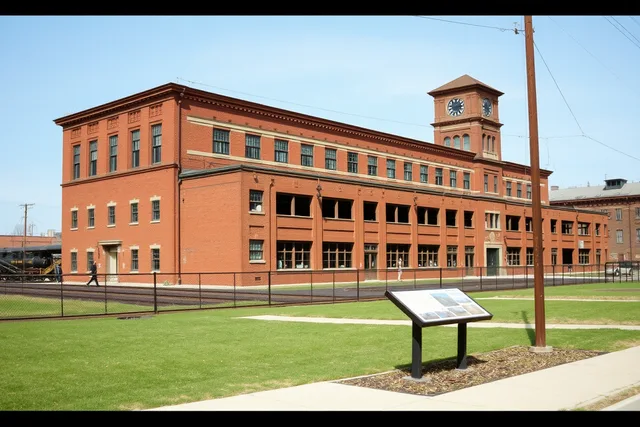
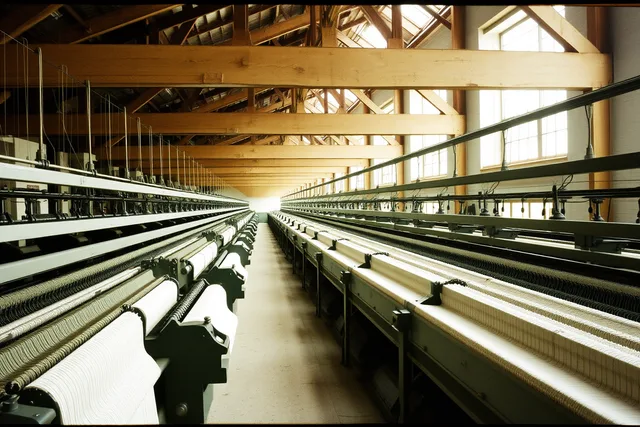
Hershey's Chocolate World is a visitor center attraction, and the working factory is not open to public tours. Lowell National Historical Park tours working textile machinery inside a national park. Sloss Furnaces in Birmingham is a preserved museum, not a live plant.
Who signs off and when to recheck
The checklist is complete when one named person signs the date and route version beside the tested route. Keep that single record instead of repeating it in each section.
Hand the finished file to someone who did not write it. Ask them to follow the arrival instruction, find the meeting point, name the route limit and describe the alternate plan. That test usually finds a detail the planning team has stopped noticing.
Allow 6 to 10 weeks from first site contact to first advertised date. Typical splits: 2 to 4 weeks for the written site agreement, 1 to 2 hours for the route walk, and one pilot run before sales open.
Recheck at the start of each season, and sooner if staffing, construction, hours or visitor behavior changes. Keep the previous version for comparison.
Insurance, liability and visitor waivers
Plant tours carry risks a museum gallery does not. Ask the host for its insurance certificate, indemnity terms and any requirement to name the site as an additional insured.
Hosts commonly ask for general liability cover in a typical range of $1 million to $2 million per occurrence. Treat that as a typical range and confirm the figure with your broker and the host risk team.
A signed waiver records that a visitor accepted the site rules, but it does not remove your duty of care. Use it alongside a spoken safety brief at the meeting point. Our guide to choosing factory tour help for U.S. sites covers what to ask a provider about insurance and supervision.