Guides
Industrial tour operator mistakes to avoid, from route checks to safety briefings
Industrial tour operator mistakes to avoid in 2027 help U.S. teams improve route planning, safety boundaries, access, staffing, visitor updates, and follow-through.
What to take away
- The most common mistake is selling a route nobody has walked this season. Last year's itinerary proves nothing about today.
- Name one route owner and one change approver before you publish a departure.
- Set group size by the narrowest point on the route, not by the biggest room.
- Carry a one-page route card with a version date on every departure.
- Track route changes, unanswered guest questions and transition delays, not just attendance.
Selling a route nobody has walked
Production schedules, maintenance shutdowns and construction fencing change which stops are usable. Recheck every stop in the week before departure, not in January.
Confirm the entry, meeting point, route sequence, capacity, exit and the person who can approve a change.
| Weak practice | What goes wrong | Better practice |
|---|---|---|
| Reusing last year's itinerary | The group reaches a locked gate | Walk every stop again before selling the departure |
| Quoting capacity from the largest room | Visitors stall at a stair or platform | Measure the narrowest usable point and cap there |
| Promising a stop by phone | No written record exists to correct | Publish a dated route card with a version number |
| Naming a contact who has moved on | Nobody can approve a day-of change | Reconfirm a named contact each season |
Route Selling Mistakes vs Fixes
Weak practice
- Reuse last year's map
- Closed or altered route
- Describe every possible stop
- Expect unavailable highlight
- Assume host is available
- Group waits, no decision-maker
- Ignore arrival details
- Late start, blocked access
What can happen
- Reuse last year's map
- Confirm against current conditions
- Describe every possible stop
- Sell approved route for date
- Assume host is available
- Confirm named site contact
- Ignore arrival details
- Test loading, parking, final walk
Better practice
- Reuse last year's map
- Describe every possible stop
- Assume host is available
- Ignore arrival details
Walk the route with the host before you book the coach. A working factory visits checklist lists what hosts expect before a group is allowed on site.
Example: Hershey's Chocolate World is not a factory tour
Hershey's Chocolate World in Hershey, Pennsylvania is a visitor center with a ride and exhibits. The working chocolate factory is not open for public tours, as its Chocolate World entry notes. Operators who advertise a plant tour sell an experience that does not exist.
Safety briefings that match the route
A briefing that lists every hazard on a large site teaches nobody anything. Cover the conditions on this route: where the group walks, which boundaries hold, what equipment is required, how to ask for help, and what happens if the group stops.
OSHA's general PPE rule (1910.132) requires employers to provide protective equipment when hazards require it. That is why hosts issue glasses and earplugs rather than let visitors bring their own.
- Hearing protection wherever the route passes a compressor or press room
- Safety glasses near open lines and cutting stations
- Closed-toe shoes for stairs, wet floors and grating
- Hi-vis vest where vehicles share the walkway
- Head protection wherever the host requires it for staff
Sizing the group at the widest point
Capacity is set by the tightest transition: a turnstile, a stair, a viewing platform, a loading dock. A typical range is one guide for every 10 to 15 visitors in production areas, with a sweep guide added past about 25 people. The site's own limit wins.
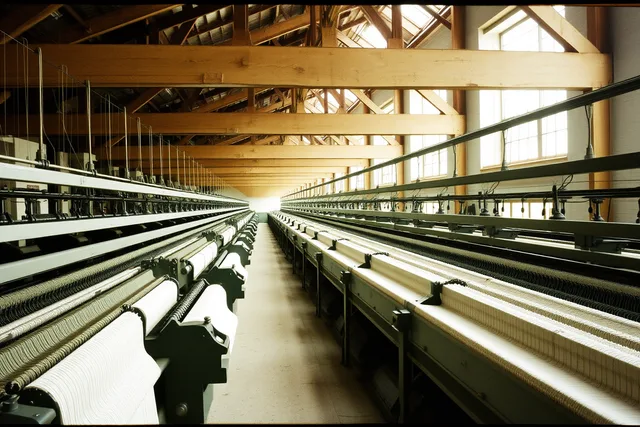
Lowell National Historical Park moves visitors through working textile mill buildings and canal routes. Its park pages show how one heritage district splits a crowd across mill floors and boats. Split the group at the pinch point, not at the entrance.
Regional patterns matter more than templates. Reading regional warning signs on industrial routes helps you see which stops break in which season before you publish dates.
Route card and pre-visit handoff
Send the guide one current handoff the day before the visit. Anything unclear should be questioned, not guessed.
- Route version, date checked and who checked it
- Group size, guide ratio and sweep guide name
- Meeting point, vehicle staging and departure time
- Access arrangement and who confirmed it
- Required PPE and where it is issued
- Site contact and the person who approves changes
- Alternate stop if the primary stop closes
Guide Route Card Contents
- Current route sequence
- Group limit
- Local restrictions
- Access notes
- Emergency contact
- Approved alternate stop
Operators selling Canadian departures need the same discipline. A Britannia Mine Museum underground tour booking guide shows how one site with a hard entry limit handles timed bookings, which is the pattern to copy.
Hiding a route change until the gate
Guests forgive a closure they hear about in advance. They do not forgive discovering it at the gate.
- Verify the change with the site contact rather than a driver or a rumor.
- Agree with the site whether the approved alternate keeps the core of the visit.
- Send booked guests one updatewhat changed, what remains, and how timing is affected.
- Hand the final route card to every guide before the group boards.
- Log the change for the monthly review.
What to measure after the visit
Attendance alone hides the problems that cost repeat bookings. Use one page per departure.
| Metric | How to track it | What a pattern suggests |
|---|---|---|
| Route changes | One line per change, with cause | The stop is oversold or seasonal |
| Time lost at transitions | Start and end time per stop | Group too large or route too long |
| Guest questions with no answer | Tally by stop | The route card is missing a fact |
| Access requests not met as planned | Note the request and outcome | Confirm earlier with the host |
Review the page monthly during the season. Two late departures in a month point at the meeting point. Three questions about the same machine point at a briefing gap.
If you sell departures across several states, comparing route questions for U.S. sites by region shows which stops move most often in a given season.
Common questions
What is the most common industrial tour mistake?
Selling a route nobody has walked this season. An itinerary from last year is a plan, not a fact.
Should a tour be cancelled whenever a stop closes?
Not usually. Use the approved alternate when it keeps the core of the visit, then tell guests before they travel.
How many guides does a plant tour need?
A typical range is one guide per 10 to 15 visitors, plus a sweep guide past about 25 people. The site limit wins.
What is worth recording after a tour?
Route changes and their cause, time lost at transitions, guide questions nobody could answer, and unresolved conditions with a named owner and date.