Guides
Industrial heritage travel checklist: how to spot mistakes before 2027 trips
Industrial heritage mistakes checklist for 2027 helps U.S. visitors verify public access, current rules, sources, and a realistic fallback before travel.
What to take away
- Confirm public access through the organization that runs the place, not a general history page.
- Separate the historical record from the live visitor details you publish.
- Keep a short route with one confirmed activity and a named fallback.
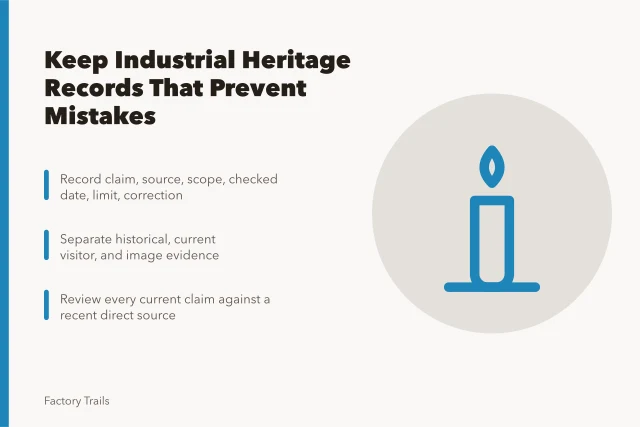
- Record the source page and the date you checked it for every claim.
- Expect one stop to change before a 2027 departure, and plan for it.
Start with a go-or-no-go screen
Run five questions before you commit to any industrial heritage stop.
- Can you name the specific question the visit answers?
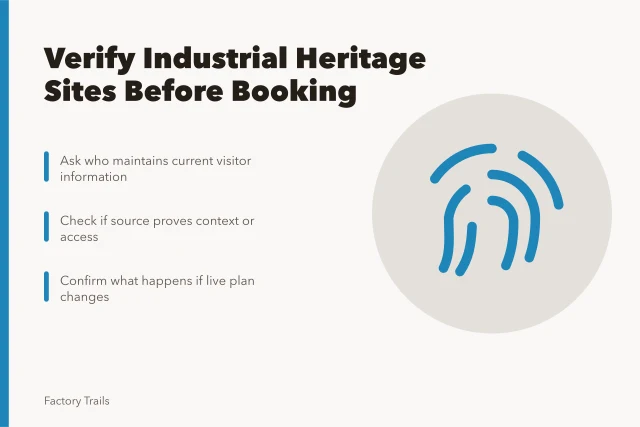
- Does every stop have a dated source you can cite?
- Is the access public, designated and suitable for the planned activity?
- Do route, hours and reservation terms work together on the same day?
- Is there a public fallback that answers the same question?
A gate that shuts at 5pm kills a 6pm stop. If you are still choosing a first trip, the questions to ask before booking cover the scoping decisions this screen leaves open.
The National Park Service Appomattox Court House compendium shows how site designations, closures, permit rules and public-use limits sit alongside wider park rules. A general history source cannot prove that one building, road or program is open today. Compendiums carry a version date, so check it before you cite one.
[figure 1]
Go or no-go screen
Can you name the specific question?
proceed to live details check
stop and define the question
Example: three sites that test the screen
Hershey, Pennsylvania is the cleanest trap. Hershey's Chocolate World is a visitor center attraction, and the working chocolate factory is not open for public tours. An itinerary that promises a factory walk is wrong before anyone packs a bag.
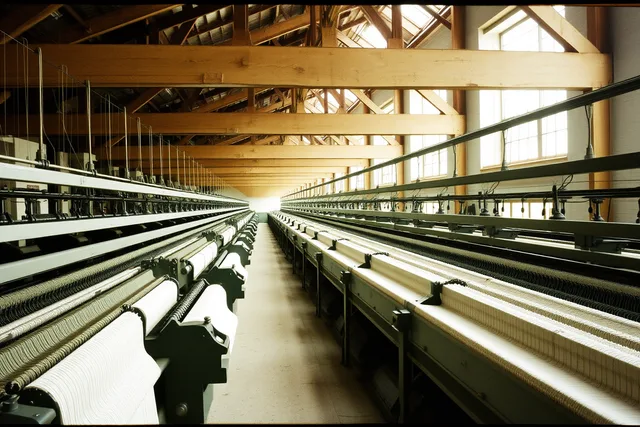
Lowell National Historical Park in Massachusetts narrows the question to which mill and which tour time. Working textile machinery and ranger-led tours run there on a schedule, not all day. Confirm the specific activity, not the park name.
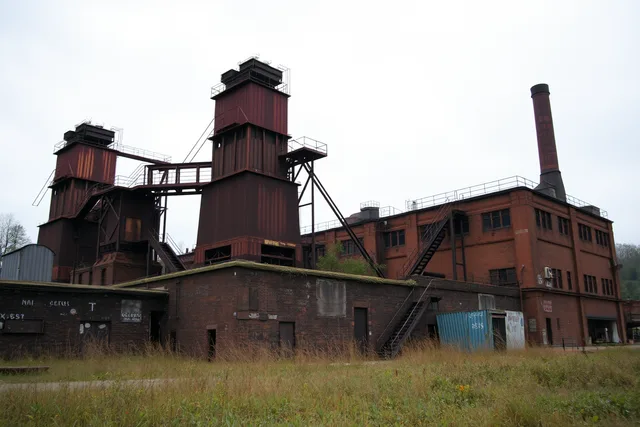
Sloss Furnaces in Birmingham, Alabama is a preserved blast furnace site that operates as a public landmark. For nearby stops that survive the same screen, the guide to Alabama sites beyond Sloss maps the region.
The pattern holds: name the operator, name the public activity, then confirm the activity still runs.
What to record for each live claim
| Field | What to record | When to recheck |
|---|---|---|
| Access | Official visitor page and designated entry point | Before departure |
| Time | Hours, tour times and reservation terms | Before departure |
| Route | Public roads, transit, parking or trail rules | Before departure |
| Claim | The exact page that supports your sentence | During editorial review |
| Fallback | A different public experience that answers the same question | When the main stop changes |
Five fields, one row each. The claim row is the one editors skip, and the one that causes the correction.
What changes for 2027 bookings
Two booking patterns will trip up 2027 planners.
The Royal Canadian Mint runs two different visits. Winnipeg shows the production facility, while Ottawa is the boutique mint with a different experience. Both publish set tour days and require advance booking, and peak-season slots are limited. Confirm the day on the Mint's visit page before you print a time.
Britannia Mine Museum near Vancouver runs an underground train tour with limited daily departures and seasonal operation. A 2024 review cannot tell you whether a 2027 slot exists. Cite the museum's own booking page, and see how to book the Britannia underground tour for the sequence to follow.
Nothing about a site is fixed by the calendar year alone. What changes is the booking window, the seasonal opening dates and the staffing that decides how many tours run. Recheck the site page in the month you travel, not the month you book.
Weak claims to cut before publishing
- Do not call a private property a visitor stop.
- Do not infer current access from an old photograph, map or review.
- Do not turn a historical business name into a current recommendation.
- Do not promise an open route the source does not confirm.
- Do not treat a closure, gate or posted boundary as an invitation to improvise.
Set the fallback rule before you travel. If the responsible page has not confirmed the main activity by your chosen date, use a separate public exhibit, visitor center or designated route that answers a related question.
Record what became unavailable and why you switched. The mistake prevention fixes for working factory visits cover the same ground for plant tours, where safety gear rules add a second layer.