Guides
How owner records shape industrial heritage travel cost planning before you book
Cost records for an industrial heritage trip keep each figure tied to the source that published it, so a stale price never rides along into a booking.
What to take away
- Record costs line by line, not as one trip total, so a single changed fee does not force a full recheck.
- Complete each line with five fieldsscope, price basis, source, check date and fallback.
- Reopen every live source before you book and again before you travel, then write the new date.
- Delete any figure you cannot reopen at its source. An unlisted cost beats a stale one.
- Keep archives and image credits in the file as context, never inside the money columns.
Every line uses the same five fields, filled in this order:
| Field | What belongs there |
|---|---|
| Scope | What the money covers: admission, guided tour, boat, parking, booking fee |
| Price basis | How the owner charges: per person, per group, per hour, included |
| Source | The page or office that published the figure, saved as a link or a file |
| Check date | The day you read that source and saw the figure |
| Fallback | A second option, already checked at its own source |
[figure 1]
If your scope is still loose, what to put in your scope checklist covers the items people forget to price.
Example: four record lines for a Lowell mill visit
Lowell National Historical Park in Massachusetts runs working textile mill exhibits and guided programs. Its own pages are the owner record for anything you write down. The park history pages name the buildings and the programs, and the fee and reservation pages carry the numbers you transcribe.
| Line | Scope | Price basis | Source | Check date | Fallback |
|---|---|---|---|---|---|
| 1 | Boott Cotton Mills Museum admission | Per person, as published | Park fee page, reopened by you | The date you read it | Mill Girls and Immigrants Exhibit |
| 2 | Guided canal tour | Per person, per departure | Tour booking page | The date you read it | Park trolley loop |
| 3 | Group tour arrangement | Per group, above a set size | Group reservations office, by phone or email | The date of the call, and who you spoke to | Two public slots on the same day |
| 4 | Parking and transport | Per vehicle or per transit fare | Parking page or the transit authority | The date you read it | A second lot, or another station |
The amount cell holds the figure you read on the check date, copied exactly. If you cannot read one, the line stays pending and stays out of the budget.
Where current fees actually live
Only the owner can carry a price. For a park mill site, that is the park's fee or reservation page. For a company that opens its plant, it is the operator's booking page, not a news piece about the tour. State heritage bodies and state tourism offices publish fees for the sites they fund.
Canada works the same way. The Royal Canadian Mint sells tours through its own visit page, and a mine museum sells tickets through its own system, as how to book a Britannia Mine Museum underground tour in BC sets out.
Where two bodies share a site, name both and record which one takes payment.
The Fairfield Works record and what an archive can do
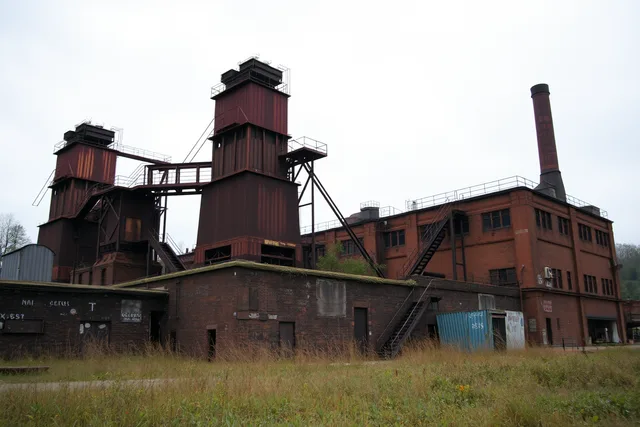
The Tennessee Coal and Iron Fairfield Works record is a Library of Congress catalog entry for historical material, including photographs, tied to an Alabama iron and steel works. It identifies what the material is and who holds it.
That is the whole job of an archive: it supports the historical half of your file. It cannot state whether the site is open or what a visit costs, because the archive does not run access.
What to do next: write down the catalog number and the holding repository, then stop. Ask the repository for a copy if you need one. For today's facts, go to whoever manages the land. A guide to Alabama's industrial heritage sites beyond Sloss Furnaces shows how far that trail runs past one city.
Status labels and the recheck rule
Three labels cover most cases. Confirmed means a responsible source states the live detail and you logged the date you read it. Pending means you have not found that source. Optional means the line can go without weakening the trip.
An address or an old brochure is not confirmation of a current fee. Records-management fundamentals explain why a filing system puts the date and the origin on every entry. Your trip file borrows that discipline at a smaller scale.
Write the limit beside each source. "Supports entry terms, not parking" stops a figure drifting into a claim it never supported.
A figure carried past the point where its support disappeared reads exactly like one checked yesterday.
The five-step review
- Open the responsible source for every live line and confirm the figure still appears.
- Write today's date in the check-date field.
- Delete any figure you cannot reopen.
- Check the fallback at its own source, not against the first option.
- Leave archives and image credits in place as context, outside the money columns.
Steps one and four are the two people skip when a trip is close. Both take minutes, and both protect the budget.