Reviews
Industrial heritage travel cost planning questions to ask before you compare 2027 trips
Industrial heritage cost questions for 2027 help U.S. visitors compare tours, public routes, museums, and research stops by value, access, and time.
What to take away
- Ask what each option teaches, how long it takes door to door and what booking rules apply, not only what it charges.
- No operator has posted 2027 rates yet. Plan on 2026 published terms and diary two re-checks: October 2026 and the week before you book.
- Compare named sites side by sideLowell National Historical Park, Sloss Furnaces, Hershey's Chocolate World, the Royal Canadian Mint and any National Park Service industrial site on your route.
- Write the deciding reason beside each option. A comparison that ends in a longer list has not finished.
Why no 2027 price exists yet
Nothing on sale today is a 2027 price. Museums and tour operators set next-season admission late in the current year, so any 2027 figure you find now is an estimate presented as fact. Treat the current published fee as the working number, labelled with the year it came from.
Diary two re-check dates. The first is October 2026, when next-season hours and reservation windows begin to appear. The second is the week before you travel, because closures and event days rarely surface earlier.
Record three things for every option: the page you read, the date you read it and the exact wording. That habit is the one set out in cost planning notes that hold up in 2027, which shows how a dated entry survives a later price change.
Five questions that make options comparable
- What will I learn here that I cannot learn anywhere else on this trip?
- Is the visit public, guided, ticketed or reservation-only?
- How long does it take door to door, with parking, buffer and walking included?
- What is the confirmed fallback if it closes or sells out?
- Which page states the current terms, and when did I last check it?
Five questions before comparing trips
- What will I learn here that I cannot learn elsewhere?
- Is the activity public, guided, ticketed, or reservation-based?
- How long does it require door to door?
- Does it serve the trip question or merely add a photo stop?
- What is the confirmed fallback?
These five sort the options before money enters the picture. A cheap ticket that teaches nothing you came for still costs you a day.
Put named sites side by side
| Site | What you get | Booking | Time to allow |
|---|---|---|---|
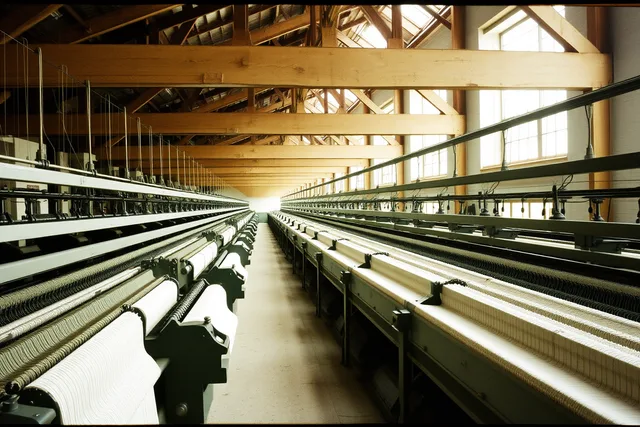
| Lowell National Historical Park, MA | Working textile mill floors and ranger programs | Timed mill tours, check ahead | Half a day |
| Sloss Furnaces, Birmingham, AL | Preserved iron blast furnace site and grounds | Check before you drive | 2 to 3 hours |
| Hershey's Chocolate World, PA | Visitor center attraction, not the working factory | Walk in | About 2 hours |
| Royal Canadian Mint, Winnipeg | Working production facility tour (Canada) | Timed, book ahead | 1 hour plus screening |
| Indiana Dunes, IN | Industrial and settlement heritage in a national park | Most sites need no booking | A full day with a car |
Common industrial heritage choices
Choice
- Guided tour
- Need staff interpretation
- Museum
- Exhibits answer main question
- Public route
- Site relationships matter
- Digital research
- Need original context
Often worth it when
- Guided tour
- Limited capacity, fixed times
- Museum
- Hours, separate program tickets
- Public route
- Weather, distance, boundaries
- Digital research
- Not live access information
Watch for
- Guided tour
- Museum
- Public route
- Digital research
The Hershey row catches the most common mix-up. Chocolate World is a visitor center, and the factory is not open for public tours, as the Chocolate World reference explains. Lowell is the opposite case, with real mill floors and ranger interpretation inside the park, listed on the Lowell National Historical Park page.
For furnace-scale sites, the Sloss Furnaces record covers the history, and our guide to Alabama's industrial heritage sites maps the stops that belong on the same route.
Example: a paid mill tour against a free canal walk
Example. Two travellers, one day in a mill city. Option A is a ranger-led mill tour at $12 each with a 10:00 start and 90 minutes inside. Add 40 minutes of travel and buffer, so the block runs 2 hours 20 minutes.
Option B is a free canal walk with $10 for day parking, 2 hours on foot and a 30 minute buffer. Cash cost is $24 against $10.
The value test is your trip question. If you came to understand how a power loom worked, the tour answers it and the walk cannot. If you came for how canals tied mills to markets, the walk answers more.
Run that test on every row before you total anything. The method behind it appears in factory tour cost questions for 2027 budgets, which turns each row into a decision instead of a list.
Typical ranges to hold in your head
Planning placeholders in 2026 dollars, not quotes. Museum admission $10 to $25 per adult. Guided industrial tours $15 to $40. Parking $5 to $20 a day. Public parks are often free.
Replace each placeholder as soon as the operator publishes a number. Put two totals on every line: cash and hours. A site with no ticket that adds 90 minutes of driving is not free at your day rate.
Checks before you commit
- Confirm the opening hours against your travel weekday.
- Confirm whether entry is timed or open all day.
- Confirm what the price leaves out, such as parking, shuttle or a special exhibit.
List the day in blocks. A timed 90 minute tour needs a two hour slot once travel and buffer are counted. A museum needs three if you read labels.
Museum rows fail more often on hours than on price, so settle manufacturing museum comparison questions before you lock a day.
Common questions
Is a guided tour always better value?
No. It wins when it provides access or interpretation your trip needs, such as a working mill floor. Otherwise a public route can answer the same question for less.
Can I compare options before 2027 prices exist?
Yes. Compare access, booking rules, duration and total cash cost on current terms, then swap in the published 2027 figure when it appears.
What makes an option poor value?
It is poor value when it eats time or money without adding anything that serves your trip question. A photo stop that costs half a day is the usual example.
Where should I look for the terms?
Start with the operator's own page, then the managing agency page for parks and public sites. Note the date on anything else you read.