Guides
Why do two years of argument sit behind every industrial interpretation panel?
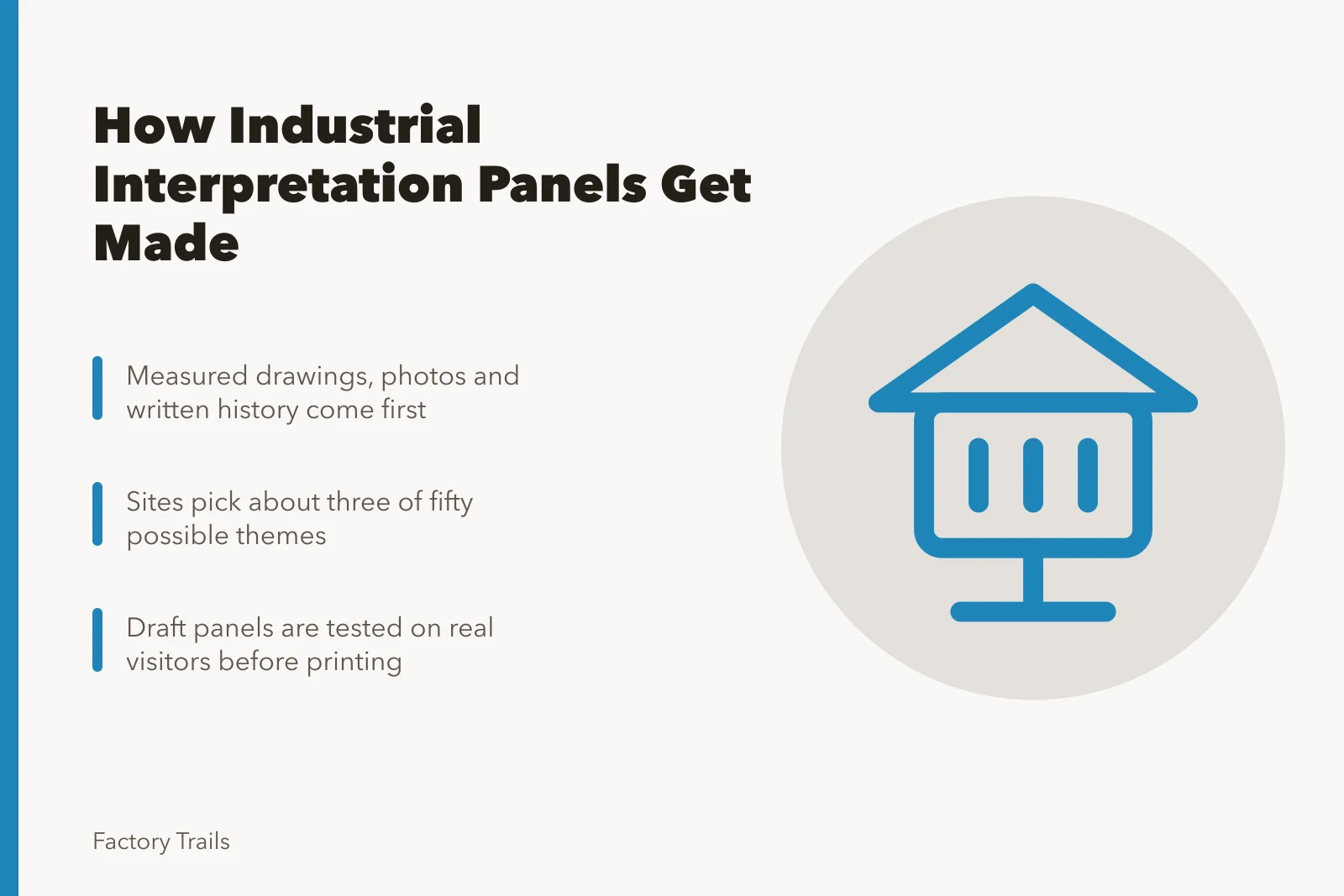
Every panel you read at a mill was argued over for two years. Knowing how that process runs tells you why some sites explain themselves and others do not.
What to take away
- Documentation comes first. A site that was measured and recorded can be interpreted accurately; one that was not gets guesswork.
- Themes are chosen deliberately, and what is left out is a decision rather than an oversight.
- Panels are the last resort of interpretation, not the first choice.
- Testing with real visitors is what separates a good site from an expensively designed one.
Interpretation is the work of turning a set of buildings into something a visitor can understand in ninety minutes. On an industrial site that is unusually hard, because the subject is a process rather than an event and the evidence is machinery rather than furniture.
Knowing how the work is done explains a great deal about why sites vary so much.
Stage one: record what is there
Before anybody writes a word for the public, the site has to be documented properly.
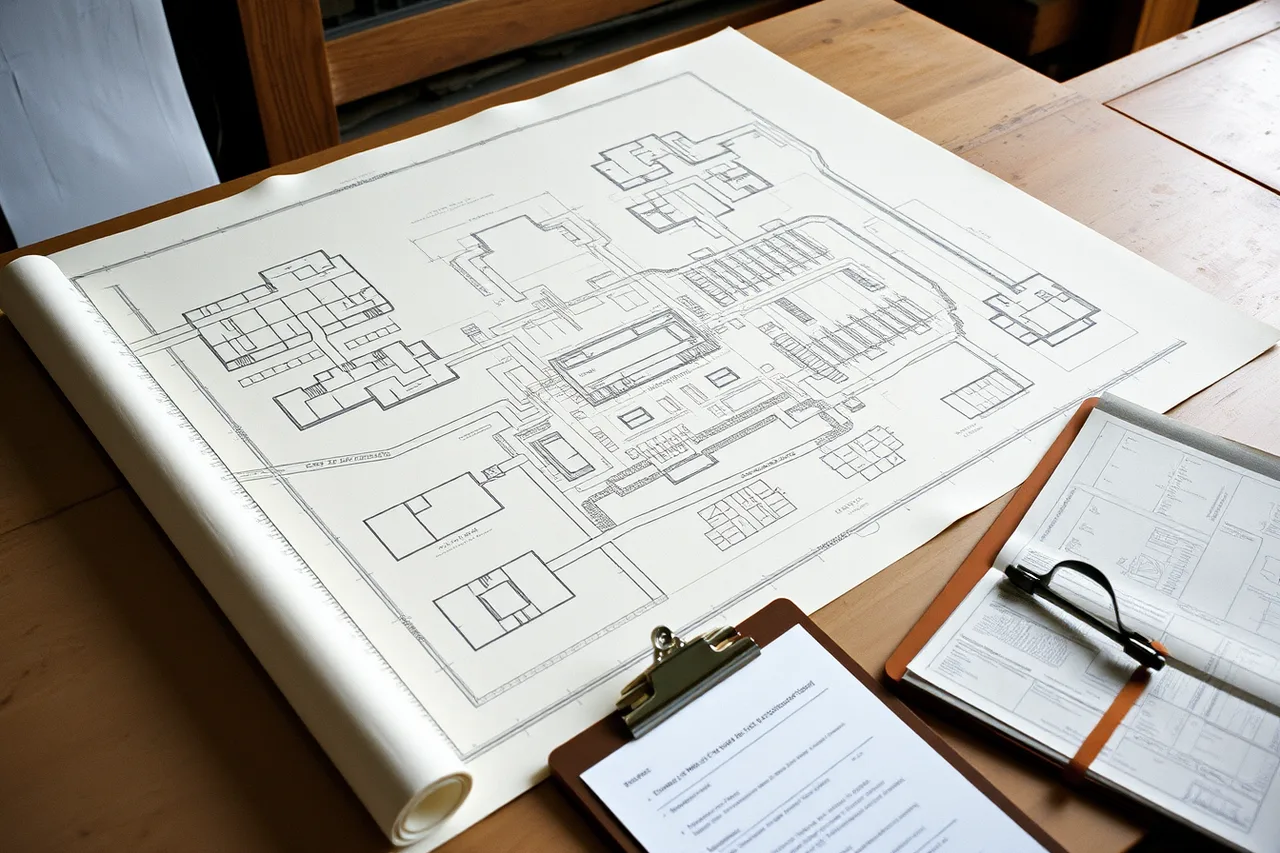
That means measured drawings, photographs and a written history, and for the setting as well as the buildings. The Historic American Landscapes Survey does that last part, and the program's pages explain how designed and vernacular sites are recorded, which for an industrial property covers the yards, the water systems, the tramways and the spaces between structures.
Sites with good documentation can say precisely what happened where. Sites without it end up with vague panels, and you can feel the difference within ten minutes of arriving.
Stage two: decide what the place is about
Every site could tell fifty stories and has room for four. Choosing them is the central act of interpretation.
Typical industrial themes: the process, the people who worked it, the technology's development, the community it built, the environmental consequences, and the reason it closed. Most sites can do three well.
What gets dropped is the decision worth noticing as a visitor. A site that covers the process and the founder but not the workforce or the closure has made a choice, and it is usually a choice about who the site is for.
Stage three: design the means
Only now does anybody decide what form the interpretation takes: guided tours, wayside panels, exhibits, audio, film, live demonstration, hands-on activity.
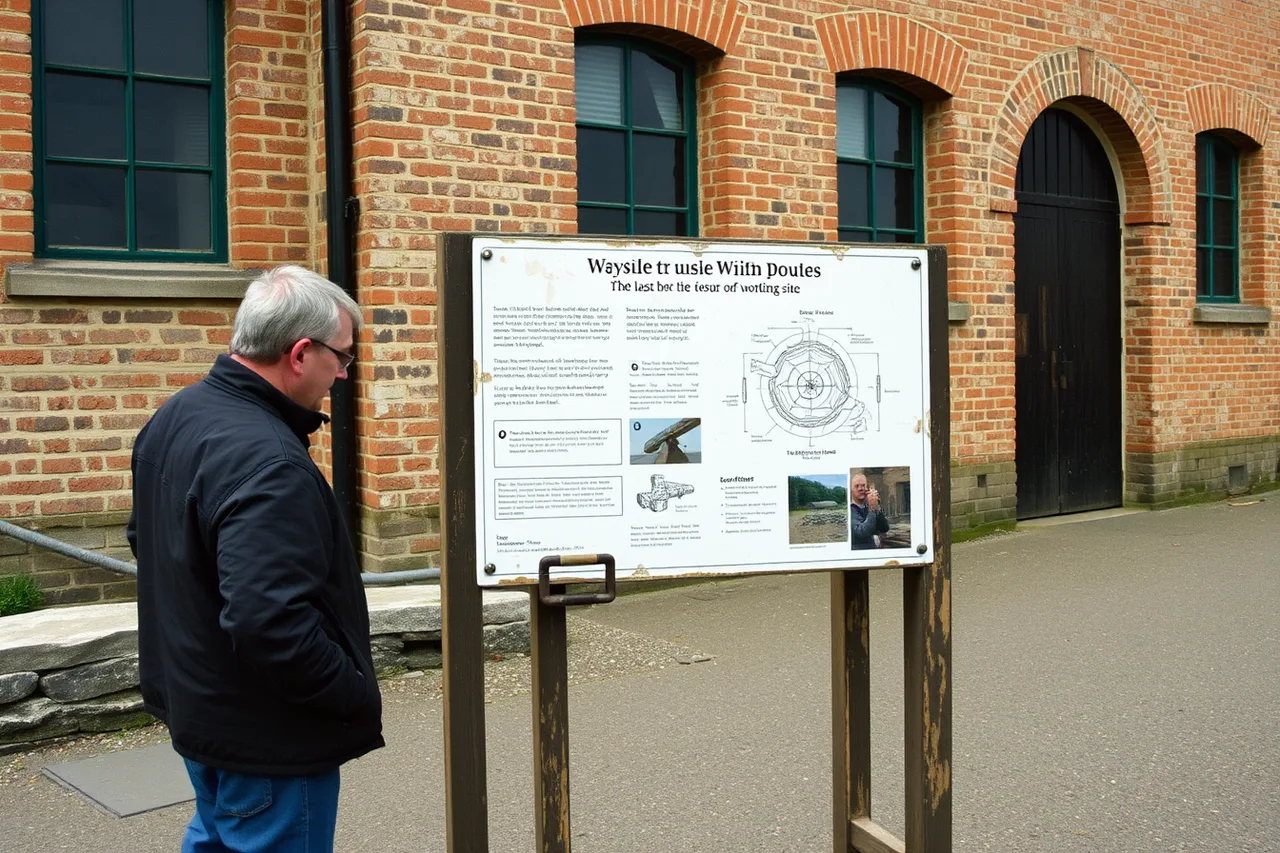
Inside the National Park Service this design work has a home, and Harpers Ferry Center is the office that produces exhibits, publications, films and wayside signage for sites across the system. Its existence is the reason federal sites have a recognisable quality of interpretation, and the reason a small independent museum with no such support struggles to match it.
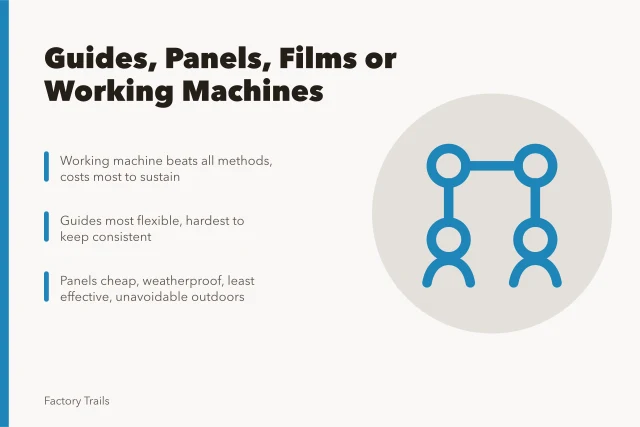
The professional rule of thumb is that panels are the last resort. A person, a working machine or an activity beats text every time, and text is what you use when nothing else is possible.
Stage four: test it on people
Draft panels get tested on real visitors, who reliably misunderstand things the writers thought were obvious.
Sites that skip this end up with interpretation that satisfies the historians and confuses everyone else. Sites that do it end up with fewer words, larger type and better questions answered.
Stage five: run it, and keep it current
Interpretation is not finished when it opens. Panels fade, films date, guides leave, and the research moves on.
A site that has not revised its interpretation in twenty years is telling you what was thought twenty years ago, which is itself interesting once you know to look for it.
What this means for a visitor
Ask when the interpretation was last revised, and who wrote it. The answers explain most of what you experience, and the good sites are pleased to be asked.
The wider trip these sites sit inside is set out in the industrial heritage starting point, and what to look for on a working plant tour is the same skill applied to a place that has not been interpreted at all.
Common questions
Why do some sites have so few panels?
Who writes this material?
Why is the labor history sometimes thin?
Can visitors influence it?
In this guide
- Local businesses do more for site interpretation with an archive, compared with a sponsorshipIndustrial site interpretation business: sponsoring a panel buys a logo. Handing over the company archive, or an afternoon with a retired foreman.
- Can a strong site tour really name what it deliberately leaves out?Ask what the tour covers and what it does not. A site that can name the themes it leaves out has thought about interpretation; one that cannot has not.
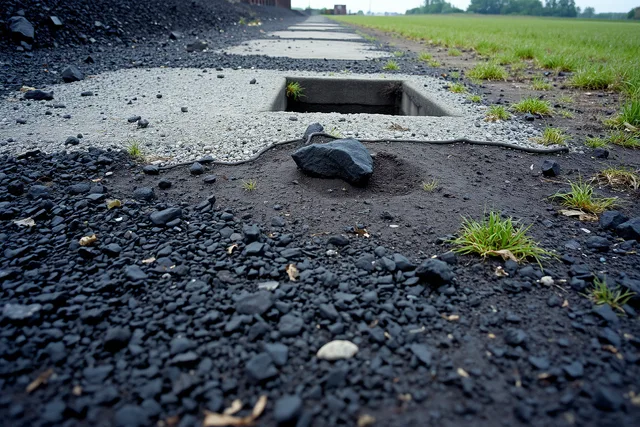
- Industrial site interpretation rated on what actually mattersIndustrial site interpretation: read the ground as well as the panels. Slag, tailings, fill and buried foundations are the site's own record.
- Site interpretation choices compared: guides, panels, films and working machinesGuide, panel, film, app or working machine. Each does one thing better than the rest, and most sites pick the one they can afford rather than the one that fits.
- 8 points worth checking on industrial site interpretationSeven things small industrial sites can do without a grant, starting with the cheapest and most powerful: recording the people who did the work.