Guides
Working factory visits safety checklist: 2027 planning guide for program teams
A working factory visit runs on approved access and current messages, so program teams confirm routes, hosts and changes before guests travel.
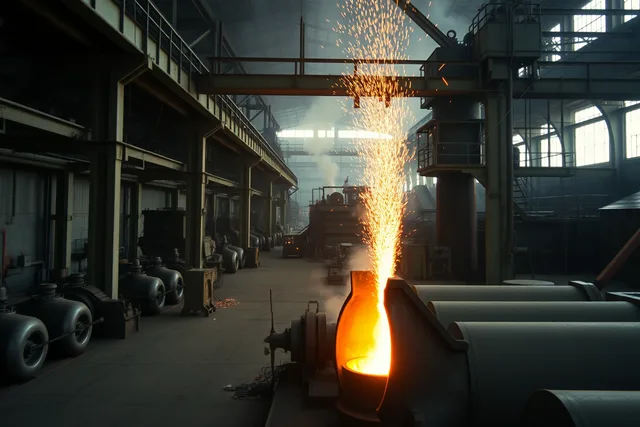
A live plant is not a museum floor. At Sloss Furnaces the furnaces stopped in 1971 and the site is preserved; at a working foundry down the road, a line may be pouring the morning your coach arrives. That difference decides what a visitor-program team can promise.
Your job is narrow. Confirm what the plant has approved, tell guests exactly that, and hand them to the host at the gate. You do not clear a route, judge a condition or write a safety rule.
What to take away
- A working plant can change its visitor plan the same week, so reconfirm before every session, not once a season.
- Ask the plant's safety officer or visitor coordinator for current PPE, escort ratio and induction requirements in writing, and publish only their wording.
- Book against the maintenance calendar. July and December shutdowns, relines and turnaround weeks move access without notice.
- Keep one approved guest message and one host brief. A partial update is how groups end up at the wrong gate.
- Route access, insurance and liability questions to a qualified attorney and the plant's own published visitor rules.
The working plant and its preserved twin
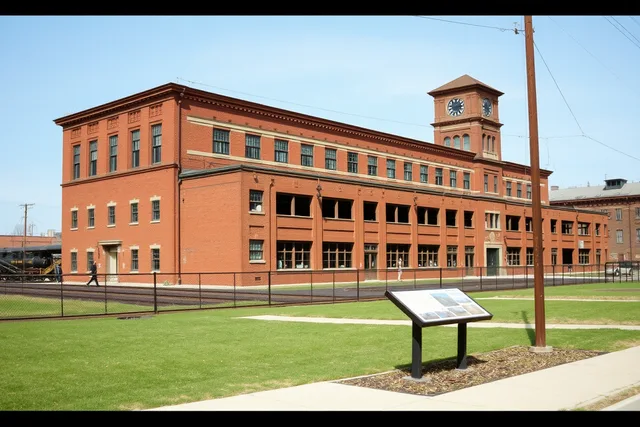
Heritage sites are built for visitors. Pullman National Monument, the Britannia Mine Museum and the Big Three at Rouge have fixed routes, permanent interpretation and staff whose job is the public. A working plant has none of that by default.
Its routes exist for production. A walkway closes because a forklift needs the aisle, not because anyone decided to inconvenience you. An escort is pulled to a breakdown. Noise, heat and moving vehicles are normal, not incidents.
So the first planning question is not what guests will see. It is which plant you are actually visiting, and who there is authorized to say yes. Write that name down before you invite anyone.
Confirm the plan before guests travel
Run a short confirmation with the plant contact before each session. Its purpose is to check that an approved plan still exists, not to inspect the site.
Pre-visit confirmation checklist
- Visit still authorized for date and size
- Arrival point, check-in, ID rule
- Host and named backup
- Planned route still available
- Plant-approved restrictions or changes
- Approved alternative if route unavailable
- Who answers host's unanswered question
"We cannot offer that part today" is a complete answer. It beats a vague promise that leaves a host improvising at the turnstile.
The confirmation call script
Keep it to five minutes and write down who said what.
Five-minute confirmation call
- State name, program, date, group size
- Confirm authorization, arrival point, host, backup
- Ask what changed on route or access
- Ask for approved alternative if route is out
- Repeat answers back and flag anything unconfirmed
"This is [name] with [program], confirming the [date] visit for [group size]. Can you confirm the visit is still authorized, the arrival point, and the host and backup? Has anything changed on the route or in what guests may see? If the route is unavailable, what alternative is approved? And who should the host contact for a question they cannot answer?"
Close by repeating the answers back. If any item is unconfirmed, say so in the guest message rather than filling the gap yourself.
What the host brief holds
What the host brief holds
- Group name and size
- Arrival time and meeting point
- Route version
- Confirmed visitor needs
- Day's key message
- Approved alternative route
- Contact for changes
Date the brief and name who confirmed it. If a condition shifts, the host follows the plant's established instruction and calls the named contact. Do not paste controlled procedures or sensitive site detail into a visitor document.
The Occupational Safety and Health Administration's office contingency-plan guidance describes named roles and coverage for employees, contractors and visitors in its own workplace context. Do not copy it. The transferable lesson is that visitor arrangements need named roles inside the plant's existing plan.
Give guests one honest message
Tell guests what they can act on:
- arrival time
- meeting point
- any confirmed identification or registration step
- clothing and personal-item guidance in the plant's own words
- expected duration
- the plain fact that the route can change
Say "follow the host's directions on site" rather than describing conditions you did not assess. Say "some areas may be unavailable" rather than naming a substitute nobody approved. Use the plant's approved visitor notice where one exists, and link to it rather than rewriting it.
The guest message template
Thank you for joining the [program] visit to [plant] on [date].
Arrive at [meeting point] by [time]. [Identification or registration step, if the plant confirmed one.] [Clothing and personal-item guidance, in the plant's wording.] The visit runs about [duration].
The route follows plant operations and can change on the day. Your host will give the current briefing at the meeting point. Please follow host directions while on site. Questions before the visit: [contact].
Keep a change log
Most avoidable failures start with a half-finished update. The plant moves the arrival gate, the host gets the new one, the booking confirmation still shows the old one.
Change log and update targets
Change
- Arrival point moves
- Guest message, calendar, brief
- Route changes
- Guest expectation, brief, alternative
- Host changes
- Organizer contact, day-of handoff
- Session limited or canceled
- Every booked guest, internal owner
What to update
- Arrival point moves
- Test reader finds new point
- Route changes
- Host confirms current version
- Host changes
- Backup named in writing
- Session limited or canceled
- Delivery and replies recorded
Completion check
- Arrival point moves
- Route changes
- Host changes
- Session limited or canceled
Log the date, the visitor-facing effect, who confirmed it and which channels were updated. Leave out causes, security detail and personnel information.
Access, photography and the shutdown calendar
Ask about photography permissions, tripod rules, noise, stairs and vehicle timing windows in the same confirmation call. Coach access often has a fixed window, and a plant running two shifts may only accept groups between them.
Access questions for the call
- Photography permissions and tripod rules
- Noise and stairs on the route
- Vehicle timing windows
- Coach access fixed window
- Shift pattern between-group gaps
- Maintenance calendarturnaround, reline, shutdown
Then check the maintenance calendar. A turnaround, reline or summer shutdown can close the exact route a brochure describes. The working factory visits checklist covers what a live site asks of a group that a preserved one does not.
Accessibility is a planning question
Ask early what the plant can currently arrange for a guest who shares an access need. Do not answer from a map, a photograph or last year's visit.
The Department of Justice's effective communication guidance ties the right arrangement to the nature, length and context of the communication and the person's usual method. Send the guest only what the plant confirms, and record that response.
Budget lines that move
Guide time, coach hire, insurance and staff hours are the four lines that change most between a preserved site and a live one. Escort ratios set guide numbers; vehicle windows set coach cost; the plant's insurer sets what your cover must show.
Budget lines that move
- 4budget lines that change most
- Group size / escort ratioguides needed, rounded up
- Vehicle windowsset coach cost
- Plant insurersets required cover
Keep the arithmetic in your own figures: guides needed equals group size divided by the plant's escort ratio, rounded up. The budget notes set out how those lines are built.
Close the loop after the visit
Ask the host and organizer what confused people. Watch for patterns: guests at the wrong gate, an old instruction inside a calendar invite, a route question asked three times.
Fix the message, then confirm the fix landed before the next session. "Three guests used the previous entrance instruction" is enough to act on. Do not turn a guest comment into a claim about plant conditions.
Keep the current version findable
Mark the live guest message and host brief, keep the approval that changed them, and retire older copies that can still reach a group. The National Archives web-records guidance describes managing published information across its life cycle, which is the practical model here.
Its records-management profile guidance treats records duties as ordinary management. Keep a short review note with the plan, the change, who approved it and the trigger for the next check. That note supports the next visit; it does not replace site operations or safety records.
Common questions
Does this checklist tell a plant how to run its safety program?
No. It covers visitor-program coordination only. The plant keeps control of operations, access, safety, security and emergency procedures, and its safety officer sets every requirement guests must follow.
What should happen if the route changes on the day?
Ask the authorized plant contact for the approved guest message and alternative, then update the host and organizer before anyone is directed. If no current approval exists, the group waits at the meeting point.
Can a coordinator promise every part of a tour?
Promise the approved purpose of the visit and say that conditions can force an authorized change. Naming a specific machine, area or demonstration as guaranteed is the promise that breaks.
What belongs in the coordination record?
The date, the visitor-facing change, who confirmed it, the messages affected and the follow-up. Controlled operational, safety and personnel records stay in the plant's own systems. Before the next booking cycle, review the factory tour warning signs so weak visitor planning is caught early rather than at the gate.
In this guide
- Factory visits safety checklist: how to scope working tasks before you bookFactory visit safety scope checklist for 2027 helps U.S. coordinators separate guest communication tasks from facility decisions about access and operations.
- Factory visit safety questions to ask before your 2027 program startsFactory visit safety questions for 2027 programs help teams confirm who owns each answer, what changed since last year, and which checklist version guests hold.
- Factory visit safety budget notes: how to build 2027 cost linesFactory visit safety budget notes for 2027 help U.S. program teams estimate guest communication, host readiness, approved materials, and change-management costs.
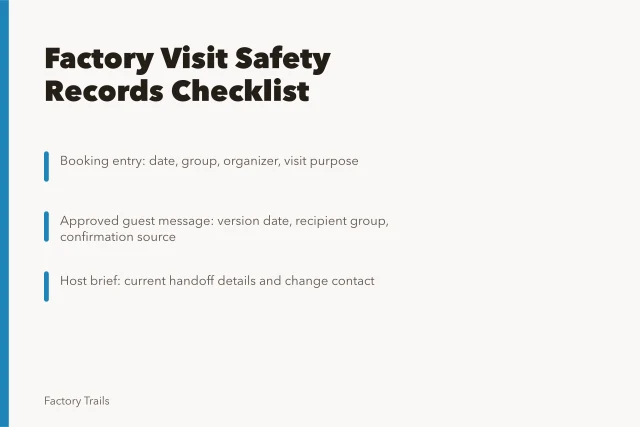
- Factory visit safety records: who owns the working checklist?Factory visit safety records guide for 2027 helps U.S. teams keep booking details, approved messages, host briefs, and change logs without duplicating site records.