Reviews
Part of How to run a working factory visits case study method for 2027 teams
Working factory visits: case study questions to ask before you trust a claim
Factory visit case study questions for 2027 help U.S. teams define evidence needs, test claims, identify context, and separate results from interpretation.
What to take away
- Ask five questions in ordercontext, evidence, decision, result and limit.
- A claim you can trust names a record and a date.
- Rewrite any question that carries its own answer.
- Write down what the case cannot show.
- Copy the interview plan below and fill one row per claim.
The five questions, in order
Ask these five before you accept a visit claim. Every answer must point to a record and a check date.
| Stage | Question | What counts as an answer |
|---|---|---|
| Context | What decision was on the table? | A dated request or schedule change |
| Evidence | Which record carries the claim? | A published page or approved tour script |
| Decision | Who approved the public wording? | A named role and an approval date |
| Result | What happened next? | A later document, not a memory |
| Limit | What can this case not establish? | A written boundary in the text |
The GAO's evidence-based policymaking guide treats evidence as information used to assess results and improve decisions. Settle what you need before you write the claim.
[figure 1]
Case question sequence
- Contextdecision required
- Evidenceoriginal and final message
- Decisionwho approved change
- Resultwhat record shows next
- Limitwhat case cannot establish
Example: a mill tour claim, answered in five rows
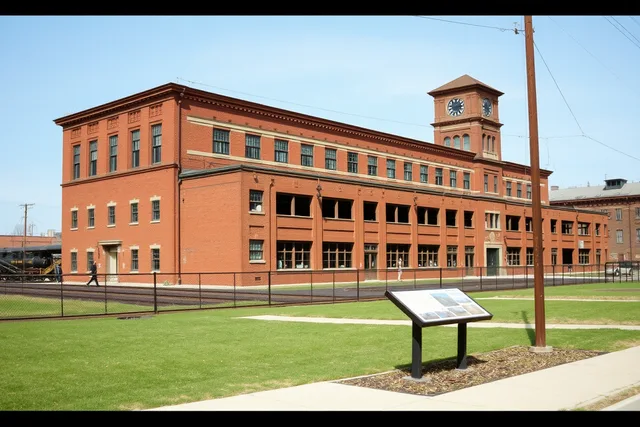
A park page says a guided walk shows mill machinery that still runs. Here is the sequence filled in.
| Stage | Answer for this case | Record that carries it |
|---|---|---|
| Context | The park had to decide what a guided walk could show inside a mill building. | The published tour listing and schedule |
| Evidence | The claim fits the museum floor the park describes. | Lowell National Historical Park |
| Decision | Interpretive content is approved by a named role, such as chief of interpretation, not by the guide on the day. | A role title and a date |
| Result | The tour listing is a record any reader can check. | The park page, read on a stated date |
| Limit | It cannot tell you what runs on the morning you visit. | One sentence saying exactly that |
Two rows end without a number or a cause. That is the point. The case describes a route and a demonstration, then stops short of a result nobody measured. The factory tour case study questions piece covers rows like these when a site hands you a marketing sheet.
Questions that carry their own answer
"How did the new map cut arrival delays?" assumes a cut. Ask instead: "What record shows arrival times before and after the map changed?"
Leading questions are easy to write by accident. The fix is mechanical: name the record the answer must come from, then delete any verb that assumes an outcome.
- Does the question name a record you could read?
- Does the wording assume a cause?
- Could two staff members answer it differently and both be right?
- Would the answer still hold if the guide left the site?
Inference is not evidence. A case that fills a gap with reasoning looks confident and reads as opinion.
Unchecked claims sink a visit write-up. The factory visit mistakes list covers several more that groups meet on the day.
A sample interview plan you can copy
- Context. Ask what decision was being made, and when the process started.
- Evidence. Ask which document or script carries the claim you want to publish.
- Decision. Ask who approved the public wording, and on what date.
- Result. Ask what later record shows what happened after the change.
- Limit. Ask what the site cannot show a visitor, and quote the answer.
| Exchange | Answer | How to log it |
|---|---|---|
| "What changed in the route?" | "We moved the entry point to the loading door in March." | A dated action. Worth a record check. |
| "Did visitors get through faster?" | "It felt better." | An opinion, not a result. Keep it out of the findings. |
Booking paperwork is a record as well, and a confirmation email usually carries a date and a scope. If you are testing claims about an underground tour, see how to book a Britannia Mine Museum underground tour in BC for what a confirmation should contain.
Records, approvals and privacy
For each question, name the record or the role that can answer it before you ask. The National Archives guide Plan Your Visit advises defining your subject and locating the holdings before you travel. Apply that order in miniature.
An approval role is the weak point in most cases. "The team decided" is not a role, and a guide's memory is not an approval. Ask for a title and a date, then put both in the case.
Workplace questions drift into private ground. Names, shift rosters and security layouts usually stay out of a published case, and a site can refuse outright. Settle what the program may publish before you write.
Add a check date to every case so a reader can see how current the evidence is and when the claim should be tested again.
Put the evidence checks inside the project scope. The factory tour budget checklist shows where verification sits against the other line items.