Guides
Part of How to run a working factory visits case study method for 2027 teams
How to scope a working factory visit case study: a 2027 checklist
Factory visit case study checklist for 2027 helps U.S. teams select one real question, define scope, gather approved evidence, and state limits clearly.
Use this checklist before drafting a factory-visit case study. It prevents the common problem of starting with a conclusion and searching for evidence afterward.
What to take away
- Select a narrow visitor-program question.
- Collect permitted sources before writing.
- State what the case does not prove.
Complete the case file
- Write one question about a documented visitor-program decision.
- Name the date range, records, and roles included.
- Mark private, controlled, or unapproved information as excluded.
- Save the original and revised visitor materials where relevant.
- Record who confirmed each public-facing fact.
- Distinguish fact, interpretation, and lesson in the draft.
- Add a limitation statement before publication.
Check / Evidence
- Case question
- Written scope note
- Change described
- Dated approved message or brief
- Public claim
- Source ledger entry
- Lesson
- Factual result plus stated limit
CDC's case-study writing guide recommends giving readers context, describing the problem, explaining what happened in order, and stating outcomes and lessons. Use that structure, but publish only facts the visitor program can support.
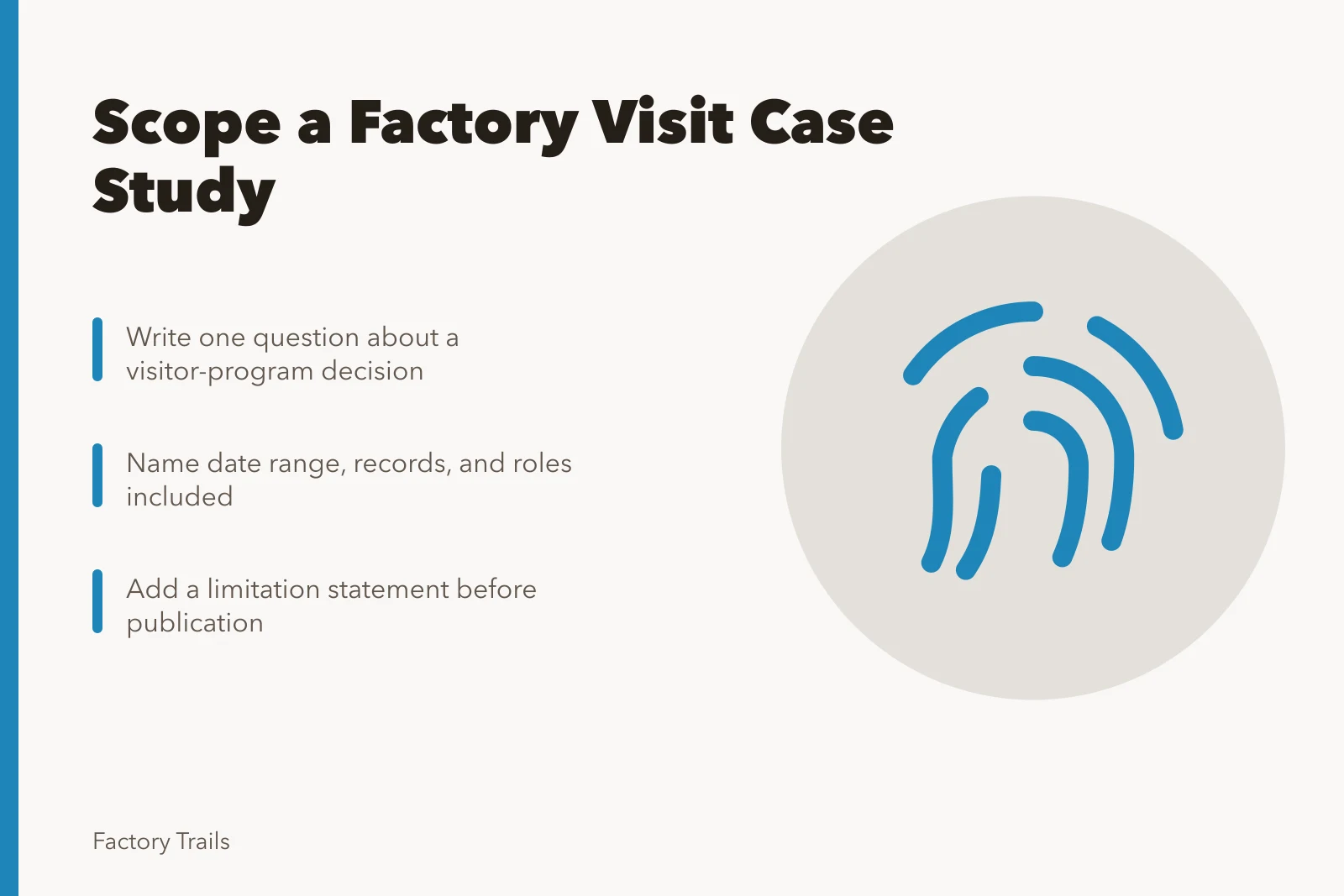
Case file completion steps
- Write one documented decision question
- Name date range, records, roles
- Mark private information excluded
- Save original and revised materials
- Record who confirmed each fact
- Distinguish fact, interpretation, lesson
- Add limitation statement before publication
Run a claim check
Read each result sentence and ask what record supports it. If the answer is an impression, convert it into a clearly labeled lesson or remove it. A case is stronger when it has fewer defensible claims than when it makes broad promises.
Confirm publication readiness
Before publication, check the draft against the source ledger one final time. Verify dates, role labels, image credit, title, and the limitation statement. Confirm that every public example was approved for that use. If a reviewer cannot identify the source for a claim in a few moments, the sentence needs a citation, a narrower form, or removal.
The checklist also needs a closing owner. Name the person who accepts the final case and the location of the working record. This prevents the article from being published while its approval trail remains scattered across email threads.
Separate observation from conclusion
Use a case file that makes the distinction visible. The National Archives analysis worksheets guide researchers to observe primary sources and ask questions about what they reveal. In a factory-visit case, list what was seen or documented first, then state the limited conclusion the record supports. This keeps a visitor comment from becoming a claim about every guest or every season.
Check the public boundary
Confirm what a writer may observe, photograph, quote, or describe before materials are collected. The Occupational Safety and Health Administration's visitor and contractor safety resource explains that contractors can face hazards at host worksites and need site-specific information. A visitor program should use its own authorized boundaries, but the basic lesson applies: do not assume that access to a location authorizes public description of its operations.
Retain a simple evidence trail
Keep the final draft with the source notes and approval record. The National Archives records-management profile guidance treats records responsibilities as part of normal program management. For this checklist, that means a future editor can trace a claim, see its date, and know who approved it without recreating the research from memory.
Finish with a publication packet
Before publishing, gather the final article, source ledger, image license or permission, approval note, and dated change log in one packet. Read the headline and summary against the body. A narrow case should not acquire a stronger promise in the title than its evidence supports. Check that the text says who observed a condition, when the observation occurred, and whether it represents a limited example or a documented result.
Then ask a reviewer who was not involved in drafting to find one claim in the source file. If the reviewer cannot locate its support in a few minutes, improve the record or reduce the claim. The goal is not to produce a large archive. It is to leave enough evidence for a fair reader and the next responsible editor.
Use the packet as the launch checklist. Once it is complete, the public version has a defensible beginning, clear limits, and a reachable owner for future corrections.
Common questions
Can a case be short?
Yes. A concise case with clear evidence and limits is better than a long narrative with unsupported claims.
What should stay out of the case?
Personal data, controlled site information, and conclusions the records do not establish.
Who approves publication?
Use the organization's normal content and facility-review process for the information in scope.