Guides
Warning signs that a U.S. factory tour is heading for closure in 2027
Coastal factory tours face rising water, shrinking access and shifting routes, so operators need warning signs that separate weather from real vulnerability.
What to take away
- A storm is weather. A walkway that floods after ordinary rain is a vulnerability, and the two need different responses.
- Coastal sites should plan against projected conditions, not against the worst event they have already survived.
- Route changes hit visitor groups unequally. A shorter path can remove the only accessible viewpoint on site.
- Escalation works when a guide can act the same day without waiting for a meeting.
- Assign each recurring condition to the role that can fund, repair, schedule or communicate it.
Weather is not the same as vulnerability
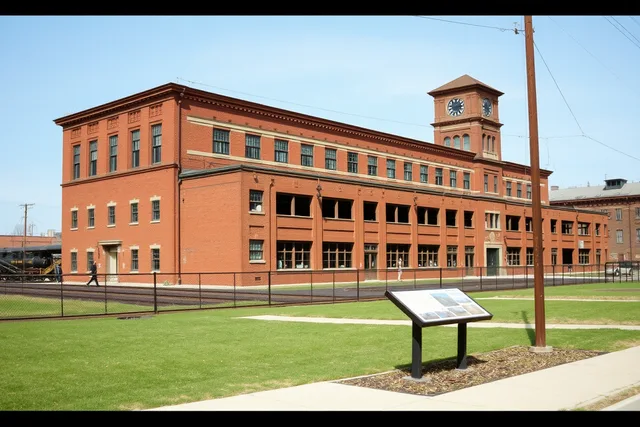
Slater Mill sits close to the Blackstone River in Pawtucket, Rhode Island, and that proximity is the exhibit. It is also the exposure.
A storm is an event. A walkway that ponds after routine rainfall is a vulnerability. The first may need a closure and an inspection. The second needs drainage, a new route, a seasonal closure, or an indoor alternative with the same interpretive content.
The National Park Service sets out redesign, relocation and abandonment as real options for facilities facing coastal hazards, and asks managers to plan against projected conditions rather than a single event.
Its coastal-adaptation guidance is written for park units, but the logic transfers to any preserved industrial site on tidal or riverine ground.
Warning signs that point to closure by 2027
Coastal Route Warning Signs
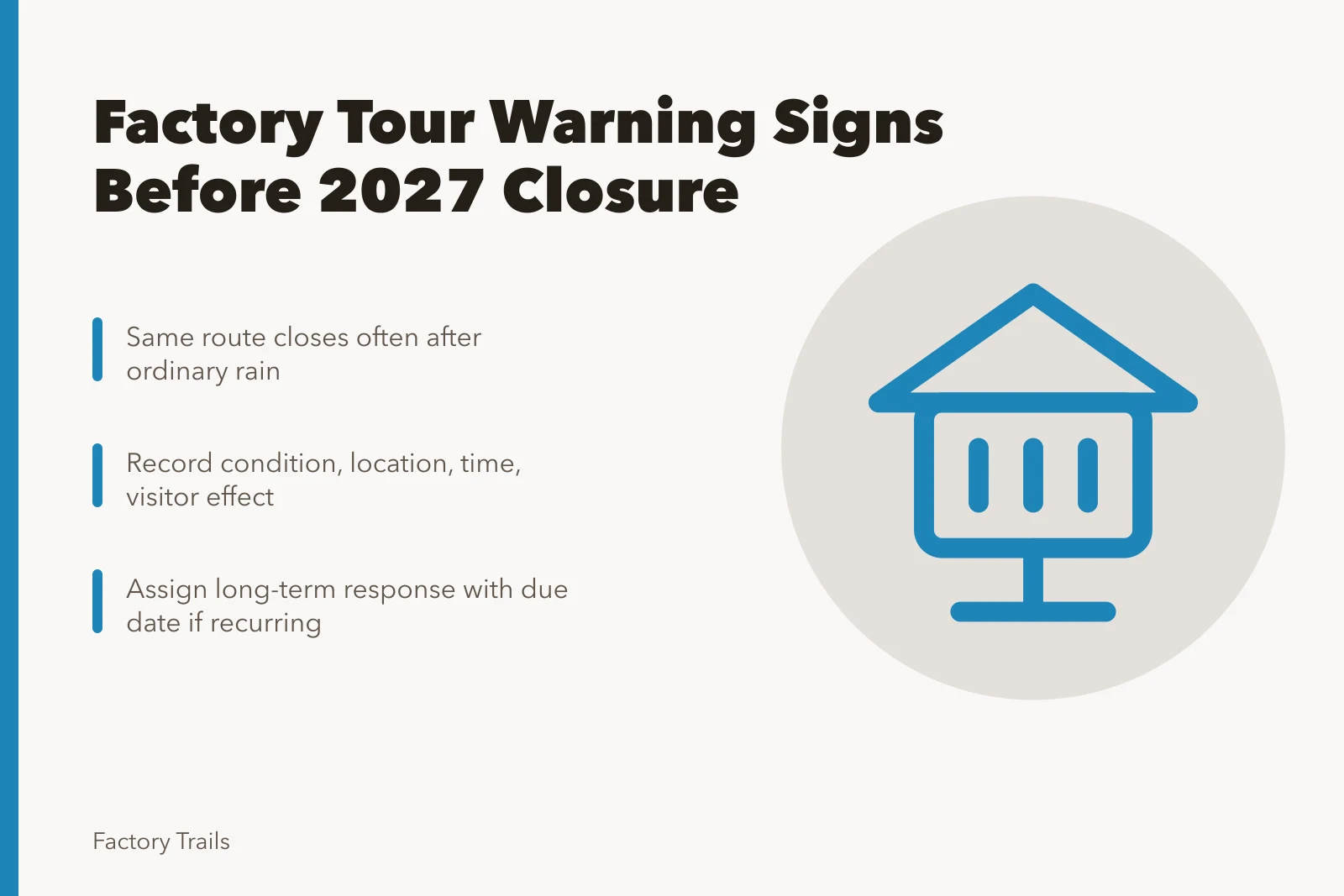
- Same exterior stop closes after light rain
- Visitors arrive surprised by conditions
- Guides improvise the detour
- Group capacity drops in wind or tide
- Temporary barrier still standing next season
| Warning sign | What it usually means | First move | Threshold (frequency or trigger) |
|---|---|---|---|
| The same exterior stop closes after light rain | Surface, drainage or grade is failing, not the weather | Log the rainfall trigger and the closure time | Two or more closures in one season, or one closure after rain below the site's light-rain mark |
| Visitors arrive surprised by conditions | Booking copy and arrival briefing are out of date | Rewrite the visitor message before the next program | One or more groups per month arrive unprepared |
| Guides improvise the detour | No documented alternate route and no named owner | Publish a route map with a decision owner | Any unplanned detour without a named owner, or two in a season |
| Group capacity drops in one wind or tide state | Departure timing and staffing do not match local exposure | Shift departure, group size or program format | Capacity loss on any departure in that state, twice in a season |
| A temporary barrier is still standing next season | A recurring condition has no funded long-term response | Move it into the next budget cycle | Barrier still present at the start of the next season |
What makes closure likely by 2027
The 2027 season is the test. Closure or a shortened route becomes likely when a recurring condition has no funded fix in the current budget, no named owner and no date for repair.
Three seasons of the same closure is a strong signal. A single storm is not. A site with one funded repair and a working detour can stay open. A site that keeps a temporary barrier past a second season is on the closure path.
Lowell National Historical Park in Massachusetts and Sloss Furnaces in Birmingham, Alabama, face the same questions. Both are U.S. industrial heritage sites with recurring water and access problems. The checklist does not rest on Slater Mill alone.
Check the surface before you blame the weather
The U.S. Access Board's floor and ground-surface guide describes accessible surfaces as stable, firm and slip resistant. It does not prescribe work at a historic foundry or mill. It does give a team shared language for deciding when a walking condition needs review rather than another cone.
Walk the route in the rain. Note where water stands, where brick spalls, where a wooden walkway flexes. Compare that against the site's own accessibility statement, which is the document that governs what the site claims it offers. If the two disagree, the statement is what a visitor relied on.
Route changes do not fall evenly
This is the part most plans miss. A shortened loop that helps a group in July heat can delete the only level viewing point on the property. A detour that suits twelve adults can be unusable for a school group of thirty with two chaperones.
Ask who loses access when the route moves. Visitors using wheelchairs, visitors with low vision, older visitors who need rest points, and school groups all absorb a change differently. A program can keep its historic character and still add seating, a rest point, or an equivalent interpretive stop that reaches the same story.
When a warning requires evacuation or a staff response, use the host site's own procedures. OSHA's emergency action plan guidance covers reporting, evacuation routes and assigned duties.
It is useful for one narrow question: who has the authority to move a group or close a section. That authority belongs in the plan, not in a guide's judgment call at the barrier.
Keep the escalation short and funded
A warning sign is only useful if a guide can act on it the same day. The sequence that survives a busy season is short:
Same-Day Warning Escalation
- Record condition, location, time, visitor effect
- Make approved adjustment or close section
- Notify facilities or program operations owner
- Check recent logs for same condition
- Assign long-term response with due date
- Guide logs the condition with time, location and a photo.
- Guide applies the pre-approved route change or closure for that condition.
- Program lead confirms the change and tells the booking desk.
- Maintenance or operations owner assesses the fix and sets a repair date.
- Capital or scheduling owner funds the permanent response or approves a seasonal closure.
Step five is where most sites stall. A condition that returns three seasons running is not an operations problem. It is a capital or scheduling problem, and it needs an owner who can fund it.
Fix costs vary. A surface patch and drainage cleanup often runs from a few thousand dollars. A regrade, new path or accessible ramp can run from tens of thousands to six figures where permits or archaeology apply. Treat those as typical ranges, not quotes.
Review the log monthly, not annually
The Visitor Use Management Council's monitoring guidance treats monitoring as feedback for judging whether a management action worked. A warning log does the same job: it shows a trend, prompts an action, and later shows whether the action held.
Group entries by condition and location. Sort each pattern into daily operations, seasonal planning, a repair request, a capital project, or visitor communication. Then tell staff what changed. Guides record better detail when they can see the record lead somewhere.
Regional planning is the frame that holds this together across sites, because a condition that closes one riverfront tour is often already documented two valleys over.
Common questions
How many repeat incidents make a warning sign?
There is no universal number. One serious event can justify action on its own. Smaller problems earn attention when they repeat, or when they reduce safety, access or supervision.
Should visitors be told about a recurring condition?
Yes, when it changes route conditions, physical demands, timing or what they will actually see. Put it in the booking copy and repeat it at arrival, where it is easiest to act on.
Who owns the long-term fix?
The role that can fund, repair, schedule or communicate the change. The program lead tracks completion. If nobody can name that role, the condition will return next season.