Guides
How to keep factory tour planning records for 2027 visits
Factory tour planning records for 2027 keep routes, approvals, visitor messages and change notes current so guides and site contacts work from the same file.
What to take away
- A working plant and a preserved site need different recordsSloss Furnaces runs a fixed route, an operating foundry changes its route when the floor changes.
- Keep one current version of each delivery document and label every older copy superseded, so no guide has to guess which PDF is approved.
- Write what happened, not what you concluded. "The foundry stop was closed at 10:15 a.m." is a fact; "visitors seemed confused" is an observation.
- Give the route sheet, visitor message and approval note a named operating owner and a backup.
- Review post-visit notes for repeats, then assign each one an owner and a date.
Planning records are the working memory of a factory-tour program. They show what the team promised, what the site approved, what actually happened, and what should change next time. Without a current file, a guide works from an old route and a site contact has to reconstruct an earlier decision while a coach is waiting.
A working plant and a preserved site keep different records
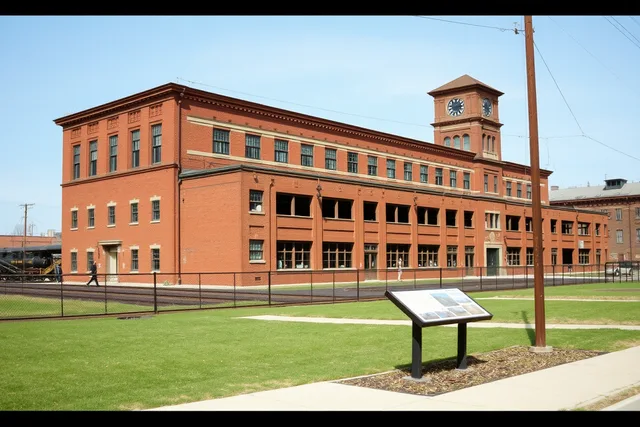
Sloss Furnaces in Birmingham is a preserved site: the route is fixed, the stops do not move, and a route sheet can stay accurate for years. A foundry that still pours metal is the opposite. A stop closes for a ladle change, a walkway shuts for maintenance, and the approved route from March is wrong by June.
That difference decides what you record. At a preserved site, log the date you last walked the route and who signed it off. At a working plant, log the condition that moved the route, the time it moved, and who authorized the change. A single record type will not serve both.
Keep the records that run the visit
| Record | What it should include | When to update it |
|---|---|---|
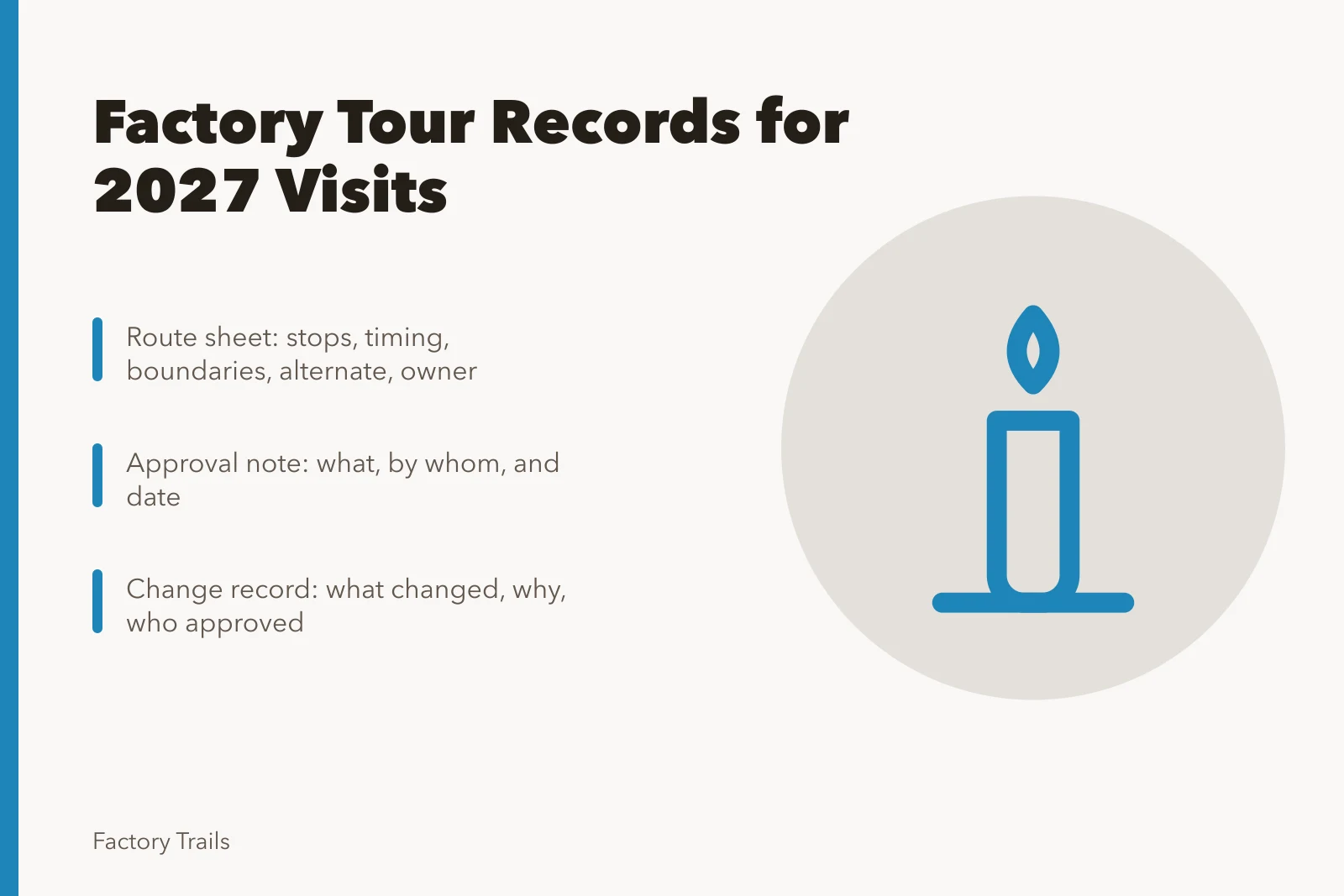
| Route sheet | Stops, timing, boundaries, alternate, owner | After each material route change |
| Visitor confirmation | Meeting point, arrival window, access conditions, contact | When a requirement or route changes |
| Approval note | What was approved, by whom, and on what date | At the decision point |
| Contact list | Site lead, guide, booking contact, backup | When roles or numbers change |
| Visit note | Attendance, conditions, issue, action | Shortly after the visit |
| Improvement log | Change, owner, review date, outcome | When a recurring issue is found |
Use one current version for delivery. Keep older versions only when they explain why a decision was made, and mark each one superseded on its face. A guide should never have to choose between three similarly named PDFs. Name files with the site, the route, the version date and the owner.
Separate the fact from the observation
A useful visit note reads: the foundry stop was closed at 10:15 a.m., the site lead directed the group to the alternate, and the change message reached visitors before they moved. Every clause is checkable.
The next line is different in kind. If the guide thought the alternate confused people, write that as an observation and say what supports it, such as two visitors asking where the furnaces were. An impression recorded as a fact becomes a false constraint on the next plan.
The National Archives records-management FAQ index covers the purpose and management of records generally. A tour operator answers to its own policies first, but the discipline holds: a record should carry enough context to be found, understood and used later.
Protect information that should not travel
Keep visitor names, personal access details, security-sensitive route information, unapproved images and confidential operating notes out of any public-facing folder. Give staff the documents the visit needs and hold restricted material in the controlled location the operator already uses.
The U.S. Small Business Administration information-quality page describes records management as creation, maintenance and use, then archiving or disposal. The requirements differ for a private operator, but the lifecycle prevents a common failure: saving everything and being able to find nothing.
Make a change record part of the routine
When a route, group limit, equipment rule, meeting point or visitor message changes, add a short entry. State what changed, why, who approved it, when it takes effect, and which files need revision. A different staff member should be able to give the same answer from that entry alone.
The Occupational Safety and Health Administration hazard-communication standard governs workplace hazard communication, not visitor records.
For anything site-specific, the plant's own safety officer and published visitor rules are the authority. Treating a factory tour like a sightseeing attraction causes most visitor mishaps, because the records that keep a working floor safe and predictable are the same ones a casual outing never bothers to keep.
Use post-visit notes to improve delivery
Read the notes in a batch and look for repeats. If visitors miss the meeting point every week, rewrite the confirmation. If the alternate route runs more often than the primary, fold it into standard planning. If a guide asks for the same phone number every trip, fix the contact list.
Each pattern gets a named owner and a review date. A note with no owner is a recap, and recaps do not change anything.
For costs that need financial support, keep the documentation with the business record. The Internal Revenue Service recordkeeping guidance explains that businesses keep records supporting income and expenses. It does not set a tour operator's full retention policy, which can also depend on contracts, insurance and state rules. Ask a qualified attorney about the last two.
Common questions
Who owns the current planning record?
Name one operating owner and one backup. Both should know where the current route sheet, visitor message and approval note live, and either should be able to hand them to a guide without searching.
What belongs in a post-visit note?
The date, the group, the route actually walked, and any material change. Who approved it, the issue observed, and a named next action. Keep facts and observations in separate sentences so the reader knows which is which.
When should records be removed or archived?
Follow the operator's policy and any obligations that apply to it. Keep current delivery material easy to find, and move older material to controlled storage rather than deleting it in place.