Reviews
How to compare manufacturing museums across regions before you book travel
Compare named manufacturing museums by region, theme, access and booking rule, with examples from Dearborn, Washington, Lowell, Birmingham and Pittsburgh.
What to take away
- Compare named sites, not regions. Lowell National Historical Park is a stop; a state or region name is only a label.
- Score each candidate on five criteriatheme, public activity, booking model, access, and the live operator page.
- Book timed factory and mint tours before you buy flights, not after.
Five criteria that make two regions comparable
- Themeprocess, place, workers, transport, or product.
- Public activitymuseum floor, guided tour, preserved ruin, exterior viewpoint, or a seasonal program.
- Booking modelfree entry, ticket at the door, timed slot, or seasonal tour.
- Accesstransit, car, or a site reachable only by road.
- Current sourcethe operator's own page, with hours that cover your travel date.
Two sites in one state can differ on all five. A region label predicts almost nothing on its own.
Panels age and sites change hands. Record who publishes the visitor information and when it was last reviewed, a step the industrial site interpretation checklist lays out in order.
The comparison table: named sites by region
| Site | Region | Theme | Booking model | Access |
|---|---|---|---|---|
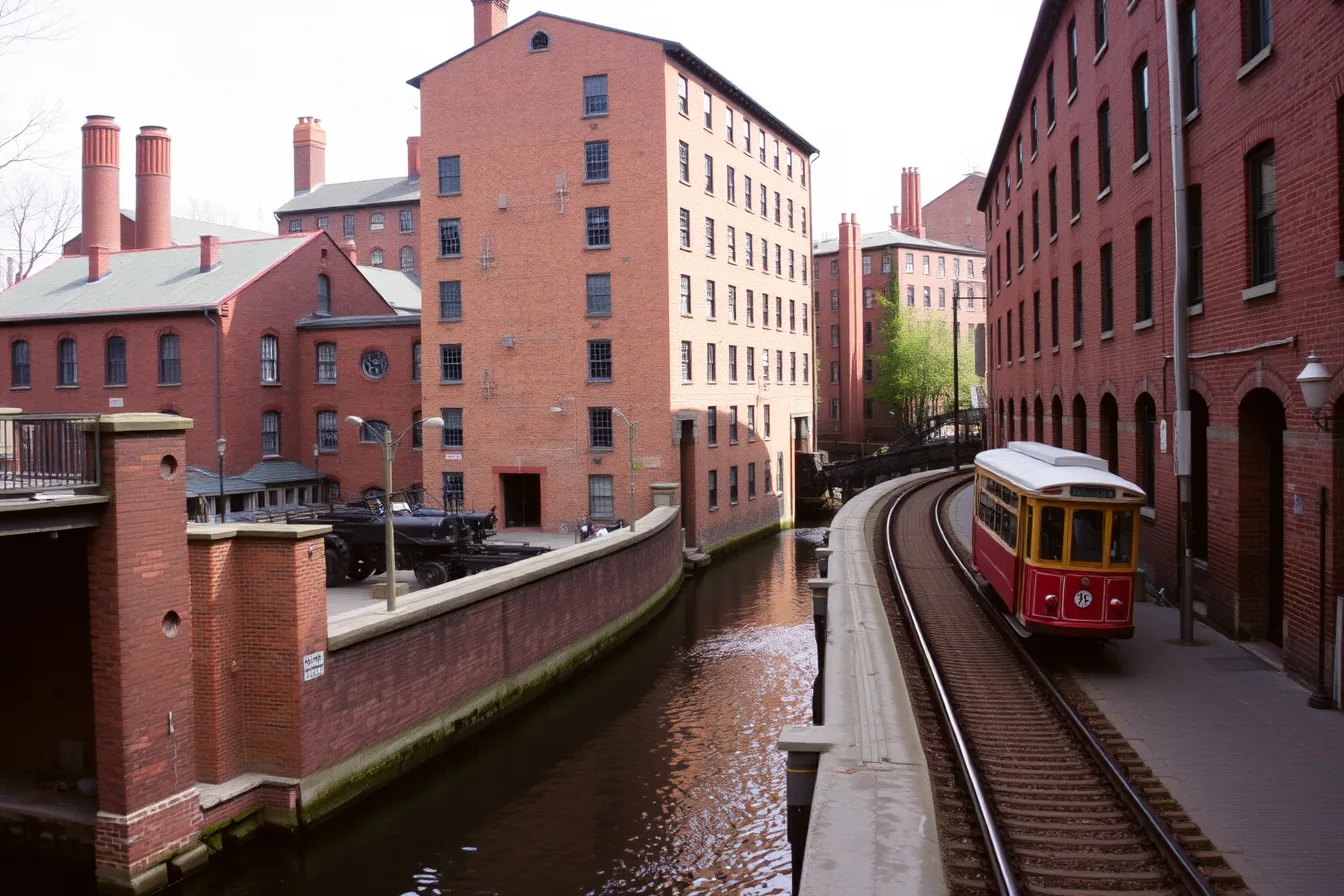
| Lowell National Historical Park, MA | New England | Waterpower, textile mills | Free entry; some tours ticketed and seasonal | Commuter rail from Boston; walkable |
| National Museum of American History, Washington, DC | Mid-Atlantic | Manufacturing, invention | Free; timed passes at peak periods | Metro |
| Carrie Blast Furnaces, Rankin, PA (Rivers of Steel) | Mid-Atlantic | Steel, labor | Ticketed guided tour, seasonal | Car |
| Hershey's Chocolate World, Hershey, PA | Mid-Atlantic | Confectionery | Free visitor center; factory not open to the public | Car |
| The Henry Ford, Dearborn, MI | Midwest | Assembly line, innovation | Ticketed; Rouge Factory Tour separate and timed | Car |
| Mill City Museum, Minneapolis, MN (Minnesota Historical Society) | Midwest | Flour milling | Ticketed | Light rail, downtown |
| Sloss Furnaces, Birmingham, AL | South | Iron, labor | Free grounds; guided tours may charge | Car |
| Baltimore Museum of Industry, MD | Mid-Atlantic | Regional manufacturing | Ticketed | Car, some bus |
| Royal Canadian Mint, Winnipeg, MB | Canada | Coin production | Ticketed, scheduled times | Downtown, walkable |
| Britannia Mine Museum, BC | Canada | Copper mining | Ticketed, scheduled underground tour | Car, roughly 45 minutes from Vancouver |
Prices are left out on purpose. Operators reset them most seasons. As a rough range, expect about USD 15 to 35 for a ticketed industrial museum and CAD 20 to 40 for a Canadian mint or mine tour. Treat these as typical bands.
Booking windows and timed entry
The Rouge Factory Tour at The Henry Ford runs on timed entry, separate from the main museum ticket. Summer mornings go first. The Rouge Factory Tour rules cover bag limits and the walking route through the plant.
Book two to four weeks ahead once your Detroit dates are fixed. Peak weekends need more.
The Royal Canadian Mint splits its visits. The Winnipeg production tour and the Ottawa boutique are two different bookings, and Winnipeg runs on a fixed daily schedule with limited seats.
Timed entry is the tightest constraint in industrial tourism. When a site sells slots, treat the slot as the anchor of the day.
Example: two Mid-Atlantic stops under one label
Carrie Blast Furnaces and the National Museum of American History share a region label. One is a free Smithsonian building on the Metro. The other is a seasonal guided walk through a steel ruin, reachable only by car.
Hershey repeats the gap in another form. Chocolate World is a free visitor center beside the plant; the working factory is not open for public tours. The Chocolate World entry records that split. Expect a visitor attraction, not a factory walk.
Travel logistics between the nominated sites
Downtown stops are usually reachable by transit. Lowell National Historical Park sits in the city center, and the park's visitor pages list current hours and tour times.
The car-dependent stops are Carrie Blast Furnaces and Britannia Mine Museum. Pair each with a second site nearby to justify the drive.
Sloss Furnaces keeps its grounds free to walk, and the Alabama industrial heritage guide maps the Birmingham sites that fill the same day.
Checklist before booking:
- Timed slot reserved for every site that sells one.
- Transit or parking confirmed for each stop.
- Closure days checked against your travel dates.
- Safety rules read if the tour crosses a live production floor.
Canada as a second market
Winnipeg and Britannia Beach are the two strongest Canadian stops for a list like this. Both run scheduled tours and charge admission. Winnipeg is the only one of the two with a production-floor tour, and the Ottawa mint visit is a shop and exhibit instead.
Write one fit line per candidate
Close each option with one sentence naming who it suits. Choose The Henry Ford for assembly-line history and a full day. Choose Lowell for waterpower and canal walks. Cross Sloss Furnaces off if you need step-free indoor access.
Keep sponsorship out of the method. A sponsor can pay for travel. It cannot supply evidence or turn a private site into a public stop. A factory tour budget checklist helps you price tickets, transport and time before you commit.