Guides
Manufacturing museum mistake prevention: a scope checklist before you publish
Manufacturing museum mistake prevention means checking each visitor promise against a current operator source and dated floor plan before the guide goes live.
A manufacturing museum guide fails quietly. The history is right, the writing is clean, and a visitor still drives two hours to a gate that does not open. The fix is not more research. It is a narrower promise, tied to a source you can point at.
What to take away
- Sort every claim into one of three kindsstable history, live visitor condition, or fit opinion. Each needs different support.
- Treat the headline, summary and caption as claims, not decoration. They usually promise the most.
- Set the review date by how fast the claim changes, not by how long the article is.
- Keep the source link, the date checked, and the correction note beside each live claim.
- Hand a second editor only the practical claims. If a promise needs inference to defend, cut it.
Sort the claims before you edit them
Do not approve a draft as one block. Go sentence by sentence and mark anything that tells a reader to do something: enter a building, watch a demonstration, follow a route, park, or buy a ticket.
Claim kinds and their evidence
Stable history
- Example
- Furnace charged 1908
- Supported by
- Dated archive
- Cannot prove it
- Tuesday opening
Live visitor condition
- Example
- Casting floor open Tuesdays
- Supported by
- Operator's current page
- Cannot prove it
- 1908 crew work
Fit opinion
- Example
- Suits older children
- Supported by
- Editorial judgment
- Cannot prove it
- Access or hours
Then label each marked sentence.
| Claim kind | Example | What supports it |
|---|---|---|
| Stable history | A furnace was charged in 1908 | A dated archive or published history |
| Live visitor condition | The casting floor is open Tuesdays | The operator's own current page |
| Fit opinion | This suits families with older children | Editorial judgment, stated as judgment |
The label decides the evidence. A history page cannot prove a Tuesday opening. A ticket page cannot prove what a 1908 crew did.
Headlines and captions promise the most
Read the title, the summary and the image caption on their own, with the body hidden. These three carry the broadest promise in the fewest words.
Caption promise check
Does the caption promise access to the building?
prove the access or rewrite as historical
caption describes the picture, keep it
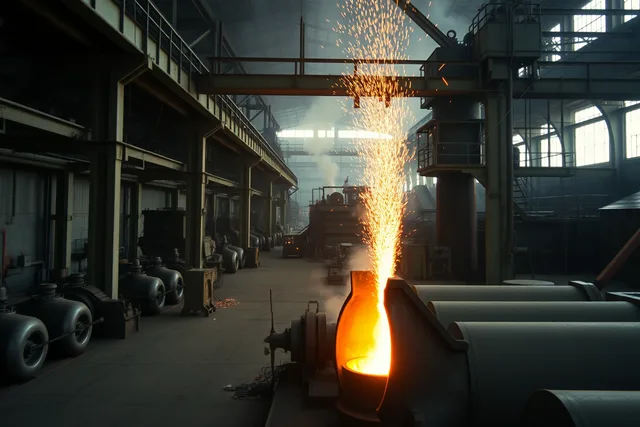
If the headline says "tour," the body needs a current source for a tour. If the caption shows a working line, a reader assumes the line runs. Historic photographs are the usual trap: a 1940s plant floor looks like a place you can stand in.
Check the caption against the entry. Does the caption describe the picture, or does it quietly promise access to the building in it? If it promises access, either prove the access or rewrite the caption to name the image as historical.
Worked fix: a caption reading "Working line, 1948" becomes "Line at work in 1948. Not open to visitors."
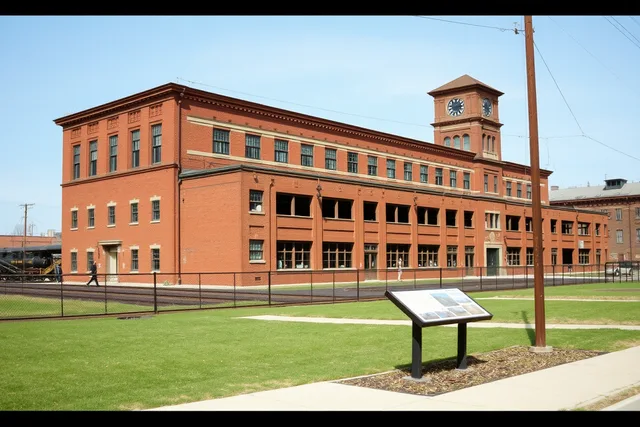
Read the title, summary, site entry and current link in that order, then ask whether the reader can identify the place and find the operator's own information.
Set the review date by volatility
A founding date can sit for years. A maintenance shutdown, a temporary exhibit, a seasonal boat, or a fee cannot.
Give each live claim its own reminder, and store it with the source page next to the draft. When the reminder fires, you check one page instead of rebuilding the research.
Two clocks run on every site entry: the historical context and the current visitor terms. They age at different speeds, so they get different dates.
Keep the record traceable
The National Archives' records-management fundamentals support one habit: source, date checked, and a note on what changed. The National Park Service Museum Handbook, the Smithsonian visitor-accessibility page and the National Park Service's current-conditions guidance back separate review dates for historic context and live visitor terms.
For the wider pattern of plant access, running lines and preserved twins, see the working factory visits guide.
Ask a second editor for the claims only
Hand over the draft with the practical sentences highlighted. The second reader should point to a current source for each one without leaning on a photo, a review, or a history page.
Anything that needs inference goes into a limitation note or comes out. A two-stop guide with confirmed details beats a long list that readers correct on arrival.
Common questions
What belongs in every site entry?
The exact public activity, the operator's current source, and what the visit excludes. Without the exclusion, readers assume the whole site is open.
Why check image captions on their own?
A caption can imply access. Read it alone and ask what a visitor would expect.
When does a claim need a review date?
When it can change without an edit. Programs, routes, fees and seasonal services qualify; founding dates usually do not.
When should an entry come out of a list?
When no current source supports the essential visit. If the operator cannot confirm it, cut the entry.