Guides
Manufacturing museums fundamentals: a visitor checklist before you go
A manufacturing museum checklist that separates what a site collects from what a visitor can actually do there on the day of the trip, including hands-on demos.
What to take away
- Confirm the public experience firsthours, last entry, admission, and whether demonstrations run on your date.
- Treat a collections page as history and the operator's visitor page as the live source for the day.
- Keep historical context and live visitor terms in separate fields, so a correction touches one and not the other.
- Give every live claim a source note with five fieldspage, date checked, supported sentence, limits, next review date.
- Name the operator page behind any number. If none exists, label the figure as your own estimate.
Split the collection from the live visit
A manufacturing museum holds two different things at once. One is a collection, cared for over decades and interpreted for its own sake. The other is a public experience that can shift between Tuesday and Friday.
A checklist that keeps them apart survives a site update. A checklist that mixes them goes stale quietly, and a reader books travel around a demonstration that stopped running last season.
Care and maintenance decisions behind the scenes shape what a visitor sees on the floor, so manufacturing museum care questions belong in the same trip plan.
Start with the live terms. Collection focus is context. It says what a site holds, not what is open, staffed or running on the day you arrive.
Example: Saugus Iron Works, Lowell and Sloss Furnaces
The Saugus Iron Works collections page is a good model. Archaeology, historical research and archival documents together document an iron-making site and the people who worked it. Nothing on that page says whether a building is open or whether a demonstration runs.
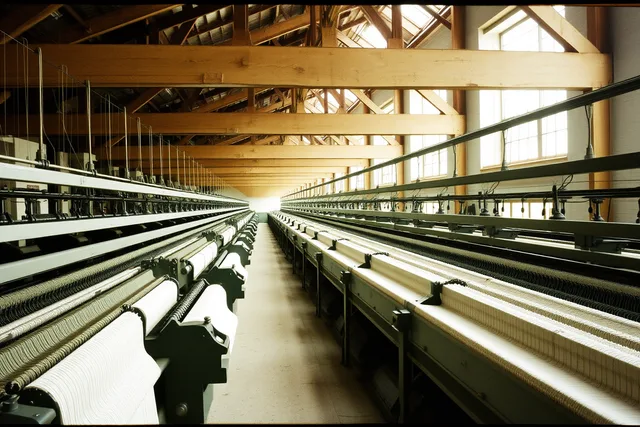
Lowell National Historical Park takes the other route. Its working textile mill exhibits and tours sit on a published seasonal schedule. Program times belong to the park's visitor page, not to a description of the mill machinery.
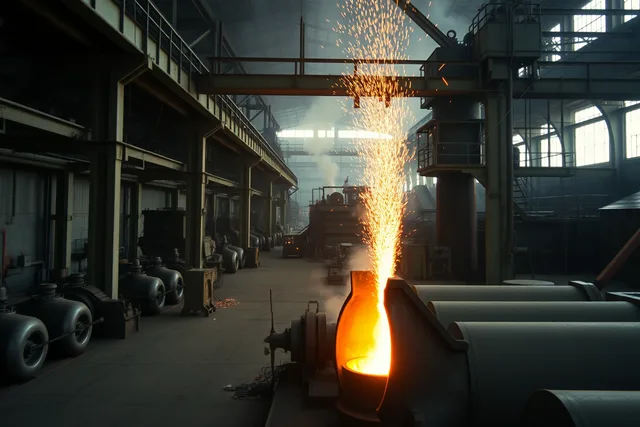
Sloss Furnaces in Birmingham, Alabama, is a preserved blast furnace site used for tours and events. Its calendar changes constantly, so any date printed in a guidebook ages quickly. Alabama's other industrial heritage sites are worth adding to the same trip if you want a wider comparison.
A day-of checklist for arrival, entry and exit
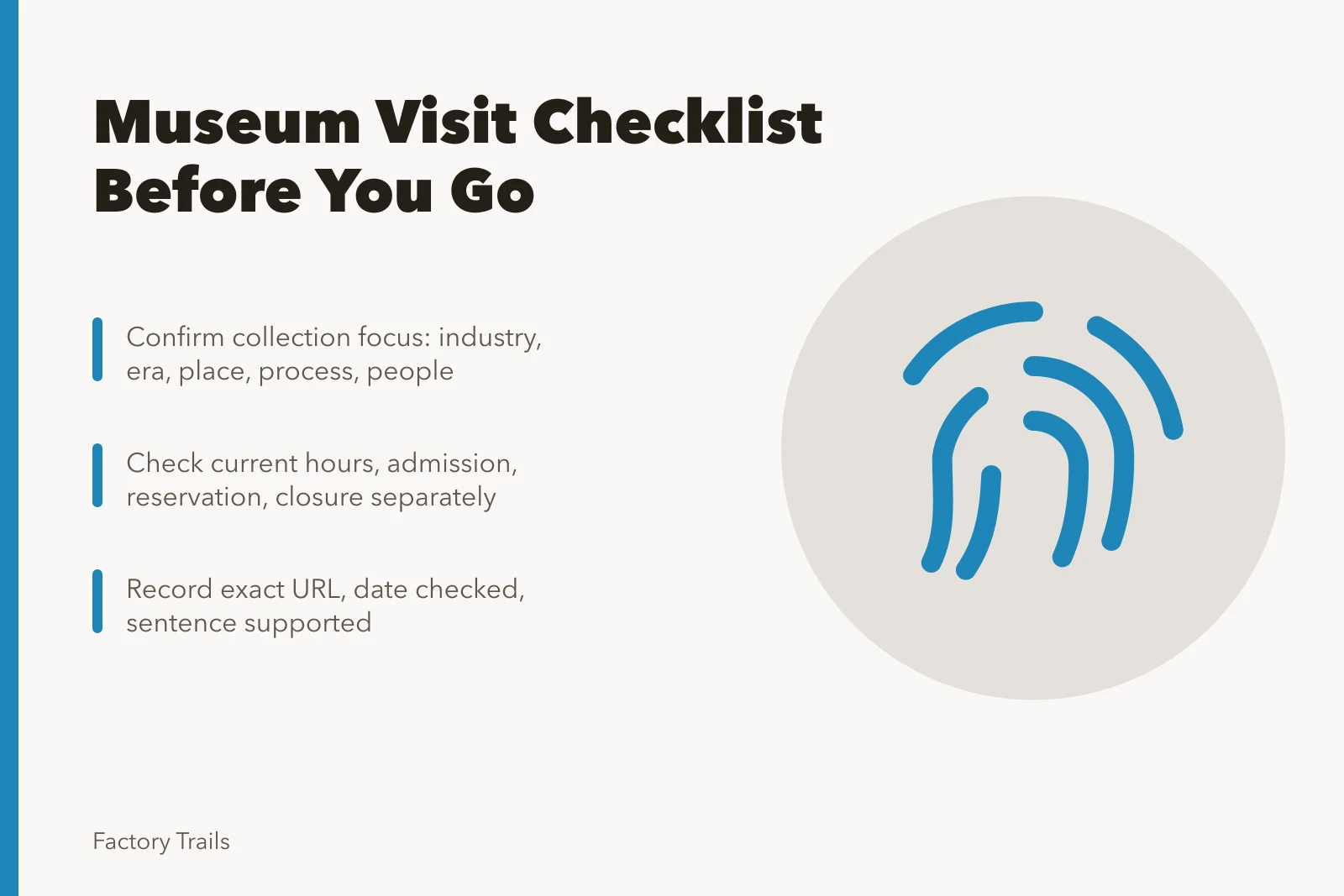
These six items change fastest. Confirm each one on the operator's current visitor page for your exact date, then record the date you checked.
- Opening hours and last entry for your date
- Admission price
- Demonstration or tour times, plus whether booking is required
- Step-free route and accessible restrooms
- Parking, plus the actual entrance location
- Closure notices for holidays and maintenance
Keep the list on your phone. A checklist read at the gate beats a paragraph read six months earlier.
Separating historical context from live visitor terms
Historical context can sit unchanged for years. A program time or a reservation process may not survive a single season. Mixing the two is how a guide ends up wrong about the present.
| Field | What it holds | How often it changes | Where the entry comes from |
|---|---|---|---|
| Historical context | Collection focus, process, people, dates | Years | Collections page, archives, site history |
| Live visitor terms | Hours, admission, demonstration times, access | Season to season, sometimes weekly | The operator's current visitor page |
A note dated 3 March is wrong by 1 April if a site switches to a summer schedule. Separate fields turn that into a one-line fix.
The same split applies to a working plant visit rather than a museum. Working factory visits fundamentals sets out what a host plant can and cannot promise.
The source note: five fields
A note without a review date ages into a stale figure nobody catches. Build every live claim from five fields.
- Write the page you actually read, not the site's home page.
- Date the check.
- Quote the sentence the source supports.
- State what the source does not cover.
- Set the next review date.
Source note fields
- The page
- The date checked
- The sentence it supports
- What it does not cover
- The next review date
If you update after a visit, keep the earlier date in the record. That separates a changed condition at the site from a correction of your own error.
Booking terms sit with the operator
Booking rules are live visitor terms too, and they vary by site. Hershey's Chocolate World in Pennsylvania is a visitor attraction beside a working plant, and the factory itself is not open for public tours. Knowing that saves a wasted trip.
The Royal Canadian Mint shows the same split inside one operator. Its tour page covers a production facility tour in Winnipeg and a smaller Ottawa boutique. The two do not offer the same experience, so read before you book.
As an estimate, and not an operator figure: groups often start booking a plant visit about four to six weeks out. A published window from the operator overrides that number.
If you are weighing two sites, manufacturing museum comparison questions help you test which one matches the day you want.