Guides
How to keep industrial tour regional records without gaps
Regional route records for industrial tours keep local contacts, transport assumptions and seasonal conditions in one file a new guide can pick up.
What to take away
- A regional record exists to protect what makes one route different: its contact, its vehicle window, its season.
- Record the assumption you planned on, not just the outcome, so the next planner knows what to re-check.
- Name one owner per field. A field with no owner is a guess someone will repeat.
- Keep attendee details out of the route file; the log only needs to say an arrangement was confirmed.
- Review at season end and carry forward only the assumptions that held.
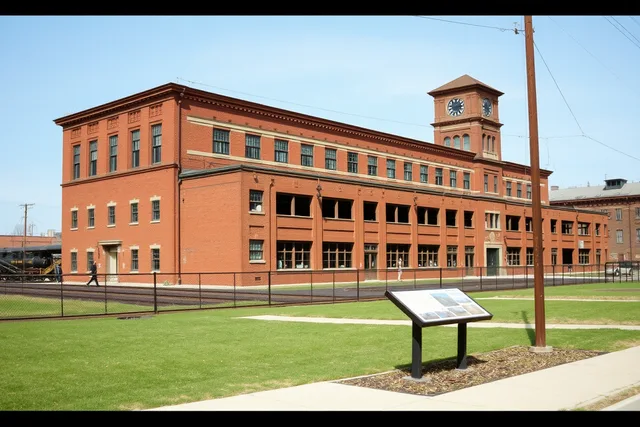
Two operators can run the same preserved plant and produce completely different visitor experiences. One parks coaches at the north gate before the shift change, the other at the south lot after it.
One runs the December route with the furnace cold, the other never books December at all. Regional records are how that local knowledge survives a change of guide, a change of operator, or a change of season.
Build the file around local assumptions
The point of the file is not to prove you were right. It is to show the next planner which local conditions your plan depended on, so they can check whether those conditions still hold.
Route file fields and owners
- Site and routegate, stops, exit, group cap
- Local contactnamed person, role, date confirmed
- Transport assumptionvehicle, loading point, buffer
- Seasonal conditionshutdown, weather, events, hours
- Visitor noticewhat changed, when told
- Next check datewhen re-verified, named owner
| Field | What goes in it | Who owns it |
|---|---|---|
| Site and route | Current entry gate, stop sequence, exit, group cap | Operations lead |
| Local contact | Named person at the site, their role, date confirmed | Operations lead |
| Transport assumption | Vehicle type, loading point, buffer allowed | Transport coordinator |
| Seasonal condition | Maintenance shutdown, weather pattern, event clash, opening hours | Operations lead |
| Visitor notice | What changed, when guests were told | Guide or front desk |
| Next check date | When this field gets re-verified | Named owner |
Fill the seasonal row first. A shutdown calendar decides more of an industrial itinerary than any other single fact: a plant that runs its July maintenance takes the working line off the route, and the preserved twin becomes the visit instead.
Write the assumption, not the outcome
"Arrived 20 minutes late" tells the next guide nothing they can act on. "Coach window closes at 14:10 because the gate is locked during shift change; we allowed 15 minutes and lost 20" gives them the number to change.
Record the assumption in the same row as the result. When a route is sold again, the planner reads the assumption and decides whether to keep it. That is the whole mechanism.
The National Archives bulletin on electronic records management sets expectations for federal agencies, not private operators. What transfers is the principle: an operational record needs a defined way to be kept, found and reviewed. A tour operator applies its own policy to reach the same end.
Give each field a version and a name
A route file without a date is a rumour. Put a version, a date and an owner on every active file, and re-date a field whenever it changes.
The National Archives records-management FAQ index explains record lifecycles in general terms. It is not a retention schedule for a private operator, but it makes the case for keeping enough context that a later reader can find the record behind a decision.
Keep personal data out of the route log
The route file holds local conditions, operating decisions and visitor notices. Attendee names, payments and individual access needs belong in the systems approved for those, and nowhere else.
The U.S. Small Business Administration information-quality page describes records management as creation, maintenance, use and disposition. A route log can state that an access arrangement was confirmed without holding the personal details behind it.
Worked example: the December shutdown clash
A preserved steel site runs guided routes through a cold furnace hall from November. A group books for the second week of December. The record shows the previous year's assumption: the hall was closed for maintenance that week, and the visit moved to the outdoor ore yard.
The planner checks the current shutdown calendar before confirming. If the hall is open, the original route stands. If it is closed, the ore yard route is already costed, already has a meeting point, and already has a visitor notice drafted.
Nothing was solved by memory. The file carried the assumption, the alternate and the contact who confirmed it.
Close the season on paper
Run one review at the end of the route's season. Which local assumptions held? Which broke? Who needs the revised version, and when does the route get checked again?
If a record supports a transport or operating cost, keep the approval and invoice with the project files. IRS recordkeeping guidance covers records that support income and expenses. It does not prescribe a tour log, but it supports keeping the approval and the explanation of a material expense in one place.
Update next season's itinerary and visitor message from the reviewed file. Assign the review to a named person and give it a date.
Common questions
What belongs in the first record for a new route?
The confirmed itinerary, the named site contact, the arrival and loading plan, the group cap and the current seasonal condition. Everything else can be added as it becomes known.
Should a single late arrival be written down?
Yes, with the assumption that produced it. One late arrival is noise; the same late arrival in three seasons is a meeting point that needs changing.
Who reviews the file at season end?
The operator, together with the site contact and the transport provider who control the parts of the visit that changed. Each confirms only the fields they own.