Guides
How to build an industrial tour maintenance budget that holds up
Maintenance cost groups for industrial tour routes: upkeep, preventive work, replacement, disruption and access support, with a test for recurring spend.
What to take away
- Group maintenance spend by purposeroutine upkeep, preventive work, replacement, disruption, access support.
- Attach each line to the route it keeps open, not to the site as a whole.
- Price the workaround, then decide whether a permanent fix is cheaper across a season.
- Record the assumption behind every estimate so a low figure can be tested against actual spend.
- Review after a material repair, not only at year end.
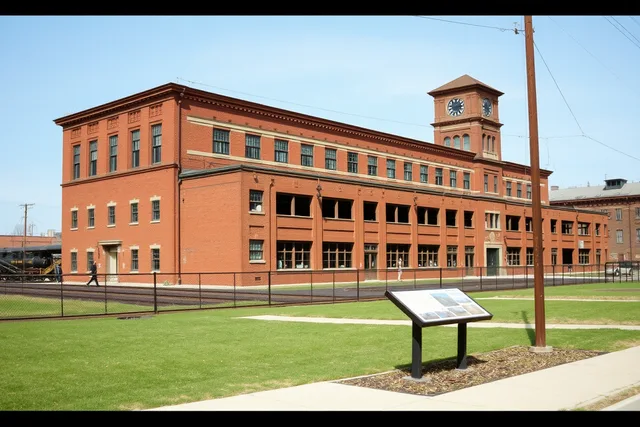
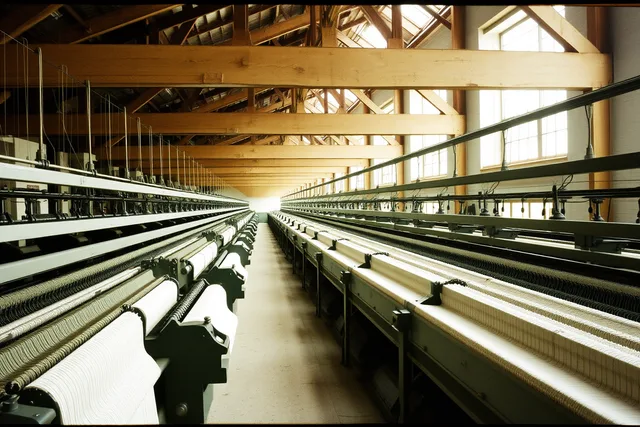
A mill that ran until 1960s shutdowns and a mill preserved as a museum fail in different ways. The working plant replaced bearings on a schedule. The preserved one now owns a building, a walkway, a sign set and an audio system, and all of it ages at once.
That is the budget this article is about: the maintenance of the visitor route, not the maintenance of the collection.
Five cost groups, sorted by what they protect
Five cost groups
| Cost group | What sits in it | The question it answers |
|---|---|---|
| Routine upkeep | Cleaning, daily checks, batteries, consumables | What recurs every departure or week? |
| Preventive work | Sealant, equipment servicing, sign refresh | What stops a small fault becoming a closure? |
| Replacement | Rail, map panel, audio unit, barrier, spare parts | What has a known life and needs a spare? |
| Disruption | Reroute, extra host, canceled stop, guest notices | What does one realistic interruption cost? |
| Access support | Alternate route, format change, mobility equipment | What does the published route require? |
The split matters because the five behave differently. Routine upkeep is predictable and can be averaged per departure. Replacement is lumpy and needs a sinking figure set aside monthly. Disruption is the one nobody wants to name, and it is the one that quietly eats the season.
Five maintenance cost groups
Cost group
- Routine upkeep
- Cleaning, checks, batteries
- Preventive work
- Sealant, servicing, signs
- Replacement
- Rail, panel, audio, barrier
- Disruption
- Reroute, host, canceled stop
- Access support
- Alternate route, mobility equipment
What sits in it
- Routine upkeep
- What recurs weekly?
- Preventive work
- What stops a closure?
- Replacement
- What has a known life?
- Disruption
- What does one interruption cost?
- Access support
- What does the route require?
Question it answers
- Routine upkeep
- Preventive work
- Replacement
- Disruption
- Access support
Put a route on every line
A maintenance line without a route attached cannot be defended or cut sensibly. Write the route, group size, staff roles and equipment quantity next to each estimate. Sloss Furnaces, Pullman National Monument and Britannia Mine Museum each publish what a visitor will and will not see, and that published description is the thing maintenance is paying to keep true.
Attach a route to every line
- Write the route name
- Note the group size
- List staff roles
- Record equipment quantity
- Tie it to the published description
The U.S. Small Business Administration guide to writing a business plan treats operations and financial projections as one section, which is the right instinct here. A route budget shows what conditions support the total.
Test one recurring cost for a permanent correction
This is the part that changes a budget rather than restating it. At the end of a season, take the cost that appeared most often and ask whether a permanent fix retires it.
Say temporary signage is printed at cost P per sheet, N sheets per month, for M months of operation. That is P x N x M for the season.
A durable panel costs D once, plus installation I. If D + I is below P x N x M, the recurring line should become a one-time capital item next year, not a supply line forever.
The same arithmetic works for guide overtime. If a departure pattern needs H extra host hours per week at rate R across W weeks, compare H x R x W against the cost of re-timing departures. Repeated extra host time usually means the route, not the roster, is wrong.
Test one recurring cost
| Recurring cost | Test | Permanent correction |
|---|---|---|
| Printed temporary signs | Season print total against panel plus install | Durable panel |
| Extra host hours | Weekly hours x rate x weeks | Re-timed departures |
| Repeated audio swaps | Swap count against service contract | Serviced units or a spare pool |
| Frequent reroute notices | Notice cost against a fixed alternate stop | Permanent alternate stop |
Name the disruptions before they draw on contingency
Keep a contingency amount. Then list the conditions most likely to use it: a weather event, a construction restriction, an equipment outage, an unavailable loading area. Each one needs a trigger, an action and an approver written down in advance.
The National Weather Service heat-safety resource explains that heat affects people differently and can strain the body. If an outdoor route needs rest breaks, a shorter format or an indoor alternate in summer, that response belongs in the operating estimate before the season starts, not in a mid-season scramble.
Keep the record that proves the decision
Invoices, approvals and notes should follow the established business process. The Internal Revenue Service recordkeeping guidance sets out why records supporting income and expenses are kept.
The IRS publication on business expenses discusses ordinary and necessary expenses without classifying a particular tour cost for you. Neither decides what a walkway repair should cost.
Both support being able to show why it was approved.
When a cut changes the guest promise
Removing a maintenance line is not neutral. If the saving drops a route stop, an access arrangement or a working interpretive tool, the public description and the booking terms have to change with it. An operator who trims the budget and leaves the description alone has created a complaint, and complaints cost more than sealant.
Two related reads: the care budget notes for manufacturing museums cover building and collection upkeep, and the operator mistakes to avoid covers the booking and access errors that turn a small fault into a lost group.
Common questions
What should be estimated first?
Recurring route upkeep and consumables, because they repeat and can be averaged per departure. Add the items whose failure would interrupt a tour second.
Should replacement items sit in the same sheet?
Track them separately but link each one to the route and disruption risk it addresses. A spare part with no route attached is just stock.
How often should the budget be reviewed?
During active periods and after any material repair, closure or operating change. An annual review alone lets a recurring workaround run for a full season before anyone notices.