Guides
Working factory visits maintenance plan scope checklist for 2027 teams
Factory visit care checklist for 2027 helps U.S. teams keep arrival instructions, visitor signs, host materials, route messages, and approved alternatives current.
Use this checklist to keep visitor-facing details current around an operating factory. It is a program-maintenance tool, not a substitute for the facility's maintenance, safety, security, or emergency processes.
What to take away
- Review information guests actually use, not only the tour outline.
- Give each correction a named owner and a date.
- Remove an outdated promise before it becomes a check-in problem.
Before each visit period
Check / Ready when
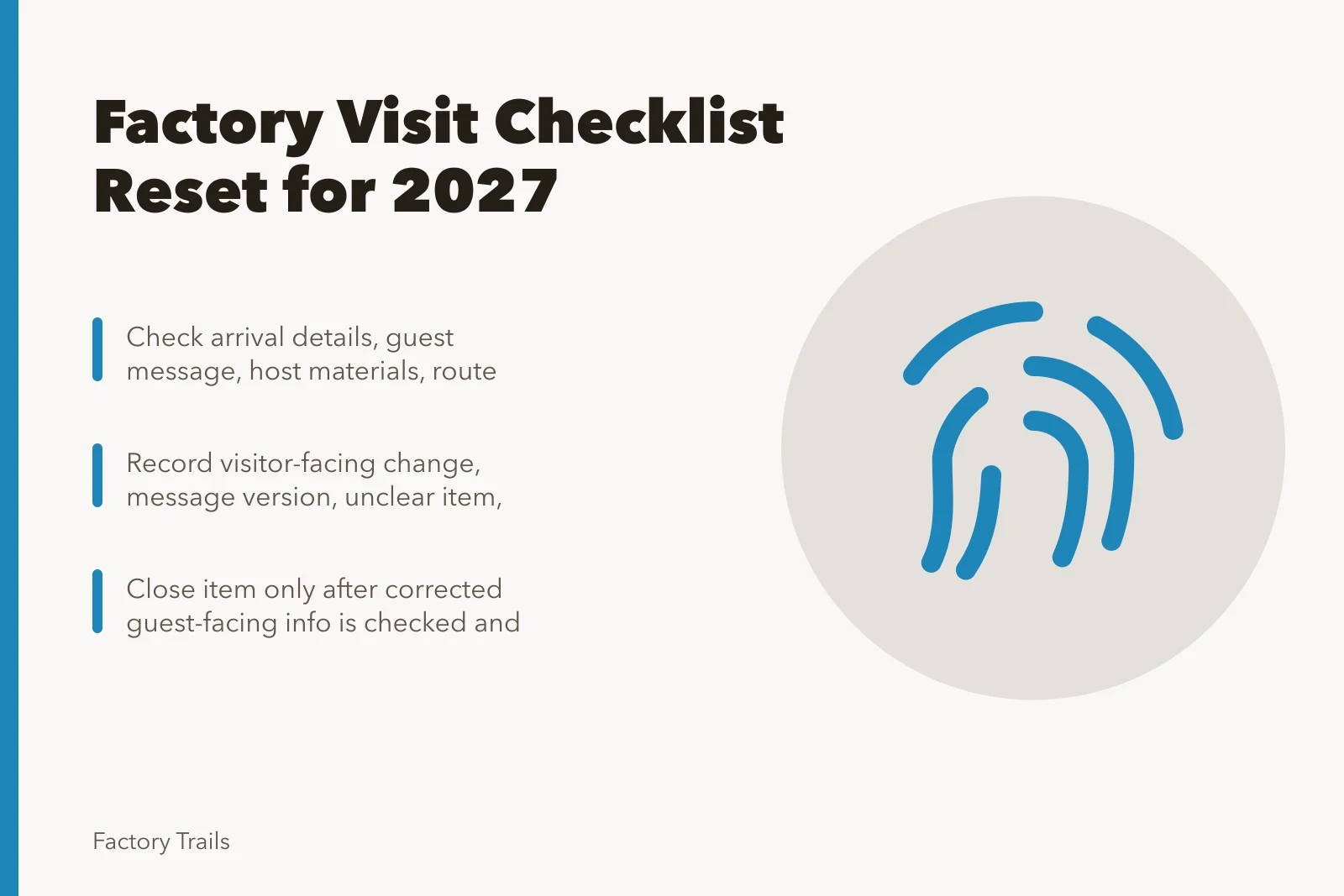
- Arrival details
- Directions, entry point, parking, and late-arrival contact are current.
- Guest message
- Timing, requirements, and restrictions match the approved plan.
- Host materials
- The briefing and visual materials use current information.
- Route description
- The public wording does not promise unconfirmed access.
- Alternative
- A truthful approved format is ready if conditions change.
The National Park Service's wayside-planning guidance, titled Wayside Planning, links long-term maintenance with visitor confidence in interpretive exhibits.
Pre-Visit Readiness Checks
- Arrival detailsdirections, entry, parking, contact
- Guest messagetiming, requirements, restrictions
- Host materialsbriefing and visuals current
- Route descriptionno unconfirmed access promised
- Alternativetruthful approved format ready
After a session
Record a visitor-facing change, the message version used, a missing or unclear item, and the person responsible for follow-up. Keep technical findings in the facility's own systems. A short program note should help the next host lead an accurate visit.
Worked example. The host brief and printed handout said, "Line 3 stops at 2:15 pm." The approved corrected wording is, "Line 3 may run until 2:15 pm. The viewing gallery closes at 2:10 pm." The old line promised a stop time the factory does not guarantee; the new line tells guests what to expect.
Run a seasonal reset
Before a new visitor season, inspect the public path in order. Confirm that the website has the right date range, the organizer instructions name the correct arrival point, printed material is readable, and the host brief matches the approved visitor experience.
A change in one place can make every other document misleading, so compare the full set rather than updating only the most visible page.
Use the reset to identify items that need a different owner. A faded sign may require facilities support. A route description may require confirmation from the site contact. A repeated question may need an approved content revision. The program owner tracks the visitor impact and follows up through the appropriate path.
Confirm corrections
Do not close an item when a request is sent. Close it when the corrected guest-facing information or material has been checked. This makes maintenance a reliable cycle instead of a list of unresolved observations.
Check assets where visitors use them
The National Park Service wayside exhibit evaluation checklist asks reviewers to consider physical condition, readability, visitor use, and purpose. A factory visitor team can use that review habit for its signs, handouts, and arrival information.
Copy these habits as one set: treat visitor signs as maintained assets, review condition and use, and keep old and new versions with dates and approvals. Report a visitor-facing problem to the facility contact and correct only approved communication.
Make version changes visible
The National Archives web-records guidance, titled Managing Web Records, describes managing web information through its life cycle.
Keep the review schedule realistic
The National Park Service wayside maintenance guidance treats maintenance as part of caring for visitor assets after installation; set a review rhythm the owner can meet. A simple pre-season and pre-visit check may be better than an ambitious calendar that nobody follows.
2027 review calendar
| When | Trigger | Check | Owner example |
|---|---|---|---|
| January 2027 | Annual plan review | Confirm season dates, route, booking message, and host brief version | Program owner |
| March 2027 | Four weeks before first booked visit | Run the seasonal reset and fix gaps | Program owner with host lead |
| April 2027 | First visit week | Check arrival details and guest message | Host lead |
| June 2027 | Mid-season | Spot-check signs, handouts, and route wording | Program owner |
| September 2027 | Seasonal change | Recheck printed material and approved format | Program owner with facilities contact |
| November 2027 | Post-season | Archive versions and list open fixes | Program owner |
Close the checklist with an owner
Name the person who confirms the current guest message and the person who receives a report about an outdated asset. Keep the two roles separate when needed. That division gives a coordinator a clear handoff without moving a facility decision into the visitor-program file.
Use the two tables above as the 2027 template. Store the checklist and version log in the same shared folder as the tour script; name the file Factory Visit Readiness Checklist 2027. Record each review outcome with the active message, the review date, the owner, and a short condition note.
Use that record as the starting point for the next review, so ownership and history stay in one place. A monthly check works for active visitor programs; a pre-season and pre-visit check works for seasonal sites.
Common questions
How often should guest information be reviewed?
Review current conditions before each session and perform a fuller check whenever the route, program, or seasonal arrangement changes.
Who may change a route description?
The program owner can revise guest language after the responsible facility role confirms the visitor-facing result.
What should be removed first?
Remove any promise about access, timing, equipment, or photography that cannot be confirmed for upcoming visitors.