Reviews
Manufacturing museum planning questions to compare visits before you choose
Compare manufacturing museum visits with questions on route time, parking access, access details and confirmed dates before you book the 2027 trip.
What to take away
- Six questions decide the shortlistpublic format, process, working or preserved, time blocks, accessibility and the current source for hours.
- Time is the comparison most groups skip. A typical visit splits into 15 to 20 minutes of arrival, 20 to 30 minutes of orientation and 60 to 90 minutes of the core experience.
- Named checks beat brand names. Royal Canadian Mint in Winnipeg tours a production facility; Ottawa is a boutique mint. Hershey's Chocolate World is a visitor center, not the factory.
- Ask when the 2027 calendar posts, then write the fit line before any ranking: choose this site for one reason, and say who should choose another.
Six questions that decide the shortlist
Work down the list in order. Factory visit maintenance questions cover the calendar side once you have a shortlist.
- What does the public actually do herewalk a preserved site, ride into a mine, join a guided program, or view objects in a hall?
- Which industrial process does the site explain, and is that the process the group came for?
- Is the plant working or preserved? A working plant runs on its own calendar, while a preserved site runs on a visitor calendar.
- How long do arrival, orientation and the core experience each take, added together?
- What does the site's own accessibility statement liststeps, route length, seating, lighting, sound and crowding?
- What is the current source for hours, program dates and reservations, and when was it last checked?
Six questions before booking
- What does the public actually do here
- Which industrial process does it explain
- Is the plant working or preserved
- How long do arrival and core take
- What does accessibility statement say
- What is the current source for hours
Question three is the one most comparisons skip. A working plant can close for maintenance while its preserved twin stays open. Ask about shutdown dates.
What each public format gives you
Each row answers a different visitor need, not a score. Sloss Furnaces is the easiest anchor for a Birmingham day, and Alabama's industrial heritage sites give you two more stops to weigh in the same week.
| Site | Public format | Suits | Confirm before booking |
|---|---|---|---|
| Sloss Furnaces, Birmingham, Alabama | Preserved furnace grounds, self-paced walking | Visitors who want scale and ruin at their own pace | Hours, event days, open areas |
| Pullman National Monument, Chicago | Park Service site on the planned company town and its labor history | Groups tracing industry and place together | Ranger program times, visitor center hours |
| Britannia Mine Museum, British Columbia | Guided underground route with working-era machinery | Visitors who want a process explained start to finish | Tour times, underground access, reservation policy |
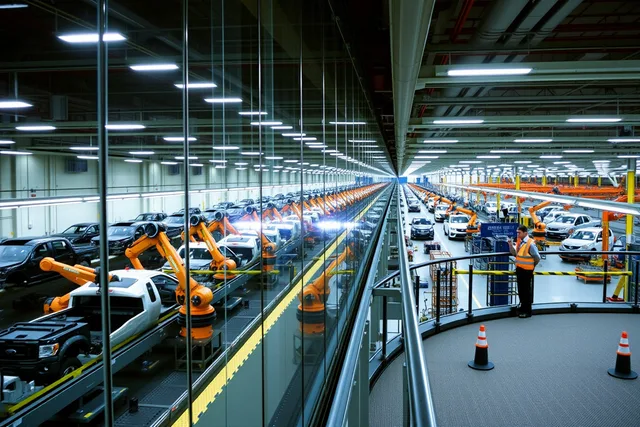
| Royal Canadian Mint, Winnipeg | Production facility tour | Visitors who want to see a live manufacturing floor | Tour times, which lines are running, photo rules |
Four sites, four visitor needs
Sloss Furnaces
- Public format
- Preserved furnace grounds
- Suits
- Scale at own pace
- Confirm first
- Hours, open areas
Pullman
- Public format
- Company town history
- Suits
- Industry and place
- Confirm first
- Ranger program times
Britannia Mine
- Public format
- Guided underground route
- Suits
- Process start to finish
- Confirm first
- Tour times, access
Big Three tours
- Public format
- Working assembly lines
- Suits
- Seeing production run
- Confirm first
- Line running, rules
Read the last column first: it decides whether the day works.
The Royal Canadian Mint tours page separates the Winnipeg production tour from the Ottawa boutique. Two sites, one name, two visits.
Time blocks to compare before you book
Compare three blocks before anything else. Treat the minutes as typical ranges.
- Arrival covers parking, coach drop-off and the walk to the entrance. Typical range, 15 to 20 minutes.
- Orientation covers tickets, bag check, the site map and the first exhibit room. Typical range, 20 to 30 minutes.
- The core experience is the one thing the group came forthe furnace walk or the underground route. Typical range, 60 to 90 minutes.
A site can look excellent on paper and still fail a two-hour window once orientation takes 30 minutes. Cut a stop rather than sprint the last gallery.
Accessibility details worth asking for by name
A step-free entrance can still lead to a route that tires someone who needs to sit twice. Ask for the steps at the entrance and along the main route, the total route length, and seating at the midpoint.
The Ford's Theatre accessibility page lists lighting, sound, crowding and separate access topics as distinct items rather than one general welcome. Ask those narrow questions of every site on the shortlist.
For Sloss, Pullman and Britannia, ask the same numbers: entrance steps, route length and seats on the way. If the underground route is the reason for the trip, book the Britannia Mine Museum underground tour early, because fixed times fill first.
Example: a visitor center and a working floor
Hershey's Chocolate World is a visitor center with a ride and exhibits, and the working factory is not open to public tours. A production tour at the Royal Canadian Mint in Winnipeg shows the other half of the contrast. There, the visit follows the plant's rules on where you stand and what you photograph.
Preserved sites control none of that, so put working plants and heritage sites in separate columns of the comparison. Then compare those columns on time, access and cost rather than atmosphere.
2027 booking windows and winter closures
Ask each site when its 2027 calendar posts and when group reservations open. A typical group window is three to six months ahead, and summer weekday slots go first.
Ask about winter too. Heritage sites often run reduced days in January and February, and a working plant may close for maintenance with short notice. Note the date you checked each answer.
Before you pay, put the group rate and the tour time together. Factory tour budgeting fundamentals is where the cost line belongs.