Guides
Industrial heritage travel safety checklist: what to know before you go
Industrial heritage travel safety starts with the plant's own rules, current closures and designated routes, not with a photograph or an old map.
What to take away
- The operator's current visitor page, not a search snippet, sets the rules that override any general checklist.
- Confirm the designated arrival point, the parking or transit stop and the walking route, not just the street address.
- Working plants, preserved mills and museum sites set different boundaries, so check which one you booked.
- Keep one confirmed public fallback and a written turn-around time for every outdoor block.
- Book timed tours where the site requires it, and treat an idle plant as closed.
How to find the operator's current visitor page
Start with the site's own domain, not a search snippet or a photo caption. Look for links named "Visit," "Plan your visit" or "Tours," then open them.
Check three fields: today's hours, the current tour or entry rules, and a phone number staff answer on the day. Save the page offline before you travel.
Where two sources disagree, the operator's page wins.
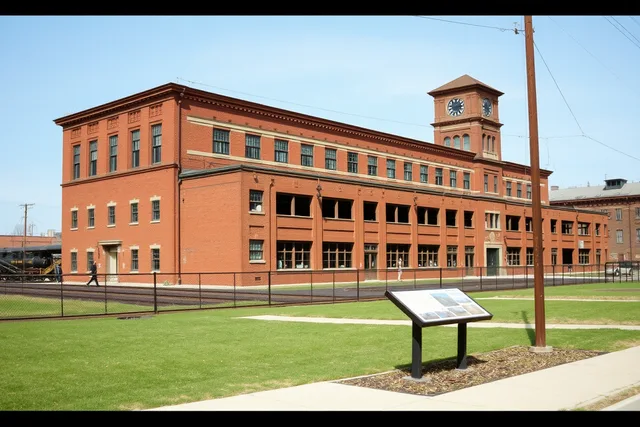
Public agencies run their own pages. Lowell National Historical Park, a textile mill site in Massachusetts, publishes hours, fees and safety notices on its own site. The Lowell National Historical Park page shows the shape of it: one page, current dates, one contact. Copy that habit for your destination.
Then turn the confirmed details into notes the group can read. Our guide to visitor arrival notes for industrial sites explains how to phrase them so guests actually follow the route.
Pre-trip checklist to tick off
- Operator's visitor page opened and saved offline today.
- Designated arrival point and gate name confirmed by phone or email.
- Tour or timed entry booked, with the confirmation number written down.
- Required gear listedclosed shoes, safety glasses, hard hat, hearing protection.
- One public fallback per half day, with its own hours checked.
- Turn-around time agreed and written down.
- Mobility needs and early departures discussed before the day.
- Site staff contact and emergency number saved in two phones.
- Drone left at home unless the operator gave written permission.
On a working line the operator decides what you wear. OSHA's general PPE standard, 1910.132, sets out when employers must supply protective equipment. Sites often borrow the same list to describe what visitors should bring.
Example: three sites and who sets the rules
| Site | Who sets access rules | What to confirm before travel |
|---|---|---|
| Lowell National Historical Park, Massachusetts | National Park Service, ranger-led mill tours | Tour times, which mill buildings are open, canal walk surfaces |
| Sloss Furnaces, Birmingham, Alabama | City of Birmingham, National Historic Landmark | Guided versus self-guided hours, event closures |
| Britannia Mine Museum, British Columbia | Museum operator, tunnel tours booked by slot | Booking slot, hard hat rule, tunnel access |
| Hershey's Chocolate World, Pennsylvania | Attraction operator, separate from the plant | Which attractions are open; the working factory is not on the public tour |
These four show the pattern. A federal park, a city landmark and a company visitor center publish different rules for the same reason: the hazards differ. To compare how nearby sites word their own visitor rules, see our guide to Alabama industrial heritage sites.
What a designated arrival point looks like in practice
It is a named place with a person or a sign, not a coordinate. Expect a visitor center desk, a staffed gate or a numbered coach bay.
Confirm two things before you travel: the name of that gate or door, and the time staff expect you. Then ask which path you walk after check-in. If the operator cannot name the gate, ask again.
Confirm route before you go
- Designated arrival point
- Parking or transit instructions
- Path between public facilities
- Current operator directions, not satellite image
- No shortcuts through rail, private land, construction
Production tours add a step. The Royal Canadian Mint runs a production-floor tour in Winnipeg and a smaller Ottawa operation. Its visit page sets out which facility is which and what each tour includes.
Underground tours work the same way. Britannia Mine Museum in British Columbia books tunnel tours by time slot and issues hard hats. Our booking notes for the Britannia Mine underground tour cover what to confirm before you reserve.
Group size, fallbacks and changing conditions
One plan, one holder. Name who carries the booking and who keeps the saved visitor page offline. Add the person who knows the return route.
Name a fallback for each half day, such as a museum gallery or a shorter accessible loop. If weather or a closure removes the main stop, swap the fallback in.
Idle is not open. A plant with the line stopped may still have maintenance crews on the floor, and its visitor route may be suspended.
Idle plant: is it open?
Production line idle during shutdown week?
Check operating calendar; visitor route may be suspended
Proceed with planned visit
Check the operating calendar before you book travel. Season and shutdown windows decide more visits than weather does. Our guide to the best seasons for industrial heritage travel compares the summer and winter patterns.
If something goes wrong
Move to a safe public place. Report a hazard through the site's staff or published contact, and call local emergency services when the situation needs them. No general article can supply the right action for a specific place.
After a non-emergency disruption, note what changed and which source told you. Add the fallback you used. That record stops a temporary detail from hardening into a rule.