Guides
Part of How to plan industrial heritage travel before you book anything
How to keep industrial heritage travel planning records before you go
A planning record for industrial heritage trips pairs every claim with the source that supports it, the date you checked, and what that source cannot settle.
A planning record is the evidence file for one trip decision: what you needed to know, which source settled it, when you checked it, and what you will do if the plan breaks. Build it before you book, not after a plant cancels your slot.
What to take away
- Seven fields per entrysource title, source role, claim, limit, check date, status, fallback.
- One spreadsheet per trip, one tab per site, header row frozen.
- Every live detail carries a statusconfirmed, pending, not needed, or stale.
- Image credits sit in their own columns, away from the travel claims.
- Log each change with a date before you leave.
The seven fields of a planning record
Field / What goes in it
- Trip question
- One sentence naming what the record must answer
- Source title and link
- The exact page title plus the direct address
- Source role
- Historical record or current visitor information
- Claim it supports
- One factual sentence
- Limit
- What that source cannot settle
- Date checked
- The day you opened the page
- Fallback
- A public alternative you have confirmed
Minimum planning record fields
- Trip question
- Source title and URL
- Source type
- Claim supported
- Date checked
- Open question
- Fallback
A claim and the limit of its source sit on the same row. That one rule stops a historic drawing from being read as a promise that a gate is open.
The National Park Service HAER program documents engineering and industrial sites in measured drawings and photographs. Those records carry real weight on a history question. They cannot tell you whether a working line runs tours in December.
Deciding what to check first is the harder half of the job, and our industrial heritage trip planning questions cover the ones worth settling before you book a stop.
Example: a filled record for a Lowell mill trip
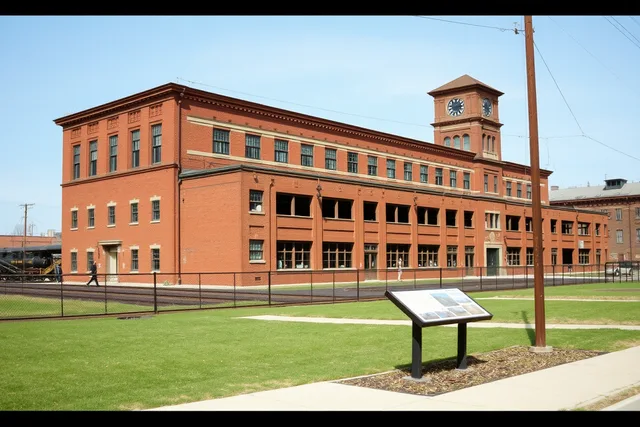
A preserved mill and a working plant look identical in a photograph and behave nothing alike. The trip question below stays narrow: do the Lowell mills still run working textile machinery, and can a visitor watch it move on a weekday in March?
| Claim | Source and role | Limit | Checked | Status | Fallback |
|---|---|---|---|---|---|
| Working textile mill exhibits run in the park | Lowell National Historical Park, current information | Does not promise a run time on your date | 12 Feb 2027 | Pending | Self-guided mill floor route |
| The mills here ran on water power | NPS Lowell history pages, historical record | Says nothing about today's hours | 12 Feb 2027 | Confirmed | Not needed |
| Timed entry can apply on peak days | Lowell National Historical Park, current information | Rules change by season | 12 Feb 2027 | Pending | Arrive at opening |
Claim, source role, and limit
Claim
- Building documented
- Historical record
- Tour scheduled time
- Current visitor page
- Image named subject
- Image record
- Fallback site usable
- Current responsible source
Source role
- Building documented
- No current visitor use
- Tour scheduled time
- No plant history
- Image named subject
- No current condition
- Fallback site usable
- Recheck before departure
Limit to record
- Building documented
- Tour scheduled time
- Image named subject
- Fallback site usable
Underground sites add timed entry on top, and our Britannia Mine tour booking guide shows how those slots work at a BC mine museum.
The same field earns its keep on a working site. The Royal Canadian Mint runs production tours in Winnipeg and a boutique mint in Ottawa, so the two can be booked as primary and fallback. See the Royal Canadian Mint tour options for how the visits differ.
Where the record lives
- Create a spreadsheet named Industrial heritage trip records in Google Sheets or Excel.
- Add a tab per trip using year, month and site2027-03-lowell.
- Freeze row 1 and set ten columns from A to JTrip question, Claim, Source title, Source link, Source role, Limit, Date checked, Status, Fallback, Editor.
- Give one colleague edit rights and everyone else view-only access.
The National Archives describes records-management basics as arranging information so the next person can find the source and see why it was used.
Groups covering several plants in one week need a shared structure, and our trip record structure for tour operators sets out how to divide one file between guides.
Image credits and the revision log
Image entries need their own fields: image record link, creator, title, and the credit wording or rights statement. Keep them off the travel rows, because a credit proves where a picture came from and says nothing about access to the site.
A revision log tab holds four columns: date, field changed, source used, editor. That shows a detail was updated rather than guessed.
Status labels for live details
- Confirmeda current responsible source states the detail and the check date is logged.
- Pendingthe question still matters and no source has answered it.
- Not neededthe detail no longer affects the plan.
- Stalethe check date is older than the site's own change cycle.
Hours, escort rules and maintenance shutdowns change without notice. Confirmed is a snapshot, not a permanent fact, so recheck the row a week before you travel.
What you hand to visitors on the day is a separate document, and our visitor arrival notes for industrial sites explain what belongs in it.