Guides
Part of How to choose a working factory visits provider for 2027
Working factory visits: a provider selection scope checklist for 2027
Factory visit provider checklist for 2027 helps teams define visitor-program scope, compare capabilities, set approvals, and protect facility decision boundaries.
What to take away
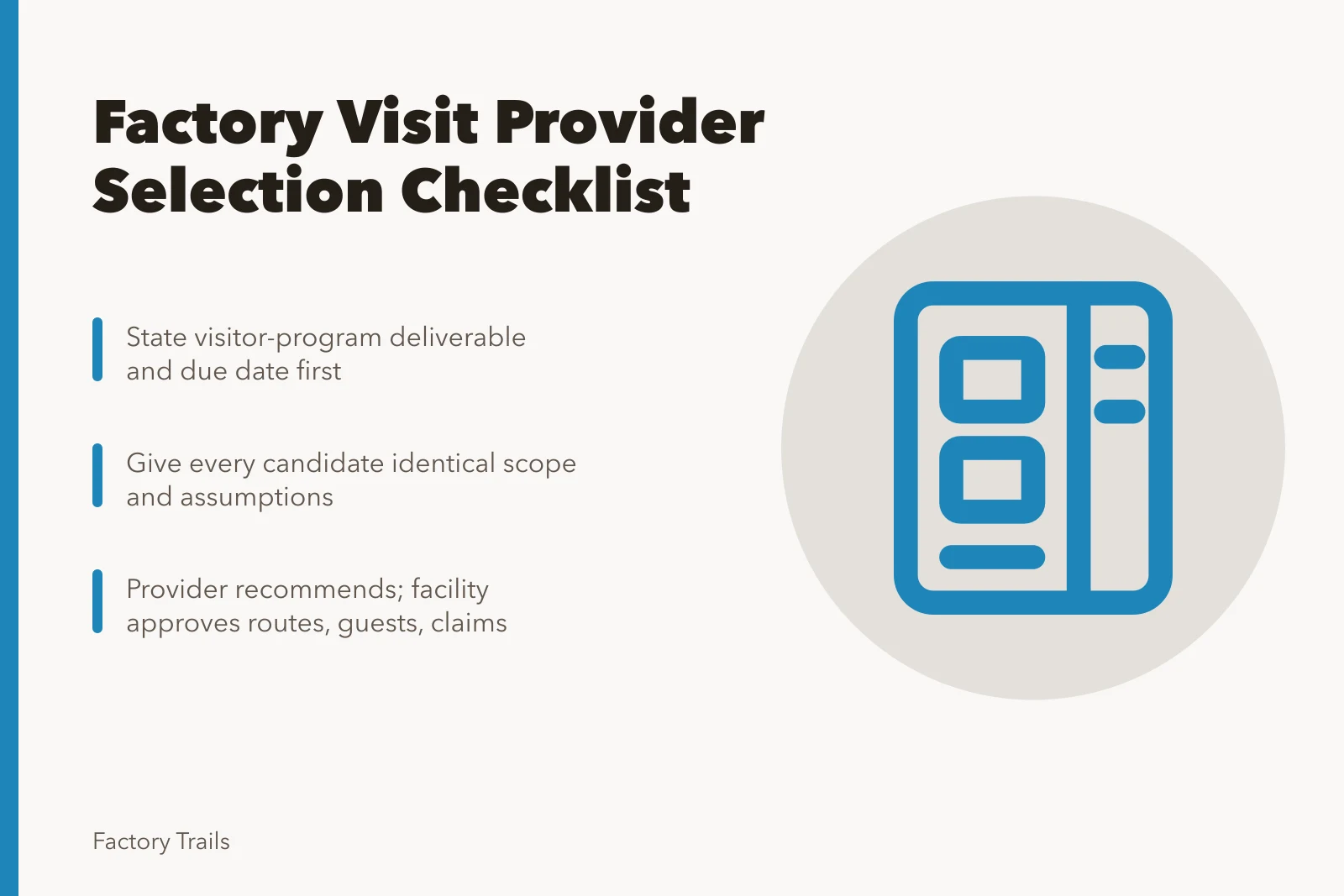
- Write the visitor outcome, the deliverable and the due date before you contact anyone.
- Give every candidate the same scope, then score the answers against one table.
- Routes, access, safety, security and guest approval stay with facility roles.
- Fix the review date and the selection file before the provider starts.
The seven checks, in order
A provider can price only what you have defined. Work the list from top to bottom, and do not compare anyone until every line has an answer.
- State the visitor-program deliverable and its due date.
- Split the workwhat the provider does and what stays with facility roles.
- Set the experience barrelevant site work, stated availability, one named lead.
- Send every candidate the same scope and the same stated assumptions.
- Ask for a proposed handoff and a written change process.
- Name the person who accepts deliverables and the person who approves guest messages.
- File the selection reason and the agreed scope.
The order matters. A candidate who never sees the full list will price the easy parts.
Provider Selection Checks
- State deliverable and due date
- List provider vs facility tasks
- Identify experience, availability, communication
- Give candidates same scope
- Ask for handoff and change process
- Name approvers for deliverables and messages
- Save selection reason and final scope
Read how to choose a working factory visits provider before you adapt this list to one plant, since that article covers the comparison step that comes next.
A scoring table you can copy
Use one row per check and keep your notes beside the scores.
Strong answer
- Capability
- Work samples from the same kind of responsibility
- Availability
- Named lead plus confirmed dates
- Cost clarity
- Stated assumptions, exclusions and change terms
- Boundary test
- Names the facility contact and waits
- Deliverables
- Route plan, script, host briefing
- Handoff
- One contact list and one route for questions
Evidence to keep
- Capability
- Sample, reference, named lead
- Availability
- Written schedule
- Cost clarity
- Quote with line items
- Boundary test
- Interview note
- Deliverables
- Draft copies
- Handoff
- Agreed handoff note
Score every candidate on the same rows, three points down to one, and keep the working notes. A high total with a weak boundary answer is a warning sign, not a win.
Define deliverables a host can inspect
Ask for outputs a host can hold: a route plan, a visitor script, an accessible handout, an approved image list, a host briefing and a final schedule. Words such as support or coordination do not belong in a scope.
The General Services Administration's guide to writing a performance work statement shows how a statement can define results, measures and responsibilities. Borrow the clarity, not the federal rules.
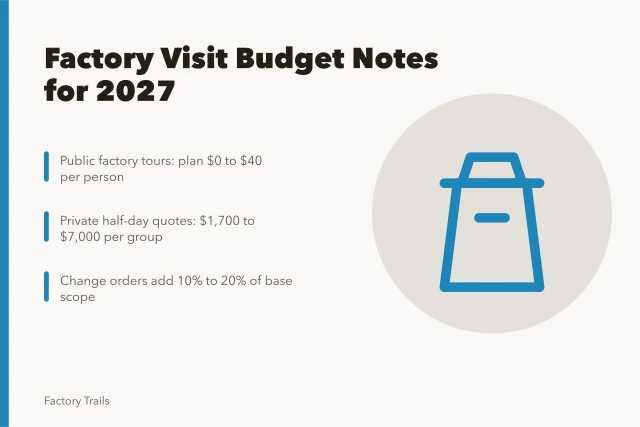
If a quote arrives as one round number, the factory tour budget checklist splits it into lines a facility can check before signing.
Example: what a route plan should show
One page is enough. Name the entry point, the minutes at each stop, the rest point, the exit, and the stops where photography is restricted. Add the facility contact who approved it and the date.
Keep facility decisions with the facility
Make the provider's authority explicit in writing. A provider may recommend and coordinate. It does not approve routes, public claims, guests or restricted information.
Recommendation travels one way. Approval stays with the facility.
Chocolate World is a visitor center beside the plant, and the working factory is not open for public tours. The company decides what the public may see, and any provider on that site inherits that line.
In Canada, the Royal Canadian Mint's visit page separates the Winnipeg production tour from the Ottawa boutique. The plant sets access, not the marketer.
Write the line down anyway, so a new provider reads it in week one.
Unwritten exceptions are how a scope drifts, and the common factory visit mistakes show how one verbal yes can reset the rules for the next visit.
Pre-award review and the first check-in
Read the proposed scope the way the day-of host will. Can that person say who arrives, when they arrive, what they deliver, where they may work, and who answers a question outside the plan?
If the answer rests on a verbal promise, write it into the plan or drop the expectation.
Put one line in the selection file. The scope is reviewed ten working days before the first visit, and after every third visit. Save each revision with its date and the name of the approver.
Keep that file where the facility controls it, not in a provider's inbox.
The review is a working session, not a signature. Walk the route with the provider and the day-of host together, then correct the plan on the spot.
Where one operator runs the whole route, the Britannia Mine Museum tour guidance shows how access stays at the gate.
Common questions
Can one checklist cover an interpreter and an event producer?
Yes for the shared items. Add work-specific capability and deliverable tests for each assignment.
What stays outside the provider's scope?
Facility access, operations, safety, security and emergency decisions remain with authorized site roles.
Why keep a selection file?
A later renewal runs faster when the original need, the scores and the agreed scope sit in one place.
How early should the pre-award review happen?
Ten working days before the first visit suits most single-site programs. Allow more when guests travel from out of state or need a security check.