Guides
Factory tour hiring checklist for U.S. sites: what to verify before you award
A provider-ready scope checklist for U.S. factory tour work, covering sign-off before award, visitor routes, and the records that outlast the job.
What to take away
- The scope you send out is the only document every bidder prices against, so write it before you talk to anyone.
- A working plant and its preserved twin need different access terms; say which one you are hiring for.
- Require the final record set in the scope, because staff turnover will erase what was not written down.
- A checklist is finished when the site can answer four thingswhat was requested, who does the work, how visitors stay protected, and what record remains.
Provider-ready scope checklist
Send this as one document. Every bidder answers the same rows, which is what makes the bids comparable.
Provider-Ready Scope Checklist
- Problem statementlocation, condition, objective, visitor effect
- Existing evidencephotos, route map, prior reports, work orders
- Historic constraintsfeatures to protect, approved methods, review requirements
- Public operationopen hours, access routes, capacity, noise limits
- Required expertisespecialty, supervision, licenses, insurance
- Deliverableswork plan, updates, photos, final records, maintenance advice
- Change processwho decides, approvals, cost documentation
| Scope row | What the bidder states |
|---|---|
| Facility areas | Exact rooms, line segments, and outdoor zones in scope, with exclusions named |
| Visitor group | Size, age mix, mobility needs, language, and supervision ratio |
| Timing | Days, hours, season, and any shutdown window |
| Access limits | Locked areas, PPE, photography bans, and route changes |
| Safety briefing | Who delivers it, when, and what it covers |
| Photography rules | Allowed and banned shots, review of images, release terms |
| Deliverables | Record set, drawings, condition notes, and handover format |
A concrete U.S. scope row: one escort per 15 visitors in active production, a typical range of 1:10 to 1:20, and a shutdown block of 4 to 8 hours on a maintenance day.
Compare bids row by row against the same scope. A lower total price is not comparable if one bidder excludes the shutdown window, the record set, or the escort ratio.
Ask each bidder to price the base scope and list any optional line separately. Flag where a bidder assumed a condition you did not state, such as a shorter closure or a smaller group.
Name the people, not the firm
Qualification is not a credential on a letterhead. It is the match between the person doing the work and the material in front of them.
Name the People, Not the Firm
- Named project lead
- Field supervisor
- Crew members
- Subcontractors
- Same materials experience
- Same conditions experience
- Same public-use limits experience
The National Park Service notes that qualifications may need to expand with the task and the historic property, and Its qualifications guidance asks who performs and supervises the work.
Ask for the named project lead, field supervisor, crew, and subcontractors. Ask which of them has handled the same materials, the same conditions, and the same public-use limits. A strong firm can still assign a team that has never met your risk.
The Park Service's architectural-preservation quality-assurance checklist covers condition records, treatment, recommended work, technical data, and contract summaries, and it is the right list to test a proposal against.
Working plant or preserved twin
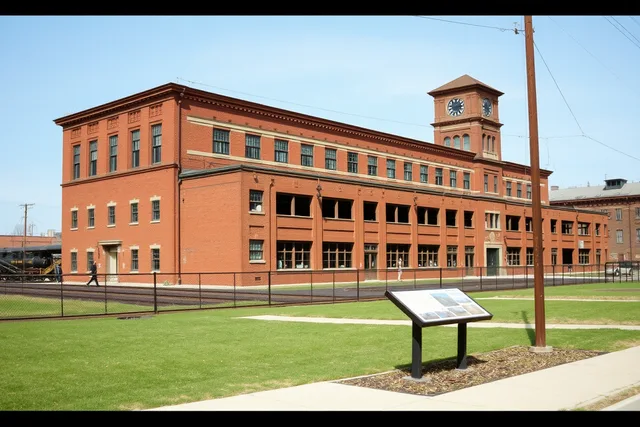
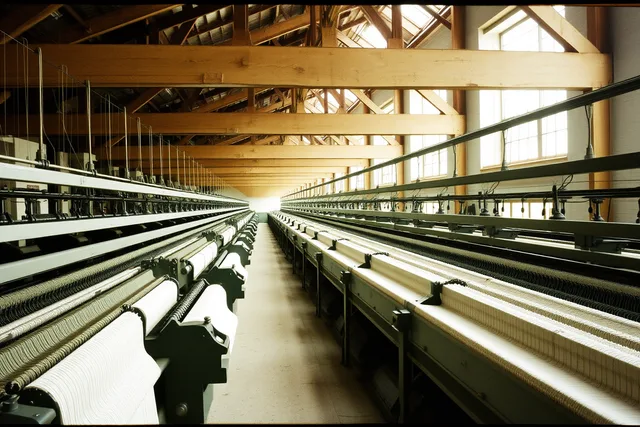
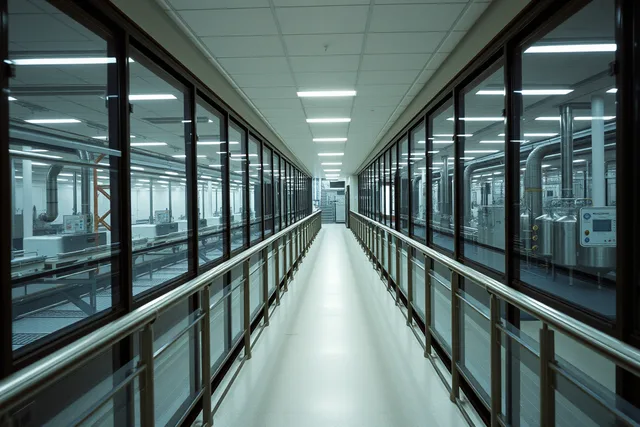
The distinction changes the whole scope. A running line brings noise, heat, forklift traffic, and a shutdown calendar that decides your dates. A preserved site brings fragile fabric, no live machinery, and a route that may not survive scaffolding.
Working Plant vs Preserved Site
Working plant
- Conditions
- Noise, heat, forklift traffic
- Dates
- Shutdown calendar decides
- Access model
- Live production escorts
- Insurance
- Production-area coverage
Preserved site
- Conditions
- Fragile fabric, no live machinery
- Dates
- Route may not survive scaffolding
- Access model
- Interpretive visitor routes
- Insurance
- Heritage-fabric coverage
Sloss Furnaces in Birmingham runs as a public industrial site with events on the grounds.
Pullman National Monument interprets a planned company town rather than a live assembly line. Britannia Mine Museum in British Columbia runs underground tours on a former working mine.
Three different access models, three different insurance and escort conversations. Say in the scope which model you are buying.
Check public operation before award
If work runs during your open season, require the provider to explain barriers and routes. Also require equipment staging, dust and noise control, and emergency access. Ask how guests hear about it. A generic site-safety statement is not a plan. The plan should name the exact visitor path and the person who can close or reopen it.
Have an alternate tour or interpretation ready before work starts. A short closure is manageable when staff already have something credible to run.
The Occupational Safety and Health Administration's exit-route guidance requires exit routes in covered workplaces to stay free and unobstructed. Your site procedure governs public access, but the proposal should still name barrier placement, approved movement, and who may change a route mid-job.
Sign off before the award
Name the person who can approve a change after award, in writing, before anyone starts. A selected provider may find a new condition or clarify an assumption at the kickoff, but that change gets recorded and approved before it touches the visitor route, the scope, or the price.
Confirm the scope in writing
Before hiring, list these items:
- facility areas
- visitor group
- timing
- access limits
- safety briefing
- photography rules
- deliverables Ask the provider to state what it will not handle. That sentence protects the manufacturer from treating a tour vendor as an authority on safety, security, or workforce decisions.
Attach a one-page site brief to the request. Include the address, arrival point, visitor capacity, and site contact. Also include the restricted rooms and the current route map. Mark what is fixed and what still needs a provider's recommendation. Candidates then price the same assignment, and staff walk into the first meeting with one document instead of five.
The National Archives records-management FAQ index explains why records should stay identifiable over time, which is why the final scope, change notes, dates, and contacts should be easy to inherit.
Common questions
What is the first document to prepare before hiring?
A short written scope covers these items:
First document to prepare
- condition
- desired outcome
- historic constraints
- public-use requirements
- timeline
- deliverables Everything else, including the bid sheet, is derived from it.
Should providers visit the site before pricing?
For historic material, tight access, or an active visitor route, yes. A visit sharpens both the price and the operating plan, and it surfaces constraints a phone call will miss.
Who approves a change in scope?
The role you named in writing before work started. The provider documents the condition, options, cost or schedule effect, and recommendation before proceeding.
Does a preserved site need the same scope as a working plant?
No. A working plant adds shutdown windows, live machinery, and escort ratios. A preserved site adds fragile fabric and review requirements. Both need the record set, the change process, and the named approver.