Reviews
Factory tour comparison questions to ask before you pick a 2027 format
Factory tour options questions for 2027 help U.S. teams compare combined and separate guided, viewing, self-guided, demonstration, and virtual visitor formats.
Ask these questions before combining tour formats. A viewing route plus virtual content can work well, but only when visitors understand which part is live, which part is recorded, and what access each component offers.
What to take away
- Combined formats need one clear visitor journey, not a list of features.
- Give each component its own staffing, content, and update assumptions.
- Use virtual media to explain restricted work, not to disguise unavailable access.
- Direct answerone booking can hold two formats when the sequence, duration, requirements, and fallback rules are clear. Budget and staff each part on its own.
Five tour formats compared
| Format | Staffing | Typical cost | Update needs | Public example |
|---|---|---|---|---|
| Guided | One trained host per 15 to 25 visitors, plus safety cover | Often free to about $30 per adult, and private group slots cost more | Route, script and safety wording each season | Ford Rouge Factory Tour, Dearborn, Michigan |
| Viewing | A greeter and posted safety cover | Usually inside general admission, roughly $10 to $25 | Signage and sightlines | Tillamook Creamery viewing gallery, Tillamook, Oregon |
| Self-guided | One attendant at entry for questions | Free to about $15, and audio or app versions add a few dollars | Content, app version, device checks | Hershey's Chocolate World, Hershey, Pennsylvania |
| Demonstration | One skilled operator plus a host for questions | About $15 to $45, and materials add cost | Supply cost, technique and safety wording | Corning Museum of Glass, Corning, New York |
| Virtual | Producer, editor and captions, no floor staff | Free to about $20 per screen, and production is a larger one-time cost | Re-shoot when the process or access changes | Slater Mill virtual tour |
Cost bands are typical for US sites, in US dollars. Group size moves them: above about 25 visitors, most plants add a second host and a second time slot.
Five questions decide whether the formats above belong in one experience or two.
| Question | Decision it informs |
|---|---|
| Does every component serve the same visitor goal? | Whether formats belong in one experience or separate programs |
| Can the live host explain the relationship between the route and digital material? | Whether a hybrid experience will feel coherent |
| Does any component depend on a different capacity or schedule? | Whether it needs its own budget line and booking rule |
| What information will become stale first? | Content review and update ownership |
| Can visitors choose the option that fits their access needs? | Whether public information is clear enough to support choice |
The National Park Service's Slater Mill virtual tour combines a self-guided digital journey with narrated interpretation of industrial history. It is a specific historic-site experience, not a factory-tour template. Its lesson: a virtual format needs a defined narrative and visitor purpose, not just a collection of images.
Factory tour comparison questions
- Same visitor goal for every component?
- Live host explains route and digital link?
- Different capacity or schedule needs?
- What information becomes stale first?
- Can visitors choose access-fit option?
Which format fits which goal
- Guidedpick it when a host must control safety, pace, or a live process.
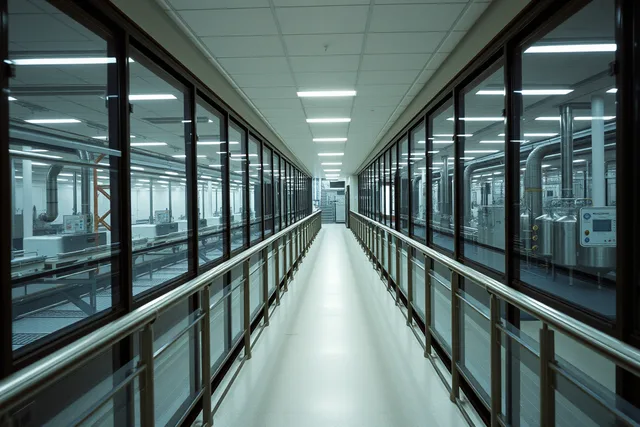
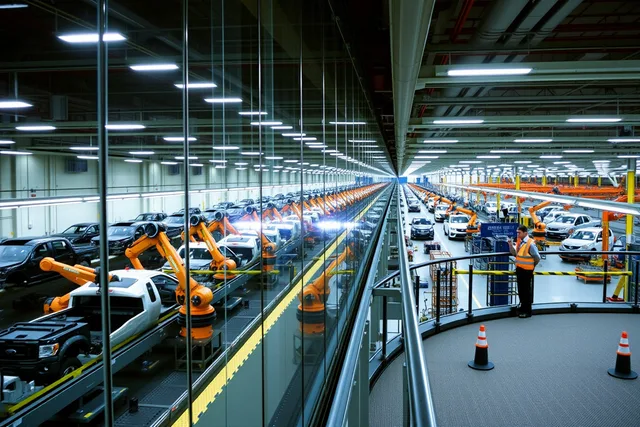
- Viewingpick it when the plant cannot be entered but the floor can be seen.
- Self-guidedpick it when visitors arrive at different times and the route is stable.
- Demonstrationpick it when one repeatable skill carries the story.
- Virtualpick it when access is restricted or the audience cannot travel.
Ask first what the combined experience is meant to change for a visitor. The National Park Service describes interpretive planning as a process that begins with audience and purpose. The page is not a guide to commercial tour design, but the point holds: a video, a viewing stop, and a host talk should each earn their place.
The National Archives' records-management basics explain why organizations identify and manage information that documents their work. For a visitor program, keep the current itinerary, media version, booking description, and review note together.
Check that a recorded explanation is not treated as automatically sufficient. The Department of Justice describes effective communication as context-dependent, which does not decide what a particular operator must provide. It supports one planning question: can a guest understand the key instructions and ask for clarification before and during the experience?
What changes for a 2027 booking
A 2027 date is not the same booking as a 2026 date. Most US plants post the next season's calendar between October and January, so expect 2027 dates from October 2026 through January 2027.
As a rule, group slots for April and May are taken by March, and plants that tie tours to an annual shutdown may confirm summer dates only in late spring.
Two things also reset with the year: age and footwear rules are restated, and a virtual component filmed before a line change needs a re-shoot before the date goes on sale.
Test the combined sequence with people who were not involved in designing it, using only the information a real guest receives before arrival. If their account of the order, duration, and fallback does not match the plan, fix the message once. The gap is usually in the booking copy, the sign, the host transition, or the media cue.
Ask what surprised them, not whether they were satisfied.
Common questions
Can one booking include two formats?
Yes, if the sequence, duration, requirements, and fallback conditions are clear. Budget and operate each component separately.
When should a virtual component be updated?
Update it when it no longer reflects the process, access conditions, branding, or visitor information it is meant to explain.
What makes a hybrid format confusing?
It becomes confusing when visitors cannot tell what is current, what is recorded, what they can access, or what will happen if the live route changes.