Guides
Part of Factory tour options compared: how to pick one for 2027 trips
Factory tour options checklist: how U.S. visitors compare 2027 formats
Factory tour options checklist for U.S. visitors in 2027 compares active, historic, museum, and self-guided sites by route, booking, and access facts.
Use this checklist to choose a factory tour format your group can finish. It names real U.S. options for 2027 and the route facts to verify.
What to take away
- Pick the learning goal firstprocess, history, collections, or pacing.
- Name the exact operator and 2027 date before booking.
- Compare route surface, duration, noise, and weather plan.
Choose the format
- Use an active-factory visit for present-day process questions.
- Pick a historic demonstration for an earlier process in context.
- Pick a museum for objects, records, and indoor introductions.
- Pick a self-guided route for flexible pacing and exterior exploration.
- Combine two stops only when each stands on its own; Corning Museum of Glass plus a short exterior route is one example.
- Do not add stops that each sound interesting; leave enough time to understand one place well.
Compare named options
| Format | Named option to verify for 2027 | Route fact | Booking fact |
|---|---|---|---|
| Active | Ford Rouge Factory Tour, Dearborn, MI | Bus from Henry Ford Museum; observation deck and assembly line | Timed ticket; production schedule can change |
| Active | Boeing Future of Flight, Mukilteo, WA | Elevated walkway over Everett factory | Timed ticket; strict bag rules; check age rules |
| Active | Martin Guitar, Nazareth, PA | Guided weekday route through body assembly and finishing | Low-cost ticket; reserve early; museum separate |
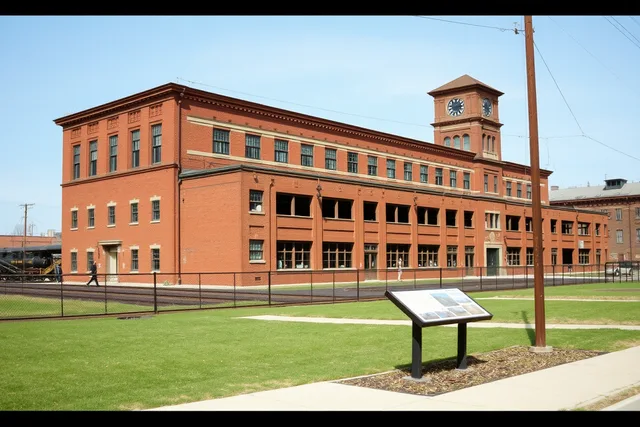
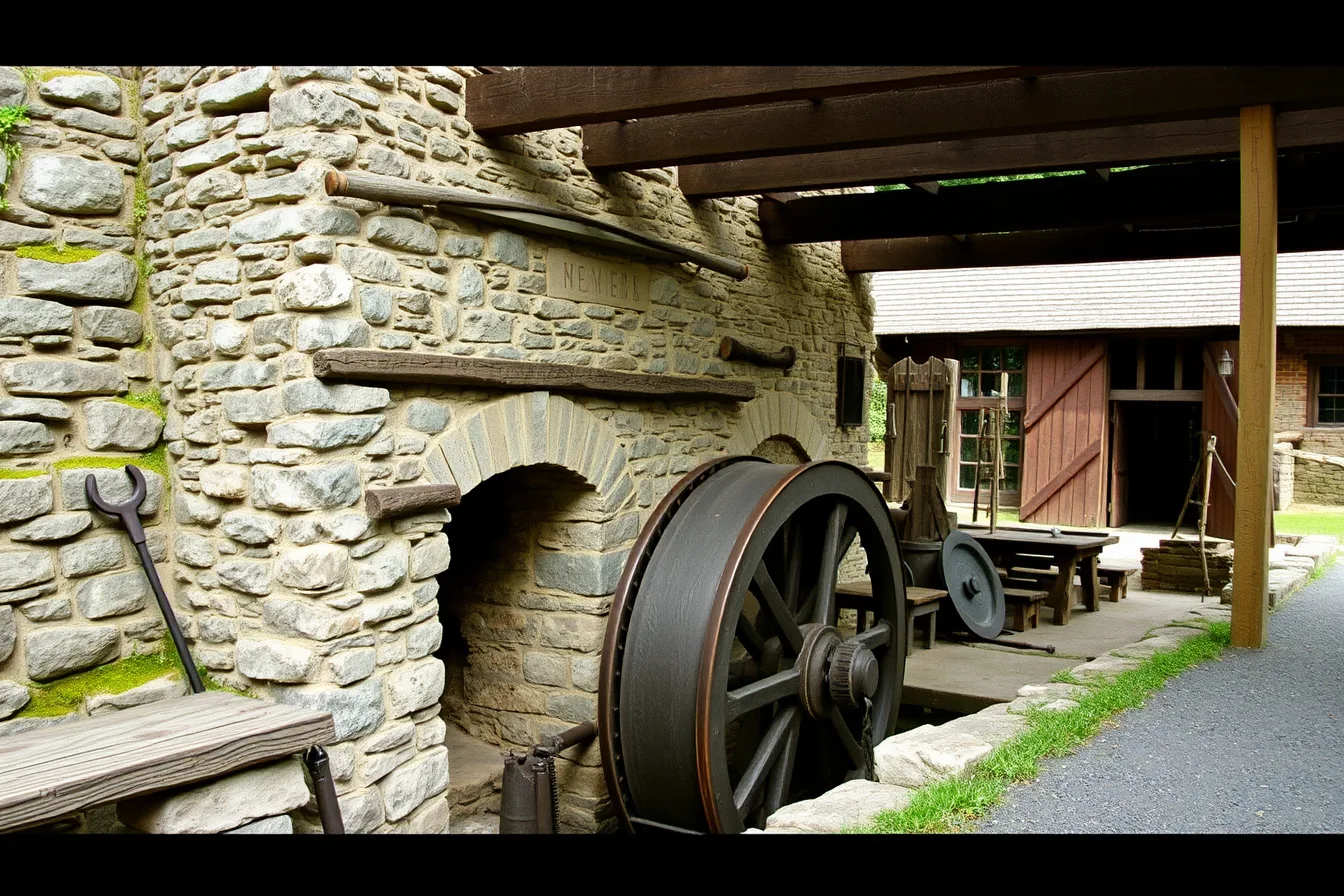
| Historic | Saugus Iron Works National Historic Site, Saugus, MA | Free NPS grounds with reconstructed furnace and forge | Check seasonal ranger programs |
| Historic | Hopewell Furnace National Historic Site, Elverson, PA | Outdoor route with uneven roads and trails | Free NPS site; weather can change access |
| Museum | Corning Museum of Glass, Corning, NY | Indoor galleries and live glassmaking demos | Paid admission; check show times |
| Museum | Henry Ford Museum of American Innovation, Dearborn, MI | Industrial collections and machinery | Separate admission; pairs with Rouge tour |
| Self-guided | Jelly Belly Visitor Center, Fairfield, CA | Elevated walkways and viewing windows | Free; check 2027 hours |
| Self-guided | Tillamook Creamery, Tillamook, OR | Indoor viewing windows over cheese production | Free entry; food and tastings cost extra |
The National Park Service's Hopewell Furnace safety information describes outdoor conditions, uneven roads and trails, and weather considerations. Those details apply to Hopewell, but they show why a visitor should compare the actual terrain and season with the group. A category such as "historic site" is not enough. See the National Park Service safety guidance for the direct example.
Confirm the route
Surface
- Ford Rouge Factory Tour, Dearborn, MI
- Paved, indoor
- Boeing Future of Flight, Mukilteo, WA
- Indoor gallery, elevated walkway
- Martin Guitar, Nazareth, PA
- Indoor floor, narrow aisles
- Saugus Iron Works, Saugus, MA
- Packed gravel, lawn
- Hopewell Furnace, Elverson, PA
- Outdoor roads, uneven trails
- Corning Museum of Glass, Corning, NY
- Indoor galleries, level floors
- Henry Ford Museum, Dearborn, MI
- Indoor halls, hard floors
- Jelly Belly Visitor Center, Fairfield, CA
- Indoor elevated walkways
- Tillamook Creamery, Tillamook, OR
- Indoor viewing gallery
Distance
- Ford Rouge Factory Tour, Dearborn, MI
- Bus covers the long run
- Boeing Future of Flight, Mukilteo, WA
- Walkway over the factory floor
- Martin Guitar, Nazareth, PA
- Guided walk through body assembly
- Saugus Iron Works, Saugus, MA
- Short loop past furnace and forge
- Hopewell Furnace, Elverson, PA
- Village and furnace loop
- Corning Museum of Glass, Corning, NY
- Set by gallery choice
- Henry Ford Museum, Dearborn, MI
- Long halls between wings
- Jelly Belly Visitor Center, Fairfield, CA
- Short route above production
- Tillamook Creamery, Tillamook, OR
- Short walk past viewing windows
Duration
- Ford Rouge Factory Tour, Dearborn, MI
- Typical 2 to 3 hours
- Boeing Future of Flight, Mukilteo, WA
- Typical 1.5 to 2 hours
- Martin Guitar, Nazareth, PA
- Typical 1 hour
- Saugus Iron Works, Saugus, MA
- Typical 1 hour
- Hopewell Furnace, Elverson, PA
- Typical 1 to 2 hours
- Corning Museum of Glass, Corning, NY
- Typical 2 to 4 hours
- Henry Ford Museum, Dearborn, MI
- Typical 2 to 3 hours
- Jelly Belly Visitor Center, Fairfield, CA
- Typical 30 to 45 minutes
- Tillamook Creamery, Tillamook, OR
- Typical 30 minutes
Stairs
- Ford Rouge Factory Tour, Dearborn, MI
- Elevator, escalator
- Boeing Future of Flight, Mukilteo, WA
- Elevator, no stairs
- Martin Guitar, Nazareth, PA
- Some stairs, step-free route on request
- Saugus Iron Works, Saugus, MA
- Gentle grades, no stairs
- Hopewell Furnace, Elverson, PA
- Uneven footing, no stair route
- Corning Museum of Glass, Corning, NY
- Elevators to all floors
- Henry Ford Museum, Dearborn, MI
- Elevators, seating
- Jelly Belly Visitor Center, Fairfield, CA
- Elevator or ramp
- Tillamook Creamery, Tillamook, OR
- Level, no stairs
Weather plan
- Ford Rouge Factory Tour, Dearborn, MI
- Indoor, route can pause
- Boeing Future of Flight, Mukilteo, WA
- Indoor, deck closed in wind
- Martin Guitar, Nazareth, PA
- Indoor, route can shorten
- Saugus Iron Works, Saugus, MA
- Grounds open, buildings may close
- Hopewell Furnace, Elverson, PA
- Rain or snow can close paths
- Corning Museum of Glass, Corning, NY
- Fully indoor
- Henry Ford Museum, Dearborn, MI
- Fully indoor
- Jelly Belly Visitor Center, Fairfield, CA
- Fully indoor
- Tillamook Creamery, Tillamook, OR
- Fully indoor
Route confirmation checklist
- Startwhere the public program begins
- Surfacestairs, slopes, rough ground, narrow interiors
- Timefull route length including check-in
- Conditionsheat, rain, noise, operations changes
- Accessroute meets the group's specific needs
Confirm the program
- Check whether the named option runs on the selected 2027 date.
- Verify reservation, ticket, age, and group-size requirements.
- Read photo, bag, food, and safety rules.
- Save the official source and its check date.
Confirm a 2027 operating date on the operator's official site, by phone, or on the booking page, then write it in a check-date field beside the source.
An option is not viable until it has a current program, a usable route, and a realistic way for the group to arrive.
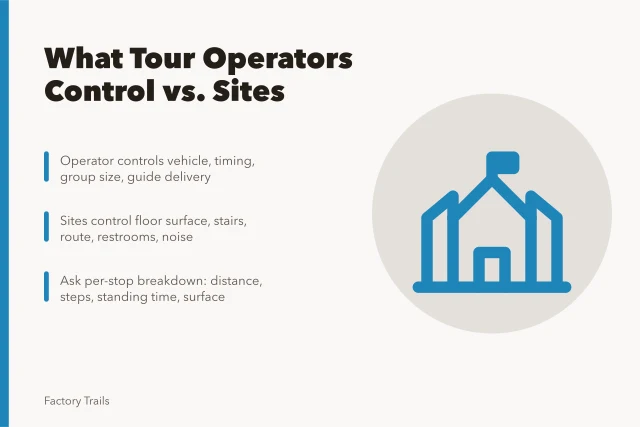
For access questions, ask about the actual route rather than a general label. The U.S. Access Board's accessible-route guide identifies walking surfaces, doors, ramps, elevators, and permitted lifts as route components. It offers a useful checklist for asking an operator about a particular visit. It does not determine what changes are possible at a historic property.
Ask the operator what visitors should do if a program must pause, move, or end early. The OSHA's emergency action plan guidance identifies reporting, evacuation procedures, and assigned duties for employees.
The National Archives research-room guidance tells visitors to confirm procedures, hours, and availability with the specific facility.
Compare the whole visit, not only the main activity. Include arrival, parking or transit, check-in, walking time, and the trip back to the vehicle. A short tour can require much more time than its posted duration. This matters for school groups, visitors with a scheduled connection, and anyone planning two nearby stops.
Choose a backup only when it can stand on its own. An indoor exhibit, visitor center, or shorter exterior route should have a clear story and a confirmed opening time. A backup that is closed, distant, or poorly explained can leave the group with the same problem after it changes plans.
Check the alternate before leaving home that day.
Common questions
Which format is best for a first visit?
An industrial museum or guided historic demonstration usually gives the clearest introduction. The named site's current program and route should decide.
Should I choose a self-guided route in bad weather?
Only if the route and the group can handle the conditions. A museum or visitor center may be the better option.
How do I confirm a route works for my group?
Ask the operator about the exact surface, distance, stairs, duration, and available alternatives.