Features
Factory tour insurance and waivers: what U.S. visitors sign before a plant walk
A checklist of the liability waivers, insurance certificates, and release forms you sign or should ask for before entering a working U.S. factory tour.
What to take away
- A factory tour liability waiver transfers some risk to you, but it does not erase a host's duty to warn and to provide required gear.
- Industrial tour accident insurance is usually the operator's coverage, not yours; ask for the certificate of insurance before you sign.
- A plant tour release form should be read for what it namesslip and fall, machinery proximity, chemical exposure, and transportation between buildings.
- Manufacturing tourism insurance requirements vary by state and by host, so no single waiver covers every plant.
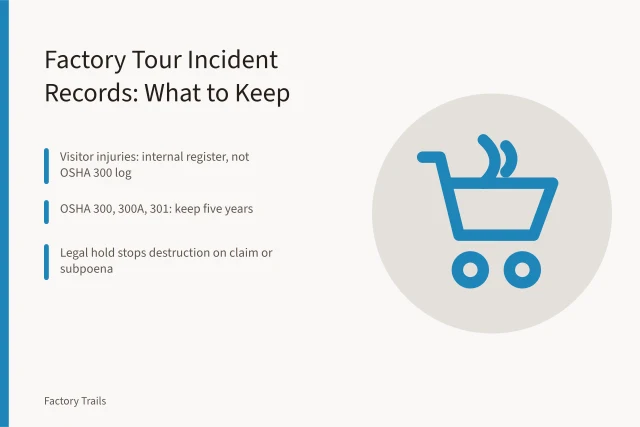
- Keep a copy of every form you sign.
What a waiver is actually doing
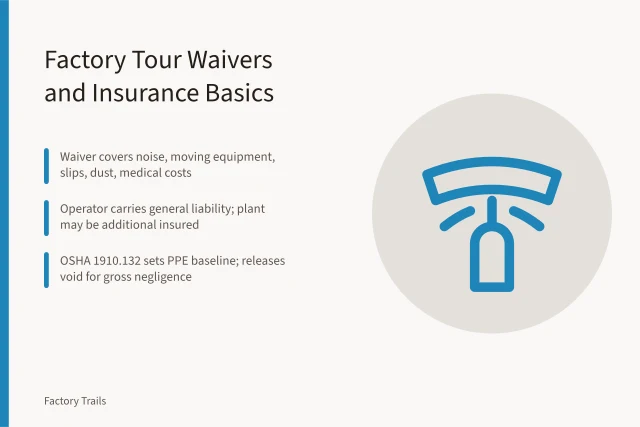
When you sign a factory tour liability waiver, you agree not to sue for certain injuries. The host still owes you a safe environment under premises liability law. The waiver narrows the claims you can bring. It does not give the host a license to hide a known hazard.
A release form for a plant tour often lists specific hazards: moving conveyors, wet floors, loud noise, and overhead loads. It may also state that you declined available protective gear. Read those lines before you sign.
Insurance that sits behind the form
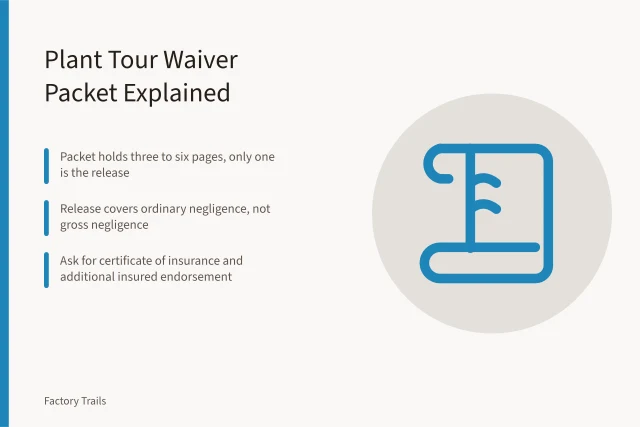
Ask the tour operator for a certificate of insurance. That document shows the general liability policy and the limits. Industrial tour accident insurance may be a separate policy. Factory tour visitor safety coverage should include medical payments and emergency evacuation.
If the host cannot produce a certificate, treat that as a signal. A small heritage site may carry a modest policy. A working plant with heavy machinery should carry more. You can ask for the insurer's name and the policy dates.
A pre-sign checklist
- Confirm the tour is a working plant, not a visitor center.
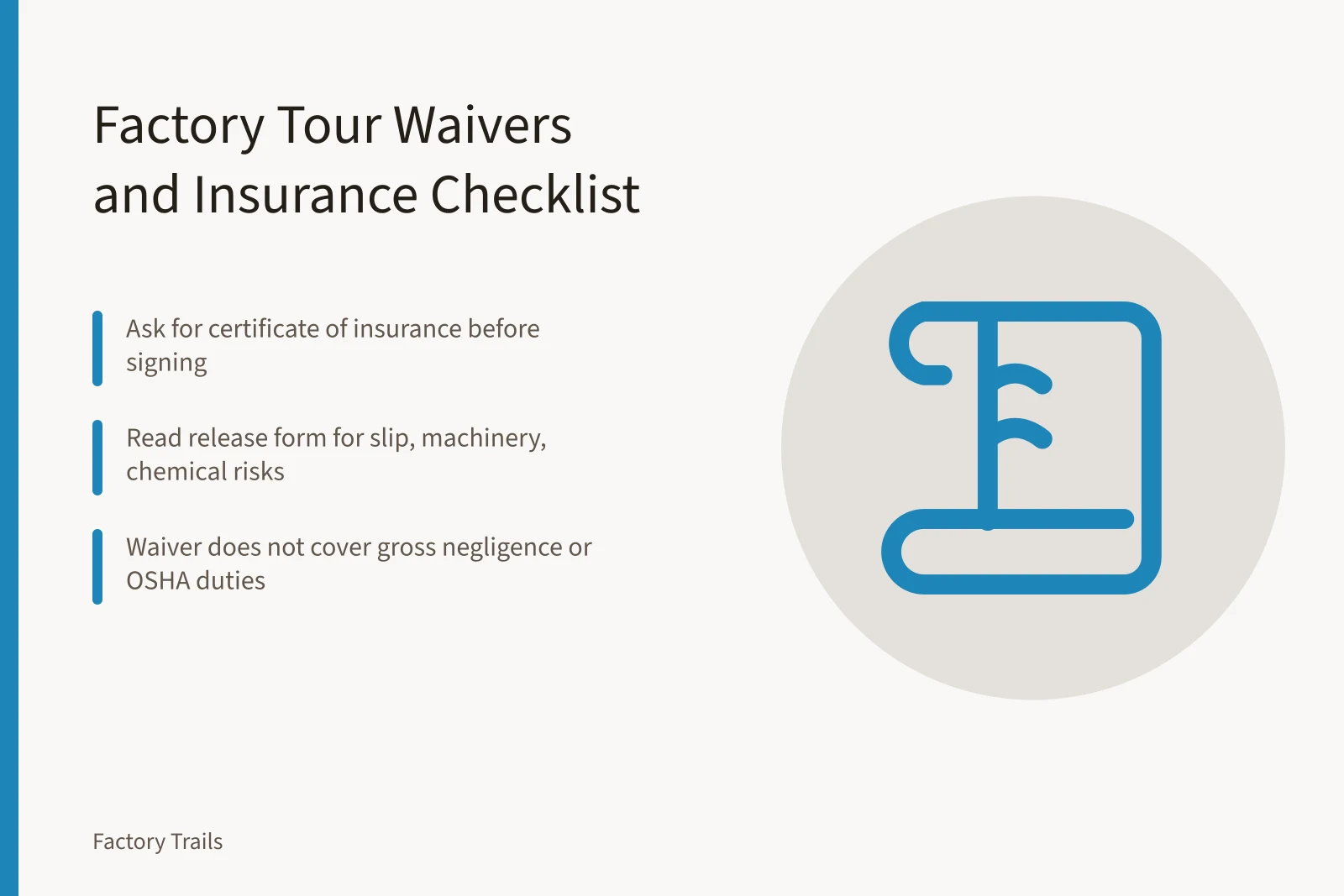
- Ask for the certificate of insurance and note the liability limit.
- Read the plant tour release form line by line.
- Check whether the waiver covers transportation between buildings.
- Ask what PPE the host provides and what you must bring.
- Keep a copy of every signed page.
What the signature does not cover
A waiver rarely covers gross negligence. It also does not block a workers compensation claim by an employee. It does not cover injuries that happen off the tour route if you wander. And it does not replace the host's OSHA duties for its own workers.
Example: heritage mills and modern plants
At Lowell National Historical Park, tours enter working textile mill exhibits. The park service explains the machinery and the safety rules. A waiver there may be shorter than one at a modern food plant. The NPS history page gives context for the mill floors you walk.
Hershey's Chocolate World is a visitor center, not the factory. The Wikipedia article explains that the actual factory is not open for public tours. That distinction matters because a waiver for a ride or a simulated tour covers far less than a release for a live production line.
Questions to ask before you sign
- What is the liability limit on your general liability policy?
- Does the waiver name specific hazards like conveyors, forklifts, or chemical lines?
- Who provides safety glasses, hearing protection, and steel toe boots?
- What is the emergency plan if someone is hurt mid-tour?
- Can I see the certificate of insurance before the tour date?
Gear rules that shape the form
OSHA 1910.132 requires employers to provide PPE when hazards exist. For visitors, the host often extends that rule as a condition of entry. You may sign a form acknowledging that you will wear safety glasses and closed toe shoes.
Some waivers include a line that you refused PPE. Do not sign that line if you were not offered gear. Ask the guide to note what was actually provided.
Comparing tour options with paperwork in mind
Before you book, compare working factory visit options with a readiness checklist. Look at whether the host publishes a waiver sample, a safety video, or a gear list. A version date on every guest message tells you the form is current. A fallback that still tells the plant's story matters if the production line shuts down.