Features
Factory tour safety records after an incident: what U.S. operators keep
Records U.S. factory tour operators keep after a visitor incident: OSHA 300 logs, 301 reports, PPE certifications, waivers, and five year retention rules.
What to take away
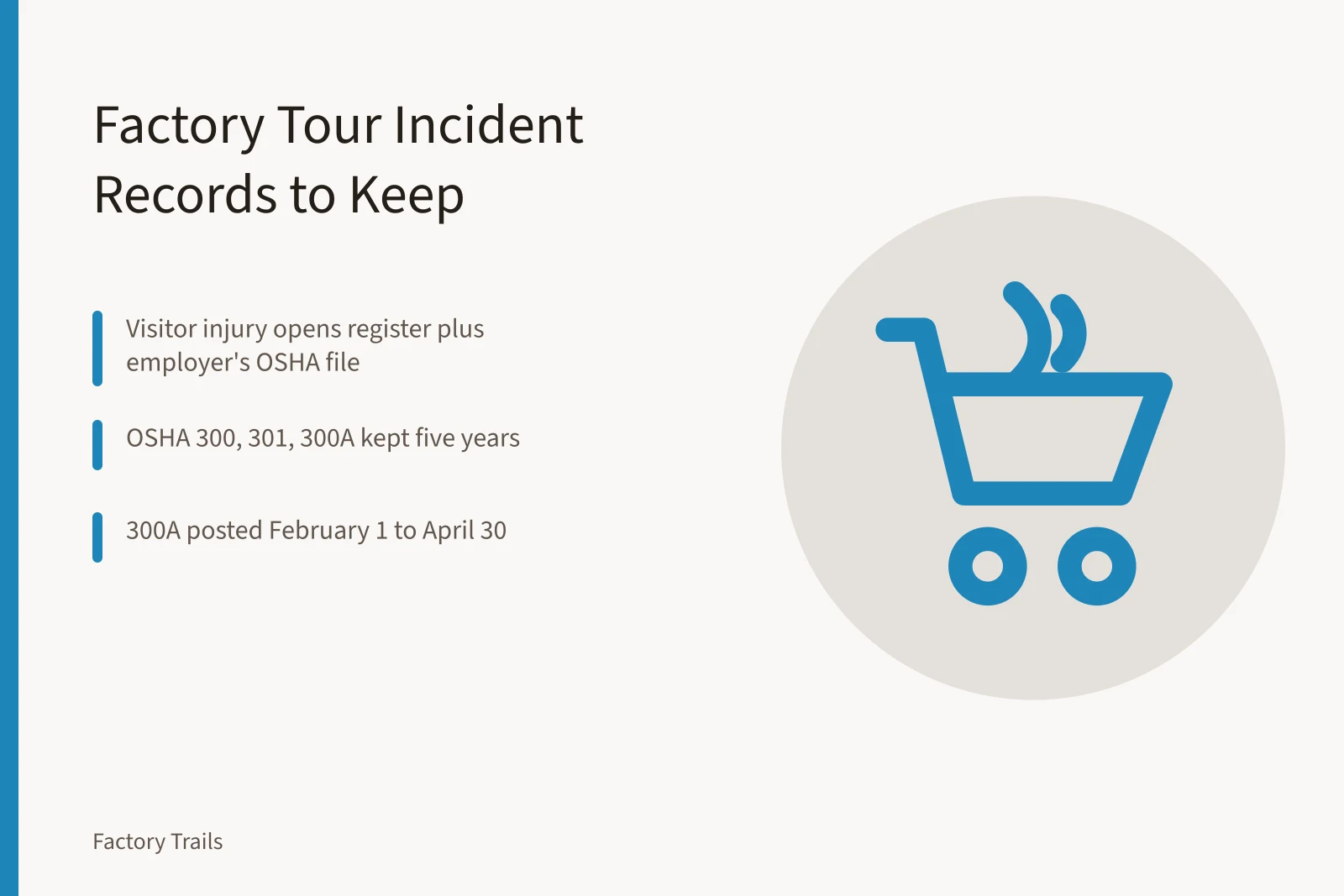
- A visitor injury opens two filesthe operator's visitor incident register and the employer's OSHA injury record.
- Employers keep the OSHA 300 log, the 301 report and the 300A summary for five years under 29 CFR 1904.33.
- PPE hazard assessments, training certificates and signed waivers are the documents insurers request first.
- State law and the insurance policy, not tour policy, set how long a claim file stays open.
The file that opens in the first hour
A guide who stops the walk and starts writing is doing the record keeping that matters most. The first hour produces most of the file.
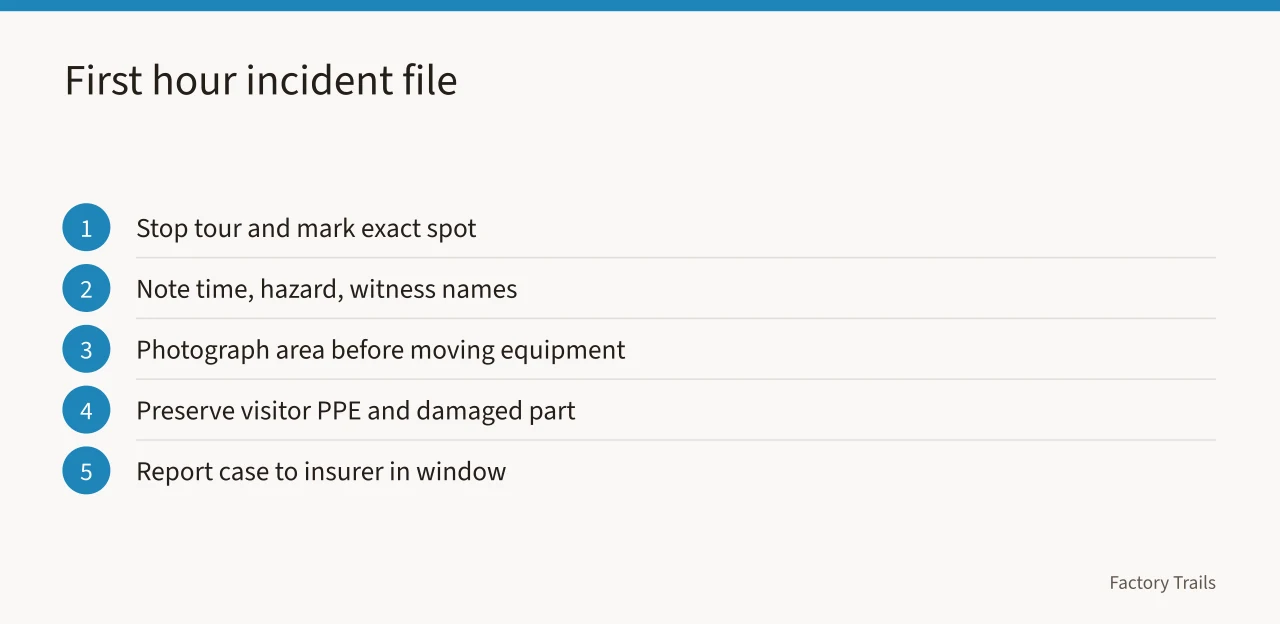
- Stop the tour and mark the exact spot where the visitor was hurt.
- Note the time, the hazard and the names of everyone who saw it.
- Photograph the area before any equipment is moved.
- Preserve the visitor's PPE and any damaged part.
- Report the case to the insurer inside the notice window in the policy.
Each step leaves a document behind. Together they form the incident file the operator keeps for years.
OSHA 300 log entries when the injured person is a visitor
The OSHA injury log covers employees. A member of the public hurt on a tour usually goes into the operator's visitor register instead of the 300 log. The employment status of the injured person decides which file opens, since a contractor, temp worker or paid guide can be recordable.
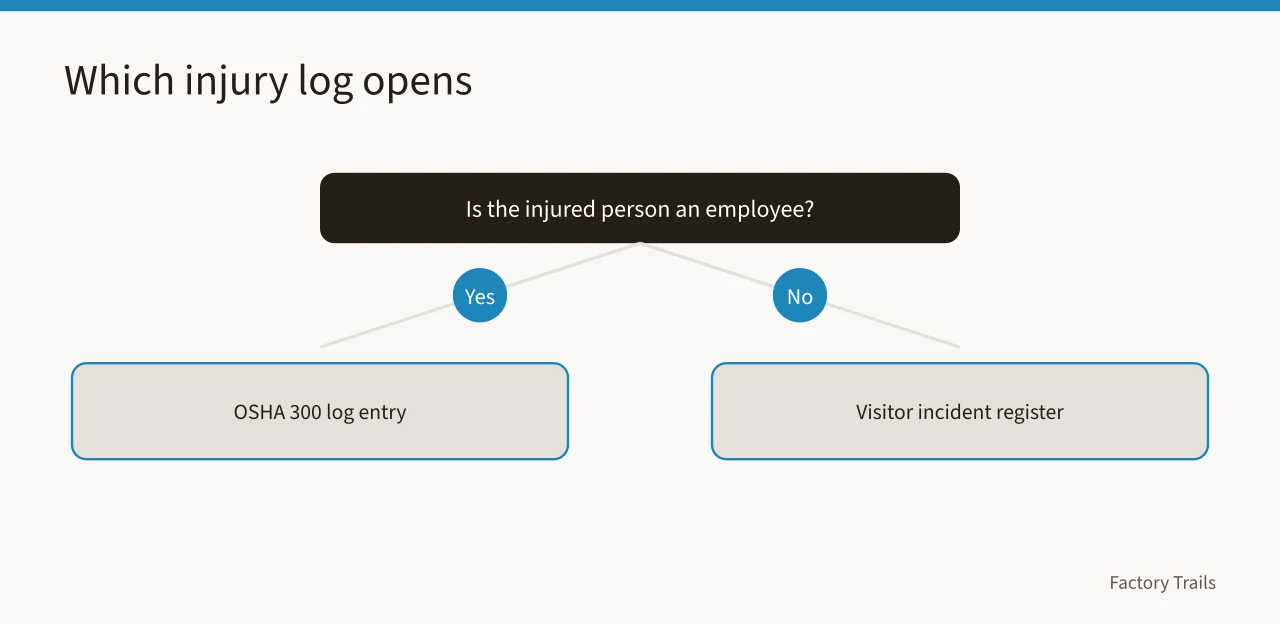
Employers keep the 300 log, the 301 incident report and the annual 300A summary for five years. The 300A posts from February 1 through April 30 of the following year.
PPE assessments and training certificates
29 CFR 1910.132 requires a written certification that a hazard assessment was done for each workplace. Tour operators use that certification to name the zones where visitors need protection, such as a melt shop or a weave room.
29 CFR 1910.136 sets the foot protection standard for areas where falling or rolling objects threaten a visitor's feet. Eye and face protection under 1910.133 covers similar terrain.
U.S. factory tour operator requirements also include documented instruction for the guides who lead the walk. Training certificates show that guides and visitors received the required instructions.
Records an operator keeps, and for how long
The table below lists the factory tour safety documentation that U.S. plant tours and manufacturing museums assemble after an incident.
| Record | Who holds it | Retention |
|---|---|---|
| OSHA 300 log | Employer of record | 5 years |
| OSHA 301 incident report | Employer of record | 5 years |
| 300A annual summary | Employer, posted February 1 to April 30 | 5 years |
| Visitor incident register | Tour operator | Per operator policy |
| PPE hazard assessment certification | Employer | Until the assessment is updated |
| Signed waiver or consent form | Operator | Per state law and counsel |
| Insurance claim file | Operator and insurer | Per policy and state rules |
Retention schedules follow the same logic as federal records schedules, which decide how long agencies keep the evidence behind reported numbers.
Example: a working mill floor
Lowell National Historical Park runs working textile machinery inside a preserved mill, so visitors walk beside operating looms instead of static displays.
A spill or a snagged sleeve there would generate the same factory tour incident records as any plant tour: a register entry, photographs, witness notes and a PPE check.
Safety holds and equipment tags
A machine linked to an injury usually comes out of service. The operator keeps the tag, the maintenance note and the release record that returns it to production.
Those papers belong in the same file as the injury report. Industrial tour incident reporting rarely reaches the public, but the paperwork grows either way.
Our companion guide to post-incident record keeping lists OSHA logs, visitor registers, PPE assessments and safety holds in one place.
Consent forms, waivers and insurance letters
A signed waiver does not replace an incident report. Insurers still ask for the signed form, the register entry, the witness statements and the medical release in one packet. State law decides how much a waiver can do.
Operators also keep first notice letters and any reservation of rights from the insurer. Those letters set deadlines for the remaining records.
Tickets, deposits and the incident file
Visitors rarely see this paperwork, but they feel its absence when a tour stops mid-walk. Anyone booking a plant visit should read refund and cancellation terms before paying a deposit, because a shutdown for a line failure is handled differently from a voluntary cancellation.