Guides
Part of How industrial site interpretation safety checklists keep arrival information current
How to keep industrial site safety records that match the public page
Industrial site safety message records guide for 2027 gives visitor teams a practical way to document approvals, updates, temporary notices, and review dates.
A visitor-message record is a small editorial file that shows what was published, who approved it, when it was checked, and what needs review next. It does not replace incident records, maintenance logs, emergency documentation, or any other controlled site record. Its purpose is to keep public information traceable.
What to take away
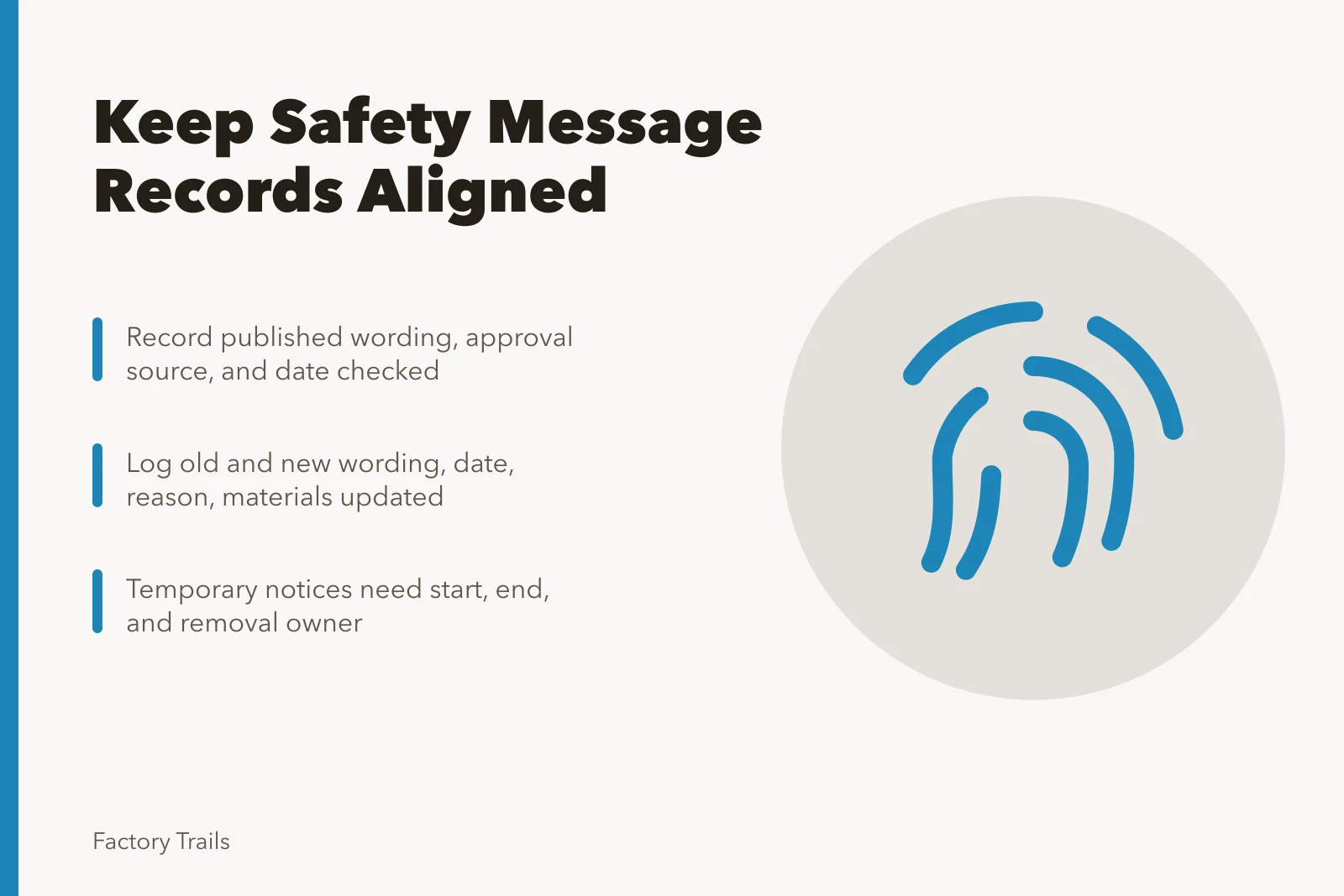
- Keep the approved wording, source, owner, and review date together.
- Record the channels changed when a visitor instruction changes.
- Give temporary notices a start time, end time, and removal owner.
Use one record for each active public instruction
The record can be a simple controlled spreadsheet or content-management entry. Include the public message, exact page or item, approving authority, confirmation date, content owner, channels affected, and next review trigger. Keep the format short enough that the team actually uses it.
| Record field | Why it matters |
|---|
Public instruction record fields
- Published wordingwhat visitors were told
- Approval sourcewho confirmed the instruction
- Date checkedwhether a review is due
- Channels affectedprevent inconsistent updates
- Temporary end timestop expired notices lingering
- Ownerclear contact for next reviewer
National Archives guidance notes that web content can change frequently and describes a change log as one way to track updates to content pages. A visitor program can use the same limited idea for public instructions: retain a clear record of the wording and its revisions. Read the National Archives web-records guidance for the source discussion of change tracking.
Record a change while it is fresh
When the public instruction changes, note the old wording, new wording, date, reason given by the approving authority, and materials updated. A short description such as "entry point updated by site authority" is usually enough for the content team.
Worked example: old wording, "North gate open to tours." New wording, "North gate closed, use the west lot." Date of change, March 4. Reason, gate repair confirmed by the site operations manager. Channels updated, visitor page, gate sign, host script.
For a temporary notice, make the end point visible. A notice without an owner or removal date often becomes a stale artifact. At the end time, confirm whether normal wording can return, whether the message needs another extension, or whether the visitor page should point only to a current contact.
Check the record against the public page
A log is useful only if it matches what visitors see. During a review, open the live page, confirmation, map, or sign text and compare it with the record. If a discrepancy appears, ask the responsible authority which version is current. Then correct the affected channel and update the record.
This is an editorial verification step. It does not establish that the underlying site condition is safe, compliant, or ready for visitors.
Keep the record connected to the current visitor source. The NPS trip-planning guidance emphasizes preparation before a visit. A message record should therefore include the public contact or page used to confirm a direction, schedule, boundary, or closure, plus the date of that confirmation.
Record how the message reached visitors. The NPS risk communication resource discusses messages delivered through websites, social media, and print. For each approval, note the web page, confirmation, sign, map, or host material that was checked so a later correction does not leave an older channel behind.
Keep a dated revision line for each changed instruction. The Ready.gov emergency-planning overview includes communications planning as an organizational activity.
Make the record easy to search during a last-minute change. Use one identifier for the public message and list every visitor channel where it appears. A future editor should be able to see the live wording, responsible contact, verification date, and open tasks without reading an email trail.
When a temporary notice expires, log whether the normal message returned or a new review is required.
Common questions
Who should have access to the message record?
The content owner and authorized site contacts need enough access to review and correct public wording. Follow the organization's policies for anything beyond that.
How long should the record be kept?
Keep each record until the next scheduled review, then hold it for one further review cycle before archiving. Where a state, federal, or organizational records schedule sets a longer period, the longer period applies. Do not invent a retention period for a site you do not manage.
What belongs outside this record?
Keep operational, security, personal, medical, and emergency details in the systems and processes authorized for them.